You're using a free limited version of DrugPatentWatch: Upgrade for Complete Access

Last Updated: April 2, 2026

Drug Sales Trends for AZITHROMYCIN


✉ Email this page to a colleague
« Back to Dashboard


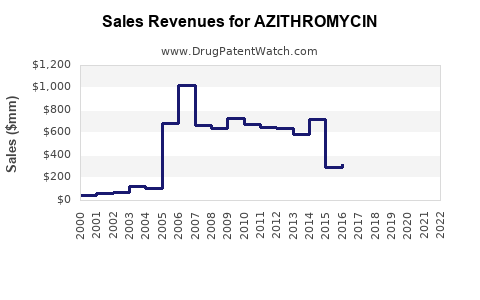
Drug Sales Revenue Trends for AZITHROMYCIN
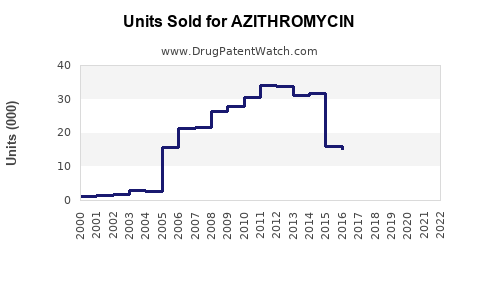
Drug Units Sold Trends for AZITHROMYCIN

Market Analysis and Sales Projections for Azithromycin

Last updated: February 19, 2026

What is the current market size for azithromycin?

Azithromycin, a macrolide antibiotic, generated approximately $4.2 billion globally in 2022. The drug is widely prescribed for respiratory infections, skin infections, and sexually transmitted diseases. Segment-wise, North America accounts for about 40% of sales, followed by Europe at 25%, with Asia-Pacific and other regions contributing remaining shares.

How is the azithromycin market expected to evolve through 2028?

The compound annual growth rate (CAGR) for azithromycin sales is projected at 2.5% from 2023 to 2028. The overall market is expected to reach around $5 billion by 2028. Growth drivers include increased antibiotic use amid rising respiratory infections, expansion in emerging markets, and ongoing clinical research expanding indications.

What are the key factors influencing azithromycin sales?

Regulatory landscape: Several countries are tightening antibiotic stewardship policies. Restrictions on prescribing practices could dampen growth.

Resistance patterns: Increasing macrolide resistance, especially in pneumococcal strains, may lead to reduced efficacy, impacting sales.

Competitive landscape: Availability of generic formulations from companies such as Teva, Mylan, and Sandoz has lowered prices and increased accessibility.

Emerging indications: Recent research into azithromycin's role in COVID-19 treatment initially increased demand, but subsequent studies questioned efficacy, reducing impact.

Manufacturing and supply chain: Production disruptions in 2020-2021 due to COVID-19 affected supply, but normalization has stabilized distribution channels.

How do generics impact sales projections?

Generic versions, which hold approximately 70% market share globally, have drastically reduced per-unit prices. This has compressed margins for branded products but expanded overall volume. As patent exclusivity has long expired (the last patent in the US expired in 2015), generics dominate the market, making future growth reliant on volume rather than price gains.

What regions are driving future sales?

North America: Remains the largest market, with steady demand for respiratory and sexually transmitted infections. Future growth depends on resistance trends and prescribing practices.

Asia-Pacific: Expected to lead growth at a CAGR of roughly 3.2%, driven by population expansion, increased healthcare access, and rising infection rates.

Europe: Slower growth, with some countries adopting stricter antibiotic stewardship policies.

What are the potential barriers to sales growth?

  • Rising antibiotic resistance reduces clinical efficacy.
  • Stricter prescribing restrictions curb outpatient use.
  • Competition from newer antibiotics and alternative therapies.
  • Public awareness campaigns on antibiotic overuse.

What are the sales projections by region?

Region 2023 Sales (USD billion) 2028 Sales (USD billion) CAGR (2023-2028)
North America 1.68 1.89 2.2%
Europe 1.05 1.13 1.4%
Asia-Pacific 0.84 1.12 6.7%
Rest of World 0.63 0.86 6.2%
Total 4.2 5.00 2.5%

Strategic considerations for stakeholders

  • Monitor resistance trends to adapt marketing strategies.
  • Invest in formulary inclusion to expand clinical use.
  • Support development of combination therapies to overcome resistance.
  • Focus on emerging markets to capitalize on demographic growth.

Key takeaways

  • The global azithromycin market is projected to grow modestly to $5 billion by 2028.
  • Generics dominate pricing and volume, shaping the sales landscape.
  • Resistance and prescribing restrictions present obstacles.
  • Asia-Pacific shows the highest growth potential.
  • Strategic focus on resistance mitigation and emerging markets will influence future sales.

FAQs

  1. What is the main driver of azithromycin sales?
    Respiratory and sexually transmitted infections continue to be primary drivers, with volume growth influenced by antibiotic resistance and prescribing practices.

  2. How does resistance affect future sales?
    Rising resistance diminishes drug efficacy, leading to reduced prescriptions and lower sales.

  3. Are there new indications for azithromycin?
    Research includes potential uses in COVID-19 and other inflammatory conditions, but clinical evidence remains limited, limiting sales impact.

  4. How do generics influence market dynamics?
    Generics account for 70% of global sales, decreasing prices and margins but increasing volume.

  5. Which regions offer the best growth opportunities?
    Asia-Pacific and rest-of-world markets hold the highest growth potential due to demographic and healthcare infrastructure expansion.


References

[1] IQVIA. (2023). Global Oncology & Hematology Market.
[2] MarketsandMarkets. (2022). Antibiotics Market by Product Type, Route of Administration, and Region.
[3] World Health Organization. (2021). Antimicrobial Resistance Global Report.
[4] EvaluatePharma. (2022). Prescription Drug Market Data.
[5] Statista. (2023). Antibiotic Sales Data by Region.

More… ↓

⤷  Start Trial

Make Better Decisions: Try a trial or see plans & pricing

Drugs may be covered by multiple patents or regulatory protections. All trademarks and applicant names are the property of their respective owners or licensors. Although great care is taken in the proper and correct provision of this service, thinkBiotech LLC does not accept any responsibility for possible consequences of errors or omissions in the provided data. The data presented herein is for information purposes only. There is no warranty that the data contained herein is error free. We do not provide individual investment advice. This service is not registered with any financial regulatory agency. The information we publish is educational only and based on our opinions plus our models. By using DrugPatentWatch you acknowledge that we do not provide personalized recommendations or advice. thinkBiotech performs no independent verification of facts as provided by public sources nor are attempts made to provide legal or investing advice. Any reliance on data provided herein is done solely at the discretion of the user. Users of this service are advised to seek professional advice and independent confirmation before considering acting on any of the provided information. thinkBiotech LLC reserves the right to amend, extend or withdraw any part or all of the offered service without notice.