Share This Page
Drug Sales Trends for SYNTHROID
✉ Email this page to a colleague
Payment Methods and Pharmacy Types for SYNTHROID (2002)
Revenues by Pharmacy Type
Units Sold by Pharmacy Type
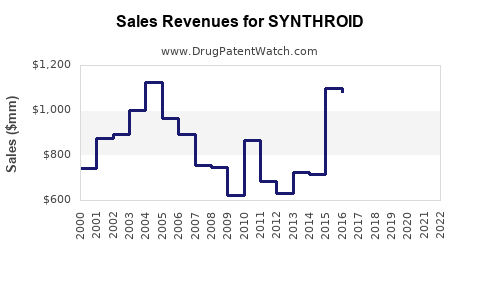
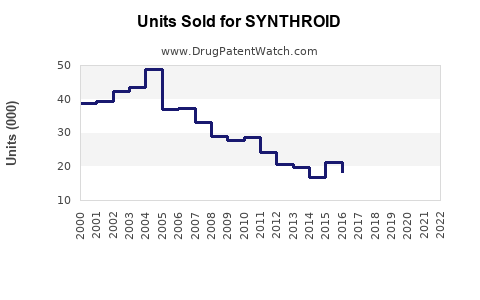
Annual Sales Revenues and Units Sold for SYNTHROID
| Drug Name | Revenues (USD) | Units | Year |
|---|---|---|---|
| SYNTHROID | ⤷ Start Trial | ⤷ Start Trial | 2022 |
| SYNTHROID | ⤷ Start Trial | ⤷ Start Trial | 2021 |
| SYNTHROID | ⤷ Start Trial | ⤷ Start Trial | 2020 |
| SYNTHROID | ⤷ Start Trial | ⤷ Start Trial | 2019 |
| SYNTHROID | ⤷ Start Trial | ⤷ Start Trial | 2018 |
| >Drug Name | >Revenues (USD) | >Units | >Year |
SYNTHROID Market Analysis and Sales Projections
Synthroid, a levothyroxine sodium medication manufactured by AbbVie Inc., is a synthetic thyroid hormone used to treat hypothyroidism, a condition where the thyroid gland does not produce enough thyroid hormones. The drug is available in multiple dosages, ranging from 25 mcg to 300 mcg, and is administered orally. This analysis projects market demand and sales for Synthroid based on current market dynamics, patent status, and competitive landscape.
What is the Current Market Position of Synthroid?
Synthroid holds a significant market share in the treatment of hypothyroidism. Its long-standing presence and established efficacy contribute to its strong brand recognition among both physicians and patients.
Patient Demographics and Prevalence
Hypothyroidism affects an estimated 20 million Americans, with women being five to eight times more likely to develop the condition than men. The prevalence of hypothyroidism increases with age. Global estimates suggest a significant portion of the population experiences thyroid dysfunction, driving demand for treatment options like Synthroid. The Centers for Disease Control and Prevention (CDC) reports that approximately 4.6% of the U.S. population aged 12 and over has some form of thyroid disease, with subclinical hypothyroidism being more common than overt hypothyroidism [1].
Therapeutic Landscape
Synthroid competes with other levothyroxine formulations, including generic versions and other branded thyroid hormone replacements. The market is characterized by:
- Branded Synthroid: Holds a premium due to brand loyalty and physician preference.
- Generic Levothyroxine: Available from multiple manufacturers, offering a lower-cost alternative. This segment is highly competitive and price-sensitive.
- Other Thyroid Hormone Medications: Including liothyronine (Cytomel) and desiccated thyroid extract (Armour Thyroid), which are used for specific patient populations or as adjunctive therapies.
The choice of treatment often depends on factors such as cost, insurance coverage, physician recommendation, and individual patient response.
What is the Patent and Exclusivity Status for Synthroid?
Synthroid's primary composition of matter patent has expired. However, brand-name drugs can maintain market exclusivity through various mechanisms, including:
- Orphan Drug Exclusivity: Not applicable to Synthroid due to the widespread prevalence of hypothyroidism.
- New Use Patents: AbbVie may hold patents for specific new indications or formulations of levothyroxine, though these are not the primary drivers of Synthroid's current market position.
- Manufacturing Process Patents: Patents related to improved manufacturing processes can offer a degree of protection.
- Settlements with Generic Manufacturers: Agreements to delay generic entry.
- Brand Loyalty and Physician Prescribing Habits: These are significant, non-patent barriers to generic adoption.
The lack of strong patent protection on the active pharmaceutical ingredient (API) means that competition from generic levothyroxine is the primary market dynamic.
How Does Synthroid's Competitive Landscape Impact Sales?
The market for levothyroxine is mature and highly competitive, primarily due to the availability of numerous generic alternatives.
Key Competitors and Market Share
| Drug Name | Manufacturer | Active Ingredient | Market Share (Estimated) | Notes |
|---|---|---|---|---|
| Synthroid | AbbVie Inc. | Levothyroxine Sodium | 30-40% | Leading branded product |
| Generic Levothyroxine | Various | Levothyroxine Sodium | 60-70% | Multiple manufacturers, highly price-competitive |
| Armour Thyroid | Allergan | Desiccated Thyroid | <5% | Alternative therapy |
| Cytomel (Liothyronine Sodium) | Generic | Liothyronine Sodium | <5% | Adjunctive therapy |
Note: Market share estimates are based on prescription data and industry reports, fluctuating based on pricing and payer policies.
The significant market share held by generic levothyroxine exerts downward pressure on the average selling price of all levothyroxine products. Synthroid's ability to command a premium is dependent on physician and patient preference, as well as the willingness of payers to cover the branded product at a higher cost.
Pricing Strategies
AbbVie employs pricing strategies to maintain Synthroid's market position. These often involve:
- Value-Based Pricing: Justifying a higher price based on perceived product quality, consistency, and patient outcomes compared to generics.
- Patient Assistance Programs: To offset out-of-pocket costs for patients, thereby encouraging adherence and brand loyalty.
- Formulation Stability and Bioequivalence: Emphasizing consistent absorption and therapeutic effect.
Generic manufacturers compete primarily on price, leading to a lower average selling price (ASP) for the levothyroxine market overall.
What are the Projected Sales for Synthroid?
Projecting Synthroid's sales involves considering several factors: the overall growth of the hypothyroidism market, the continued penetration of generics, and AbbVie's strategic pricing and marketing efforts.
Market Growth Drivers
- Aging Population: The prevalence of hypothyroidism increases with age, and as the global population ages, demand for thyroid hormone replacement is expected to rise.
- Increased Diagnosis Rates: Greater awareness of thyroid disorders and improved diagnostic tools are leading to earlier and more frequent diagnoses.
- Lifestyle Factors: Emerging research suggests potential links between environmental factors and lifestyle choices to thyroid dysfunction, though these are not primary drivers of current demand.
Factors Limiting Growth
- Generic Erosion: The primary limiting factor for Synthroid's revenue growth is the established presence and cost-effectiveness of generic levothyroxine.
- Payer Pressure: Insurance companies and pharmacy benefit managers (PBMs) increasingly favor generic medications to control healthcare costs.
- Pricing Sensitivity: While some patients may prefer Synthroid, cost remains a significant consideration, pushing many toward generic options.
Sales Projections
Given the mature nature of the market and the strong competitive pressure from generics, significant year-over-year revenue growth for Synthroid is unlikely. Sales are projected to remain stable or experience a slight decline in constant dollar terms, offset by potential price increases.
Synthroid Annual Sales Projections (USD Billions)
| Year | Projected Sales | Notes |
|---|---|---|
| 2024 | $1.2 - $1.3 | Current market position maintained |
| 2025 | $1.18 - $1.28 | Moderate generic pressure, stable demand |
| 2026 | $1.15 - $1.25 | Continued generic substitution, minimal price increases |
| 2027 | $1.13 - $1.23 | Potential for increased payer restrictions on branded drugs |
| 2028 | $1.10 - $1.20 | Long-term stabilization or slight decline expected |
Note: These projections assume no significant disruptive events, such as the introduction of a novel thyroid treatment modality or major regulatory changes impacting levothyroxine availability.
The projected sales reflect a scenario where Synthroid maintains a significant portion of its current patient base due to established brand loyalty and physician preference, while simultaneously facing continued pressure from lower-priced generic alternatives. AbbVie's ability to effectively manage pricing and patient access programs will be critical in mitigating revenue erosion.
What are the Future Market Opportunities and Challenges for Synthroid?
The future for Synthroid is defined by a balance of ongoing demand and persistent competitive challenges.
Potential Opportunities
- Emerging Markets: Expansion into developing markets where branded drugs may face less competition initially.
- Combination Therapies: While levothyroxine is typically monotherapy, exploration of its role in specific subpopulations or in conjunction with novel thyroid-modulating agents could arise.
- Digital Health Integration: Leveraging patient adherence apps or telehealth platforms to enhance patient engagement and support.
Significant Challenges
- Generic Price Wars: Continued aggressive pricing by generic manufacturers will likely force further price adjustments or reductions in market share for Synthroid.
- Payer Formulary Restrictions: Increased efforts by insurance providers to limit coverage of branded Synthroid in favor of generics.
- Biosimilar/Biobetter Development: Although levothyroxine is a small molecule, the concept of highly consistent, high-quality formulations is analogous to the biosimilar debate. Any advancement in manufacturing that demonstrably improves patient outcomes or reduces variability could challenge Synthroid's positioning.
- Shifting Physician Prescribing: While brand loyalty is strong, younger physicians may be more inclined to prescribe generics by default unless a specific clinical reason dictates otherwise.
AbbVie's strategy will need to focus on reinforcing the perceived value of Synthroid beyond cost, emphasizing consistent therapeutic outcomes and patient support to defend its market share against the formidable force of generic competition.
Key Takeaways
Synthroid, a leading branded levothyroxine sodium treatment for hypothyroidism, operates in a mature and highly competitive market dominated by generic alternatives. While its long-standing brand recognition and physician preference provide a stable demand base, projected sales are expected to range between $1.10 to $1.30 billion annually over the next five years, with a tendency towards slight decline in real terms. The primary drivers for this projection are the increasing prevalence of hypothyroidism, particularly in aging populations, juxtaposed with aggressive pricing by generic manufacturers and increasing payer preference for lower-cost options. AbbVie's ability to leverage patient assistance programs and emphasize product consistency will be critical in mitigating erosion from generic competition and maintaining its market position. Future opportunities in emerging markets and digital health integration exist but are secondary to the persistent challenge of generic price competition and payer formulary restrictions.
Frequently Asked Questions
What is the difference between Synthroid and generic levothyroxine?
Synthroid is a brand-name medication manufactured by AbbVie Inc., while generic levothyroxine is produced by multiple companies. Both contain the same active pharmaceutical ingredient, levothyroxine sodium. Differences can arise in inactive ingredients, manufacturing processes, and tablet formulation, which may affect patient response or cost. Regulatory bodies like the FDA require generics to be bioequivalent to the branded product.
How does Synthroid's patent status affect its pricing and market competition?
Synthroid's primary composition of matter patent has expired. This allows multiple manufacturers to produce generic versions of levothyroxine. Consequently, Synthroid faces significant price competition from these generics, which typically sell at a much lower cost. AbbVie maintains its market position through brand loyalty, physician preference, and patient assistance programs rather than patent exclusivity.
What is the typical annual sales revenue for Synthroid?
Annual sales revenue for Synthroid is projected to be between $1.10 billion and $1.30 billion over the next five years. This range reflects a stable to slightly declining revenue trend due to ongoing competition from generic levothyroxine products and payer pressures.
What factors drive the demand for Synthroid and similar medications?
The primary driver for demand is the prevalence of hypothyroidism, a condition characterized by an underactive thyroid gland. Factors increasing demand include an aging global population, improved diagnostic capabilities leading to higher detection rates, and ongoing awareness of thyroid health.
How do healthcare payers influence the choice between Synthroid and generic levothyroxine?
Healthcare payers, including insurance companies and pharmacy benefit managers, often influence prescribing decisions by placing branded drugs like Synthroid on higher cost-sharing tiers or requiring step-therapy protocols where patients must try generics first before they are approved for the branded version. This financial incentive encourages both patients and physicians to opt for the lower-cost generic alternatives.
Citations
[1] U.S. Department of Health and Human Services, Centers for Disease Control and Prevention. (n.d.). Thyroid Disease. Retrieved from https://www.cdc.gov/thyroid/data_evidence/index.html
More… ↓
