Drug Sales Trends for PROGRAF
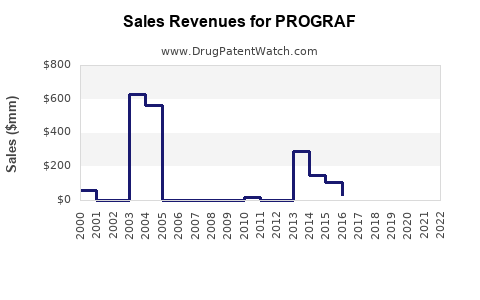
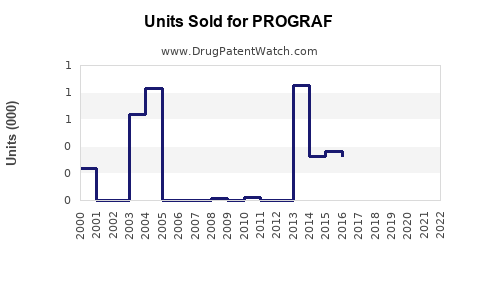
Annual Sales Revenues and Units Sold for PROGRAF
| Drug Name | Revenues (USD) | Units | Year |
|---|---|---|---|
| PROGRAF | ⤷ Start Trial | ⤷ Start Trial | 2022 |
| PROGRAF | ⤷ Start Trial | ⤷ Start Trial | 2021 |
| PROGRAF | ⤷ Start Trial | ⤷ Start Trial | 2020 |
| PROGRAF | ⤷ Start Trial | ⤷ Start Trial | 2019 |
| PROGRAF | ⤷ Start Trial | ⤷ Start Trial | 2018 |
| PROGRAF | ⤷ Start Trial | ⤷ Start Trial | 2017 |
| >Drug Name | >Revenues (USD) | >Units | >Year |
Prograf Market Analysis, Sales Forecast, Patent Expiration, and Generic Competition
Prograf, Astellas Pharma’s immediate-release tacrolimus capsule, remains a major transplant immunosuppressant despite U.S. generic competition. Its market is mature, recurring, and relatively defensive because transplant recipients require long-term maintenance therapy. Global Prograf sales are likely to decline gradually through 2028 as generic substitution expands, while total tacrolimus demand should grow modestly with transplant volumes and longer patient survival.
A base-case model estimates global Prograf-branded sales of approximately $0.8 billion in 2024, declining to $0.55 billion by 2028. The broader tacrolimus market, including generic immediate-release capsules, extended-release products, injectables, and topical formulations, is projected to increase from roughly $4.0 billion-$4.5 billion in 2024 to $5.0 billion-$5.5 billion by 2028.
What is Prograf and how is it used?
Prograf is the brand name for tacrolimus, a calcineurin inhibitor used to prevent organ rejection after transplantation. The FDA approved Prograf for liver transplantation in 1994 and later expanded its indications to kidney and heart transplantation. Its principal use is chronic maintenance immunosuppression in adult and pediatric transplant patients.
Prograf is administered orally in immediate-release capsules and as an injection for patients unable to take oral medication. The drug is generally used with other immunosuppressants, including corticosteroids and mycophenolate products.
| Product | Active ingredient | Formulation | Primary use | Manufacturer |
|---|---|---|---|---|
| Prograf | Tacrolimus | Immediate-release capsules and injection | Organ-transplant rejection prevention | Astellas |
| Astagraf XL | Tacrolimus | Once-daily extended-release capsules | Kidney-transplant maintenance | Astellas |
| Envarsus XR | Tacrolimus | Extended-release tablets | Kidney-transplant maintenance | Veloxis Pharma, owned by Chiesi |
| Generic tacrolimus | Tacrolimus | Immediate-release capsules, injection | Organ-transplant immunosuppression | Multiple manufacturers |
| Protopic | Tacrolimus | Topical ointment | Atopic dermatitis | Astellas and generics |
Prograf differs from topical tacrolimus products because the commercial opportunity is driven primarily by transplant medicine, therapeutic-drug monitoring, and chronic oral use.
How large is the Prograf and tacrolimus market?
The market has two distinct components: branded products and the broader tacrolimus market.
Branded Prograf sales
Astellas does not always disclose Prograf revenue in the same level of detail across reporting periods and geographic segments. Public company filings indicate that Prograf remains a multibillion-yen product, but sales have declined from earlier peak levels because of patent expiry and generic competition. A reasonable 2024 estimate is $0.75 billion-$0.9 billion in global branded sales.
The branded business is concentrated in Japan, the United States, Europe, and other developed transplant markets. Sales are supported by institutional prescribing, established physician familiarity, and the clinical sensitivity of tacrolimus exposure.
Total tacrolimus market
The broader tacrolimus market includes:
- Generic immediate-release capsules
- Generic tacrolimus injection
- Astagraf XL
- Envarsus XR
- Hospital and specialty-pharmacy distribution
- Topical tacrolimus products, which are commercially separate from transplant use
The transplant segment is more valuable per patient than topical tacrolimus because treatment is lifelong and requires repeated monitoring. Generic substitution has reduced unit prices but has not eliminated demand.
Market size and forecast
| Metric | 2023 estimate | 2024 estimate | 2028 base case | 2024-2028 trend |
|---|---|---|---|---|
| Global branded Prograf sales | $0.85B-$1.0B | $0.75B-$0.9B | $0.5B-$0.6B | Decline |
| Global transplant tacrolimus market | $3.8B-$4.2B | $4.0B-$4.5B | $5.0B-$5.5B | 4%-6% CAGR |
| U.S. immediate-release tacrolimus market | $1.3B-$1.6B | $1.4B-$1.7B | $1.6B-$1.9B | Low growth |
| Extended-release tacrolimus segment | $0.7B-$0.9B | $0.8B-$1.0B | $1.1B-$1.4B | 7%-10% CAGR |
These figures are analyst estimates rather than reported consolidated market totals. They include the effect of generic erosion and the continuing expansion of the transplant population.
What are the main Prograf sales drivers?
The primary demand driver is the number of functioning organ-transplant recipients receiving maintenance immunosuppression. The United States performed more than 46,000 organ transplants in 2023, according to the Organ Procurement and Transplantation Network. The number of patients living with a transplant is much larger than the number of annual procedures because many recipients remain on therapy for decades (OPTN, 2024).
Transplant-volume growth
Kidney and liver transplantation account for most tacrolimus use. Demand is supported by:
- Higher transplant volumes
- Longer post-transplant survival
- Broader access to transplantation in emerging markets
- Continued use of tacrolimus as a standard calcineurin inhibitor
- Pediatric patients requiring long-duration therapy
Tacrolimus remains central to contemporary transplant protocols. Cyclosporine is a clinical alternative, but tacrolimus is frequently preferred because of efficacy and established guideline use.
Chronic treatment duration
Prograf has a recurring-revenue profile. Patients often require treatment for the remainder of their lives, although dose intensity may change over time. This reduces exposure to short-term prescription volatility.
Therapeutic-drug monitoring
Tacrolimus has a narrow therapeutic index. Blood-level monitoring is required because underexposure can cause rejection and overexposure can produce nephrotoxicity, neurotoxicity, hypertension, diabetes, and infection risk. Monitoring increases clinical switching friction, particularly when a patient is stable on a specific product.
That friction benefits established brands but does not prevent generic substitution. Transplant centers increasingly use institutional protocols for conversion between products.
When did Prograf lose exclusivity?
Prograf’s original U.S. small-molecule exclusivity and core patent protection expired years ago. Generic immediate-release tacrolimus capsules are approved and marketed in the United States.
The commercial sequence is more important than a single expiration date:
| Event | Approximate timing | Commercial effect |
|---|---|---|
| FDA approval of Prograf | 1994 | Established tacrolimus transplant franchise |
| Core composition and formulation patents | 1990s-early 2010s | Protected early branded sales |
| U.S. generic approvals | 2017 onward | Initiated broad immediate-release substitution |
| Ongoing generic competition | 2020s | Reduced Prograf unit volume and price |
| Extended-release product protection | Product-specific | Supports Astagraf XL and Envarsus XR differentiation |
Prograf no longer has the exclusivity profile of a protected innovative product. Its remaining commercial value comes from brand retention, institutional use, supply reliability, clinical familiarity, and selected markets where generic substitution is slower.
What is the Orange Book status of Prograf?
The FDA Orange Book lists approved prescription drug products and related patent or exclusivity information. Prograf’s immediate-release capsules have been subject to approved generic competition. The relevant competitive issue is no longer whether an immediate-release generic can enter the market, but the degree of substitution, distributor contracting, and product-level interchangeability.
Orange Book status should be assessed separately for:
- Prograf capsules
- Prograf injection
- Astagraf XL extended-release capsules
- Other tacrolimus dosage forms
Patent listings and approval status can change through FDA updates. Immediate-release Prograf does not have the practical market protection associated with an active composition patent or unexpired regulatory exclusivity.
Which companies compete with Prograf?
The competitive landscape includes generic manufacturers and branded extended-release products.
Generic manufacturers
Generic tacrolimus suppliers have included major manufacturers such as:
- Teva Pharmaceuticals
- Dr. Reddy’s Laboratories
- Sandoz
- Mylan, now part of Viatris
- Zydus
- Accord Healthcare
- Lupin
- Torrent Pharmaceuticals
- Rising Pharmaceuticals and other regional suppliers
The supplier group varies by country, dosage strength, and procurement contract. Shortages or manufacturing disruptions can cause hospitals and pharmacies to shift volume between suppliers.
Branded extended-release competitors
Astagraf XL and Envarsus XR compete for patients who may benefit from once-daily dosing or different pharmacokinetic profiles.
| Product | Release profile | Key commercial argument | Main risk |
|---|---|---|---|
| Prograf | Immediate release, generally twice daily | Familiarity, broad clinical experience, lower generic cost | Generic price erosion |
| Astagraf XL | Once daily | Reduced dosing frequency | Limited market relative to generics |
| Envarsus XR | Once daily, extended-release tablet | Pharmacokinetic differentiation and conversion utility | Payer controls and cost |
| Generic tacrolimus | Mostly immediate release | Low acquisition cost | Supply variation and monitoring burden |
Extended-release products do not fully replace Prograf because many patients remain clinically stable on immediate-release therapy, and payers often favor lower-cost generics.
What formulations are protected from generic competition?
The most commercially relevant formulation protections concern extended-release delivery rather than the basic tacrolimus molecule.
Immediate-release capsules
The immediate-release capsule market is mature. Generic products have entered after ANDA approvals and patent-related barriers were resolved. A new entrant generally competes on manufacturing cost, supply reliability, FDA compliance, and pharmacy or hospital contracts.
Extended-release products
Astagraf XL and Envarsus XR use distinct release technologies and dosing profiles. Their intellectual-property positions may include:
- Controlled-release matrices
- Granule or bead technologies
- Tablet composition
- Pharmacokinetic profiles
- Dosing and conversion methods
- Treatment protocols for transplant patients
These rights can delay direct substitution but do not prevent generic immediate-release tacrolimus competition.
Manufacturing and quality barriers
Tacrolimus manufacturing is technically demanding because the drug has a narrow therapeutic index and requires tight control of potency, dissolution, impurities, and content uniformity. The practical barriers include:
- Consistent active pharmaceutical ingredient supply
- Validated low-dose manufacturing
- Bioequivalence across strengths
- Dissolution control
- Stability data
- FDA inspection compliance
- Reliable cold-chain or controlled distribution where required
- Post-approval change management
These factors can support supplier stickiness even after patent expiry.
How strong is the Prograf patent estate?
The core Prograf patent estate is weak as a barrier to immediate-release generic entry. The molecule is old, and generic products are already marketed.
The stronger IP positions are associated with later-generation delivery systems and use claims. Their value is narrower because:
- Extended-release products address a subset of the transplant population.
- Physicians can continue prescribing immediate-release generic tacrolimus.
- Payers exert pressure on branded products.
- Patients require therapeutic-drug monitoring after conversion.
- Formulation patents do not recreate molecule-level exclusivity.
Astellas’ more important strategic defense has been product lifecycle management through Astagraf XL and continued commercial control of the Prograf brand, rather than reliance on the original immediate-release patent estate.
Are there Paragraph IV challenges to Prograf?
Paragraph IV litigation was relevant during the historical generic-entry process. Generic applicants may certify that listed patents are invalid, unenforceable, or not infringed. Once generic tacrolimus capsules entered the market, the principal Paragraph IV risk shifted from future entry to ongoing patent challenges involving later formulations and related products.
For immediate-release Prograf, commercial risk from Paragraph IV litigation is now limited because generic competition already exists. For Astagraf XL or other extended-release products, Paragraph IV filings can remain commercially material if they target unexpired formulation patents.
The highest-value litigation questions are:
- Whether a generic formulation practices a protected release mechanism
- Whether a proposed label induces infringement of a method-of-use claim
- Whether a patent survives obviousness and written-description challenges
- Whether settlement terms permit an early launch
- Whether the generic receives 180-day exclusivity
What generic launch scenarios exist for Prograf?
Base case
Generic substitution continues gradually. Prograf retains a residual brand share in hospitals, specialty pharmacies, and markets with conservative transplant protocols. Global brand sales decline by approximately 7%-10% annually.
Downside case
A major payer or distributor accelerates mandatory generic substitution. Brand sales fall 12%-18% annually, and Prograf becomes concentrated in patients requiring continuity or in countries with slower generic uptake.
Upside case
Supply disruptions affect generic suppliers, or transplant centers preserve branded use for selected patients. Prograf sales stabilize near current levels, but a return to pre-generic peak sales is unlikely.
| Scenario | 2024 Prograf sales | 2028 Prograf sales | Implied trend |
|---|---|---|---|
| Downside | $0.8B | $0.4B | 15%-17% annual decline |
| Base case | $0.8B | $0.55B | 8%-9% annual decline |
| Upside | $0.9B | $0.7B | 6% annual decline |
What is the projected revenue exposure for Astellas?
Prograf is strategically important but no longer a primary growth driver for Astellas. The company’s financial profile is more dependent on newer products, including oncology, immunology, and specialty medicines.
Prograf’s value to Astellas includes:
- High-recognition transplant branding
- Recurring maintenance demand
- Established distribution channels
- Clinical data and physician familiarity
- Potential cross-selling with other transplant products
Its disadvantages include:
- Generic price pressure
- Limited ability to raise prices
- Mature patient population
- Exposure to procurement tenders
- Substitution by extended-release competitors
- Manufacturing and supply-chain obligations
In the base case, Prograf’s contribution to Astellas revenue declines steadily through 2028. The product remains cash-generative but is unlikely to materially change the company’s consolidated growth rate.
How does Prograf compare with Envarsus XR and Astagraf XL?
Prograf has the broadest historical use and the deepest clinical familiarity. Envarsus XR has a differentiated delivery system and once-daily dosing, while Astagraf XL competes on once-daily administration.
| Factor | Prograf | Astagraf XL | Envarsus XR |
|---|---|---|---|
| Dosing | Usually twice daily | Once daily | Once daily |
| Generic competition | Extensive | More limited | More limited |
| Price positioning | Lowest after generic entry | Premium | Premium |
| Switching friction | Low for established patients | Conversion monitoring required | Conversion monitoring required |
| Patent value | Low for core product | Formulation-focused | Formulation-focused |
| Growth outlook | Declining | Stable to modest growth | Stronger specialty growth |
Extended-release products may gain share in newly transplanted patients, patients with adherence problems, or patients who need conversion because of fluctuating tacrolimus exposure. They face reimbursement limits and the clinical risk associated with switching stable patients.
What FDA regulatory factors affect Prograf sales?
The FDA regulates tacrolimus as a narrow-therapeutic-index drug. Generic approval depends on demonstrating bioequivalence and meeting manufacturing standards. Regulatory changes affecting the market include:
- Additional generic approvals
- Manufacturing inspections and warning letters
- Product recalls
- Label changes concerning monitoring or adverse events
- Pediatric indication developments
- Requirements for postmarketing safety monitoring
- Pharmacy substitution rules
FDA approval of additional suppliers can increase price pressure but may improve supply resilience. Conversely, quality failures can create temporary shortages and support branded or incumbent suppliers.
What is the geographic outlook for Prograf?
The United States remains the most commercially valuable market because of high drug spending and a large transplant population. Japan is important for Astellas because of the company’s domestic position and the drug’s historical development. Europe is more exposed to tendering, reference pricing, and generic substitution.
| Region | Outlook through 2028 |
|---|---|
| United States | Total tacrolimus demand grows modestly; Prograf brand share declines |
| Japan | Mature but relatively stable; reimbursement controls limit growth |
| Europe | Generic substitution and tender pressure remain high |
| China | Transplant volume supports growth; local competition increases |
| Latin America | Access expansion supports unit growth, but pricing is constrained |
| Middle East and Southeast Asia | Demand grows from rising transplant capacity and healthcare investment |
Emerging markets provide volume growth but usually contribute less revenue per patient than the United States, Japan, and Western Europe.
What licensing deals affect the Prograf market?
The most relevant commercial arrangements involve distribution, regional commercialization, and ownership of differentiated tacrolimus formulations. Envarsus XR is associated with Veloxis Pharma, which was acquired by Chiesi in 2020. That transaction strengthened Chiesi’s position in transplant medicine and expanded competition with Astellas’ extended-release portfolio (Chiesi, 2020).
Prograf itself is primarily an Astellas-controlled product. Its licensing value is lower than it was before generic entry because regional partners cannot recreate the original molecule-level exclusivity.
Key Takeaways
- Prograf is a mature tacrolimus brand with established long-term transplant demand.
- Immediate-release generic competition is already entrenched in the United States and other major markets.
- Global Prograf-branded sales are estimated at $0.75 billion-$0.9 billion in 2024.
- Base-case branded sales decline to approximately $0.55 billion by 2028.
- The broader transplant tacrolimus market should grow 4%-6% annually through 2028.
- Generic competition reduces price and volume for Prograf but does not materially reduce total tacrolimus demand.
- Astagraf XL and Envarsus XR provide formulation-based competition and lifecycle management.
- The strongest remaining barriers are manufacturing quality, therapeutic monitoring, formulation IP, and institutional switching practices.
- Paragraph IV risk is more relevant to extended-release tacrolimus products than to immediate-release Prograf.
- Prograf remains a stable cash-generating product but is unlikely to be a major Astellas growth engine.
FAQs
Does Prograf still have patent protection?
Core immediate-release Prograf protection has expired or no longer prevents generic entry in major markets. Later patents may protect specific extended-release formulations or methods of use.
Is generic tacrolimus as effective as Prograf?
FDA-approved generic tacrolimus products must meet bioequivalence requirements. Because tacrolimus has a narrow therapeutic index, physicians generally monitor blood concentrations when starting therapy or switching products.
Can patients switch from Prograf to Envarsus XR?
Patients can be converted under physician supervision, but the products are not dosed on a simple milligram-for-milligram basis. Therapeutic-drug monitoring is required after conversion.
What is the largest risk to Prograf sales?
The largest risk is continued generic substitution combined with payer and hospital procurement pressure. Product recalls or shortages can temporarily alter market shares.
Is Prograf a biologic with biosimilar risk?
No. Tacrolimus is a small-molecule drug, not a biologic. Its competitive risk comes from generic ANDA products rather than biosimilars.
References
-
Astellas Pharma Inc. (2024). Annual report 2024. Astellas Pharma Inc.
-
Chiesi Farmaceutici S.p.A. (2020). Chiesi Group completes acquisition of global rights to Envarsus XR from Veloxis Pharmaceuticals. Chiesi Farmaceutici.
-
Food and Drug Administration. (2024). Orange Book: Approved drug products with therapeutic equivalence evaluations. U.S. Department of Health and Human Services.
-
Food and Drug Administration. (2024). Prograf prescribing information. U.S. Department of Health and Human Services.
-
Organ Procurement and Transplantation Network. (2024). National data: Transplants by year. U.S. Department of Health and Human Services.
-
United States Pharmacopeia. (2024). Tacrolimus monograph and quality standards. U.S. Pharmacopeial Convention.
More… ↓
