Share This Page
Drug Sales Trends for CEPHALEXIN
✉ Email this page to a colleague
Payment Methods and Pharmacy Types for CEPHALEXIN (2002)
Revenues by Pharmacy Type
Units Sold by Pharmacy Type
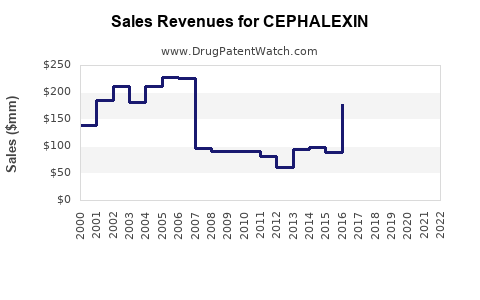
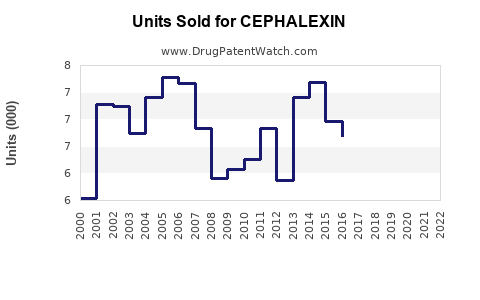
Annual Sales Revenues and Units Sold for CEPHALEXIN
| Drug Name | Revenues (USD) | Units | Year |
|---|---|---|---|
| CEPHALEXIN | ⤷ Start Trial | ⤷ Start Trial | 2022 |
| CEPHALEXIN | ⤷ Start Trial | ⤷ Start Trial | 2021 |
| CEPHALEXIN | ⤷ Start Trial | ⤷ Start Trial | 2020 |
| CEPHALEXIN | ⤷ Start Trial | ⤷ Start Trial | 2019 |
| CEPHALEXIN | ⤷ Start Trial | ⤷ Start Trial | 2018 |
| >Drug Name | >Revenues (USD) | >Units | >Year |
Cephalexin Market Analysis, Sales Projections, Patent Status, and Competitive Outlook
Cephalexin is a mature, low-cost generic cephalosporin with broad global use but limited commercial pricing power. The market is driven by prescription volume, hospital and retail supply contracts, pediatric demand, and local antibiotic guidelines rather than patent exclusivity. U.S. revenue growth is likely to remain limited, with most value captured through manufacturing scale, distribution efficiency, and supply reliability.
A realistic base case is flat-to-low-single-digit annual revenue growth through 2029, supported by stable demand and modest price increases. Volume risk comes from antimicrobial stewardship, generic substitution, resistance concerns, and competition from other oral antibiotics.
What is cephalexin and how is it used?
Cephalexin is a first-generation oral cephalosporin marketed in capsules, tablets, and oral suspension. It is also known by the brand name Keflex. The active ingredient is cephalexin, commonly supplied as cephalexin monohydrate.
The FDA label identifies cephalexin for susceptible bacterial infections involving:
- Respiratory tract infections
- Otitis media
- Skin and skin-structure infections
- Bone infections
- Genitourinary tract infections
Cephalexin is active against several gram-positive organisms, including susceptible strains of Staphylococcus aureus and Streptococcus species. It does not provide reliable coverage against methicillin-resistant Staphylococcus aureus, many enterococci, or organisms producing certain beta-lactamases. Prescribing depends on local resistance patterns and the clinical indication. [1]
Common dosage forms include:
| Dosage form | Typical commercial strength |
|---|---|
| Capsules | 250 mg, 500 mg |
| Tablets | 250 mg, 500 mg, 750 mg |
| Oral suspension | 125 mg/5 mL, 250 mg/5 mL |
| Pediatric liquid | Primarily used where swallowing solid dosage forms is difficult |
The oral suspension segment has strategic value because it serves pediatric patients and creates greater manufacturing and supply-chain complexity than standard capsules.
How large is the cephalexin market?
No single public source reports a fully audited global cephalexin market with consistent measurement of prescription volume, hospital purchases, retail sales, and private-label supply. Public company filings also generally do not disclose cephalexin revenue separately because the product is sold within large generic portfolios.
The market should therefore be analyzed through three commercial layers:
- U.S. retail prescriptions and pharmacy reimbursement.
- Institutional and hospital procurement.
- International branded-generic and tender markets.
The U.S. market is mature and highly genericized. Retail products are commonly dispensed under the generic name, while hospital and pharmacy buyers select among multiple approved suppliers. International markets may retain branded-generic pricing, especially where physicians prescribe by brand or where local manufacturers control distribution.
Estimated commercial structure
| Segment | Commercial profile | Margin outlook |
|---|---|---|
| U.S. generic capsules and tablets | High volume, low price, multiple suppliers | Low |
| U.S. oral suspension | Lower volume, greater production complexity | Low to moderate |
| Hospital procurement | Contract-driven, price-sensitive | Low |
| Branded generics outside the U.S. | More variable pricing and physician loyalty | Moderate in selected markets |
| Government and public tenders | Large volume with aggressive price competition | Low |
| Direct-to-consumer branded sales | Limited relevance | Low |
Cephalexin is commercially important as a portfolio product but is rarely a major standalone growth asset for a large pharmaceutical company.
What are the cephalexin sales projections through 2029?
The most defensible projection is a scenario model rather than a single market-size estimate. Because manufacturers do not consistently report standalone cephalexin revenue, the following model uses an indexed 2024 market value of 100 and separates volume from net price.
Global cephalexin revenue index
| Year | Downside case | Base case | Upside case |
|---|---|---|---|
| 2024 | 100 | 100 | 100 |
| 2025 | 96 | 101 | 104 |
| 2026 | 93 | 102 | 108 |
| 2027 | 90 | 104 | 112 |
| 2028 | 87 | 106 | 116 |
| 2029 | 84 | 108 | 120 |
| 2024-2029 CAGR | -3.4% | 1.6% | 3.7% |
The base case assumes:
- Prescription volume remains broadly stable.
- Generic price erosion is offset by inflation and supply interruptions.
- No major patent event changes market access.
- Pediatric suspension demand remains stable.
- Cephalexin retains a role in uncomplicated skin, urinary, and respiratory infections.
- Antimicrobial stewardship reduces unnecessary prescribing but does not eliminate established indications.
The downside case assumes continued price compression, loss of formulary preference, greater use of alternative agents, and supply-driven substitution. The upside case requires higher international demand, improved tender participation, or supply constraints affecting competitors.
Revenue projection for a hypothetical supplier
A manufacturer with a 5% global share of the addressable cephalexin market could use the following planning framework:
| Year | Base-case revenue index | Implied growth |
|---|---|---|
| 2024 | 100 | - |
| 2025 | 101 | 1.0% |
| 2026 | 102 | 1.0% |
| 2027 | 104 | 2.0% |
| 2028 | 106 | 1.9% |
| 2029 | 108 | 1.9% |
These figures are indices, not reported dollar sales. A company should convert the index into revenue using its own net sales, geographic exposure, dosage-form mix, and customer concentration.
For example, a supplier with $10 million in 2024 net cephalexin revenue would reach approximately $10.8 million in 2029 under the base case. A supplier with $50 million would reach approximately $54 million. The model does not assume a material branded price premium.
When does cephalexin lose exclusivity?
Cephalexin lost meaningful market exclusivity decades ago. The product is not in a current commercial exclusivity phase comparable to a newly approved small molecule.
The original Keflex approval predates the modern generic-drug market. Current commercial access is based primarily on abbreviated new drug applications, legacy approvals, manufacturing compliance, and supply contracts. Generic manufacturers do not generally depend on patent exclusivity to market standard cephalexin capsules, tablets, or suspension.
| Exclusivity category | Current position |
|---|---|
| New chemical entity exclusivity | Expired |
| Orphan-drug exclusivity | Not applicable |
| Pediatric exclusivity | No current product-level market barrier |
| New formulation exclusivity | Not a material market feature for standard products |
| Patent exclusivity | Expired for the core molecule |
| Generic competition | Established and extensive |
What is the Orange Book status of cephalexin?
Cephalexin is an established generic active ingredient with multiple FDA-approved products. The reference product is Keflex, associated with an older NDA approval. Current U.S. competition is primarily through ANDA-approved generic products.
For standard cephalexin products, the commercial market is not protected by a meaningful active patent estate. The Orange Book may contain product-specific information associated with reference-listed products, but standard generic entry is not generally blocked by listed patents.
Important commercial points include:
- Generic applicants typically rely on an ANDA pathway.
- Paragraph IV litigation is not a central current market issue for ordinary cephalexin products.
- A new dosage form, delivery system, or combination product could create separate patent and regulatory questions.
- Manufacturer-specific manufacturing patents or process know-how may not appear in the Orange Book.
- FDA approval does not guarantee uninterrupted commercial supply.
The Orange Book remains relevant for confirming reference-listed products and any product-specific patent or exclusivity information. [2]
Are there Paragraph IV challenges or patent litigation involving cephalexin?
Paragraph IV challenges are not a significant current competitive factor for standard cephalexin capsules, tablets, or oral suspension. The core compound is long off patent, and the market has already undergone extensive generic entry.
Potential litigation risk would be more likely to arise from:
- A proprietary extended-release formulation
- A novel pediatric delivery system
- A fixed-dose combination
- A new indication supported by method-of-use claims
- Manufacturing or crystallization technology
- Trademark or regulatory disputes involving a specific supplier
These risks are product-specific. They should not be confused with patent protection for ordinary cephalexin products.
Settlement agreements are likewise unlikely to determine the timing of generic entry for the core product. There is no meaningful first-generic launch event remaining for standard cephalexin because multiple generic products are already marketed.
What formulations are protected by cephalexin patents?
Standard cephalexin capsules, tablets, and oral suspension are not commercially protected by a current, high-value patent estate comparable to newer oral anti-infective products.
Potentially protectable areas include:
| Technology | Commercial relevance |
|---|---|
| Taste-masked pediatric suspension | Could improve acceptability but faces formulation competition |
| Extended-release tablets | Could support differentiated dosing if clinically valuable |
| Improved powder stability | May reduce manufacturing and storage costs |
| Novel packaging | Could improve reconstitution or shelf life |
| Combination therapy | May create separate patent and regulatory rights |
| Modified particle size or polymorph | May create process or formulation claims |
| Specialty delivery systems | Limited current evidence of broad market adoption |
The main barrier for a new formulation would not be the core cephalexin molecule. It would be clinical differentiation, FDA approval, reimbursement, physician adoption, and the ability to justify a price above low-cost generics.
How does cephalexin compare with competing antibiotics?
Cephalexin competes across several clinical segments rather than against one direct substitute.
| Antibiotic | Relative competitive position |
|---|---|
| Amoxicillin | Strong pediatric and respiratory competitor |
| Amoxicillin/clavulanate | Broader beta-lactamase coverage; often preferred for selected respiratory and bite-related infections |
| Cefdinir | Oral cephalosporin competitor with broader gram-negative positioning |
| Cefuroxime axetil | Oral second-generation cephalosporin used in selected respiratory infections |
| Dicloxacillin | Narrower anti-staphylococcal competitor |
| Trimethoprim/sulfamethoxazole | Alternative for some skin and urinary infections |
| Nitrofurantoin | Important urinary-tract infection competitor |
| Clindamycin | Alternative in selected gram-positive and anaerobic settings |
Cephalexin benefits from physician familiarity, low acquisition cost, broad availability, and pediatric utility. It loses share when clinicians need broader gram-negative coverage, MRSA coverage, anaerobic activity, or an alternative based on local resistance data.
What is the FDA regulatory status of cephalexin?
Cephalexin is an FDA-approved prescription antibacterial. Marketed generic products must comply with the ANDA approval framework and current good manufacturing practice requirements.
Key regulatory risks are operational rather than exclusivity-driven:
- FDA inspection findings
- Shortages of active pharmaceutical ingredient
- Manufacturing deviations
- Dissolution or assay failures
- Suspension stability problems
- Labeling or packaging errors
- Recalls
- Supplier concentration for key raw materials
The FDA’s antimicrobial stewardship policies can reduce inappropriate use, but cephalexin remains available for approved susceptible infections. FDA labeling should be used for current indications, dosage, contraindications, warnings, and renal-dose considerations. [1][3]
What generic entry risks exist for cephalexin manufacturers?
Generic entry is already established, so the principal risk is not initial entry. It is continued price and share erosion.
Commercial risks
A cephalexin manufacturer faces:
- Pharmacy benefit manager reimbursement pressure
- Wholesale price competition
- Hospital tender losses
- Customer concentration
- Product substitution after supply disruption
- FDA compliance events
- Active pharmaceutical ingredient dependence
- Competition from vertically integrated manufacturers
- Low switching costs among buyers
Manufacturing and intellectual-property barriers
Manufacturing scale is more important than patent ownership. A competitive supplier needs:
- Reliable cephalexin API sourcing
- Validated solid-dose manufacturing
- Suspension reconstitution and stability capability
- Packaging suitable for pediatric products
- Sufficient capacity for tender and shortage-driven demand
- FDA-compliant quality systems
- Competitive distribution coverage
Manufacturing know-how can protect margins operationally, but it normally does not create durable market exclusivity. A supplier with lower costs and a better supply record can outperform a supplier with a nominally stronger formulation position.
Which companies are competing in the cephalexin market?
The U.S. cephalexin market includes multiple generic manufacturers and distributors. Participants can change over time as companies enter, exit, transfer approvals, or discontinue products.
The competitive set commonly includes large generic manufacturers such as:
- Hikma Pharmaceuticals
- Viatris
- Sandoz
- Teva Pharmaceutical Industries
- Amneal Pharmaceuticals
- Rising Pharmaceuticals
- Amici Pharmaceuticals
- Major private-label and contract suppliers
The relevant competitor list differs by dosage form and market. A company may have approval for capsules but not oral suspension, or may supply hospitals without maintaining a large retail presence.
What is the revenue exposure of cephalexin?
Cephalexin revenue exposure is usually meaningful at the product-portfolio level but modest at the company level. For most generic manufacturers, the product is a volume contributor rather than a strategic growth engine.
Revenue sensitivity is highest for companies with:
- Concentrated U.S. retail exposure
- High share in pediatric suspension
- Hospital contracts dependent on cephalosporin supply
- Limited diversification across anti-infective products
- A single-source API arrangement
- A branded-generic strategy in emerging markets
A supplier with broad geographic and dosage-form coverage is better positioned than one dependent on U.S. capsule sales. The product’s low unit price also means that earnings are more sensitive to manufacturing utilization and gross margin than to headline prescription growth.
What is the generic launch outlook for cephalexin?
There is no conventional future generic-launch window for the core product. Generic launch activity is more likely to involve:
- New suppliers entering existing dosage forms
- Approval of additional strengths
- Re-entry after discontinuation
- Private-label launches
- Regional branded-generic expansion
- Reformulated pediatric products
A new entrant should expect immediate price competition unless it has a differentiated formulation, reliable shortage supply, a strong hospital contract, or access to an underpenetrated international market.
What is the geographic outlook for cephalexin?
United States
The U.S. market is mature, generic, and price-sensitive. Growth should come mainly from stable demand and occasional supply disruptions. Patent-based pricing power is absent.
Europe
European demand is shaped by national reimbursement systems, antimicrobial stewardship, and country-specific generic procurement. Cephalexin may have a smaller role than in the U.S. in some markets, depending on treatment guidelines and local product availability.
Asia-Pacific
Asia-Pacific offers the strongest volume opportunity because of population size, expanding healthcare access, and established use of branded generics. Pricing varies sharply by country, and regulatory requirements can limit rapid expansion.
Latin America and other emerging markets
Branded generics and physician familiarity can support higher unit prices than in the U.S. However, tender competition, local manufacturing requirements, currency volatility, and distribution fragmentation constrain margins.
How strong is the cephalexin patent estate?
The patent estate for the core cephalexin product is weak from a commercial protection standpoint because the molecule and standard dosage forms are long established.
| Patent-strength factor | Assessment |
|---|---|
| Core molecule protection | Expired |
| Standard capsules and tablets | Low protection |
| Standard oral suspension | Low protection |
| Method-of-use protection | Limited practical value |
| Manufacturing know-how | Potential operational advantage |
| Novel delivery systems | Possible, but product-specific |
| Litigation leverage | Low for ordinary products |
The asset’s strength is clinical familiarity and manufacturing demand, not exclusivity.
Key Takeaways
- Cephalexin is a mature, heavily genericized oral antibiotic.
- Core patent and regulatory exclusivity have expired.
- Standard products face no meaningful patent-based barrier to competition.
- The U.S. market is likely to remain broadly flat, with a base-case global revenue CAGR of about 1.6% through 2029.
- Upside depends on international branded-generics, supply shortages, pediatric suspension demand, and contract wins.
- Downside comes from price erosion, stewardship, resistance concerns, and supplier competition.
- Paragraph IV litigation and settlement agreements are not major current market drivers.
- Manufacturing reliability, API access, FDA compliance, and distribution are more important than patent ownership.
- Cephalexin is generally a stable portfolio product, not a high-growth pharmaceutical asset.
FAQs About Cephalexin Market Sales and Competition
Is cephalexin still a profitable generic drug?
Yes, but profitability depends on manufacturing scale, customer contracts, dosage-form mix, and supply reliability. Standard capsules and tablets generally have low margins.
Does Keflex still have patent protection?
The core Keflex and cephalexin molecule protection expired decades ago. Current market access is not dependent on an active core patent.
Can a company obtain exclusivity for a new cephalexin formulation?
Potentially. A genuinely novel formulation, delivery system, or approved use could qualify for patent protection or limited regulatory exclusivity, subject to claim scope and FDA requirements.
Is cephalexin affected by biosimilar competition?
No. Cephalexin is a small-molecule antibiotic, not a biologic. It competes with generic small-molecule products rather than biosimilars.
What is the main investment risk in cephalexin?
The main risk is margin compression caused by generic competition and procurement pressure. Operational disruptions can also reduce sales, while supply shortages may temporarily increase volume or pricing.
References
- U.S. Food and Drug Administration. (2023). Keflex (cephalexin) prescribing information.
- U.S. Food and Drug Administration. (2024). Approved drug products with therapeutic equivalence evaluations: Orange Book.
- U.S. Food and Drug Administration. (2024). Drugs@FDA: FDA-approved drugs database.
- U.S. Food and Drug Administration. (2023). Antimicrobial stewardship in outpatient settings.
More… ↓
