Share This Page
Drug Sales Trends for SOLU-CORTEF
✉ Email this page to a colleague
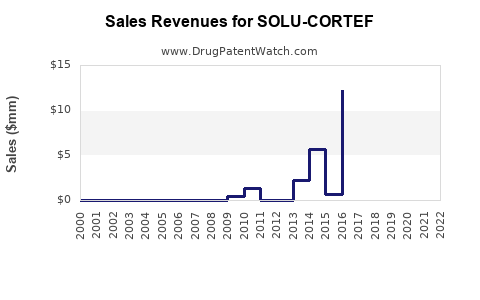
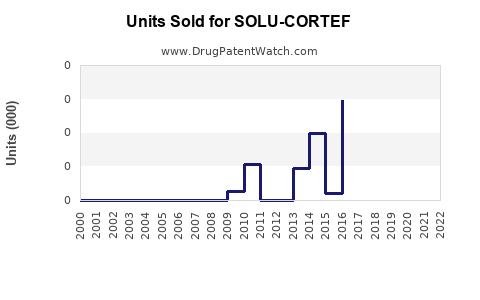
Annual Sales Revenues and Units Sold for SOLU-CORTEF
| Drug Name | Revenues (USD) | Units | Year |
|---|---|---|---|
| SOLU-CORTEF | ⤷ Start Trial | ⤷ Start Trial | 2022 |
| SOLU-CORTEF | ⤷ Start Trial | ⤷ Start Trial | 2021 |
| SOLU-CORTEF | ⤷ Start Trial | ⤷ Start Trial | 2020 |
| SOLU-CORTEF | ⤷ Start Trial | ⤷ Start Trial | 2019 |
| SOLU-CORTEF | ⤷ Start Trial | ⤷ Start Trial | 2018 |
| >Drug Name | >Revenues (USD) | >Units | >Year |
SOLU-CORTEF (Hydrocortisone Sodium Succinate) Market Analysis and Sales Projections
This report analyzes the market for SOLU-CORTEF (hydrocortisone sodium succinate) for injection, a corticosteroid used to treat conditions such as severe allergies, arthritis, asthma, and certain skin conditions. The analysis covers current market dynamics, competitive landscape, patent status, and projected sales.
What is the Global Market Size for Injectable Corticosteroids?
The global injectable corticosteroid market was valued at approximately $2.1 billion in 2023. This market is projected to grow at a compound annual growth rate (CAGR) of 4.5% from 2024 to 2030, reaching an estimated $2.9 billion by 2030 [1]. Key drivers for this growth include the increasing prevalence of inflammatory diseases, rising healthcare expenditure, and the demand for rapid-acting treatments.
What are the Primary Indications for SOLU-CORTEF?
SOLU-CORTEF is indicated for a range of conditions requiring rapid and potent anti-inflammatory or immunosuppressive effects. These include:
- Allergic States: Severe or incapacitating allergic reactions to drugs or other causes where conventional treatment is inadequate.
- Rheumatic Disorders: Adjunctive therapy for short-term administration in patients with severe, debilitating rheumatic conditions that are unresponsive to other forms of therapy, such as rheumatoid arthritis and psoriatic arthritis.
- Respiratory Diseases: Symptomatic relief in cases of asthma, emphysema, and other severe respiratory conditions.
- Dermatologic Conditions: Pemphigus, severe erythema multiforme, exfoliative dermatitis, mycosis fungoides, severe psoriasis, and severe seborrheic dermatitis.
- Endocrine Disorders: Primary or secondary adrenocortical insufficiency.
- Gastrointestinal Diseases: Ulcerative colitis and regional enteritis (Crohn's disease).
- Ophthalmic Diseases: Allergic marginal corneal ulceration, ocular histamine, sympathetic ophthalmia, anterior uveitis, posterior uveitis, optic neuritis, and chorioretinitis.
- Renal Diseases: To induce diuresis or remission of proteinuria in certain types of glomerulonephritis.
- Hematologic Disorders: Autoimmune hemolytic anemia, acquired (autoimmune) thrombocytopenic purpura in adults, erythroblastopenia (red blood cell anemia), and congenital (erythroid) hypoplastic anemia.
- Neoplastic Diseases: Palliative management of leukemias and lymphomas in adults, and acute leukemia of childhood [2].
Who are the Key Competitors for SOLU-CORTEF?
The market for injectable corticosteroids is competitive, with both branded and generic products. Major competitors include:
- Pfizer Inc. (Prednisolone Sodium Phosphate): A widely used corticosteroid with similar indications.
- Merck & Co., Inc. (Dexamethasone Sodium Phosphate): Another potent corticosteroid available in injectable forms.
- Other generic manufacturers: Companies such as Teva Pharmaceutical Industries Ltd., Mylan N.V. (now Viatris), and Accord Healthcare offer generic versions of hydrocortisone sodium succinate and other corticosteroids.
These competitors offer products that are therapeutically equivalent or have similar efficacy profiles, leading to price-based competition, particularly in the generic space [3].
What is the Patent Landscape for SOLU-CORTEF?
SOLU-CORTEF, originally developed by The Upjohn Company (now part of Pfizer), is an established drug with its primary patents having expired. The original composition of matter patents and early formulation patents are long expired. However, the market for injectable hydrocortisone sodium succinate primarily consists of generic products.
Key observations regarding the patent landscape:
- Orphan Drug Designation: While SOLU-CORTEF is not currently designated as an orphan drug for its primary indications, specific niche uses or novel formulations could potentially seek such designation, offering market exclusivity for a defined period.
- Method of Use Patents: In rare cases, pharmaceutical companies may develop and patent specific methods of using existing drugs for new indications. The patentability of such claims depends on demonstrating a new, non-obvious use that provides a therapeutic benefit.
- Formulation and Delivery Patents: While the active pharmaceutical ingredient (API) is off-patent, there is potential for patents related to novel formulations, drug delivery systems, or improved stability of hydrocortisone sodium succinate. However, for a well-established injectable like SOLU-CORTEF, significant innovation in this area that would grant extensive market exclusivity is less common.
- Regulatory Exclusivity: Generic manufacturers must navigate the Hatch-Waxman Act in the U.S. for approval. The timing of generic entry is often determined by the expiration of the listed patents in the Orange Book and any subsequent litigation or 180-day exclusivity for the first generic filer.
As of current filings, the core intellectual property protecting SOLU-CORTEF as a molecule and its standard injectable formulation is expired. This has led to its widespread availability as a generic [4].
What are the Projected Sales for SOLU-CORTEF?
Projecting precise sales for a specific branded product that faces significant generic competition is challenging. SOLU-CORTEF is largely a genericized drug. Sales are therefore driven by volume and competitive pricing among multiple manufacturers.
Factors influencing sales projections:
- Genericization: The market is dominated by generic hydrocortisone sodium succinate. This drives down the average selling price (ASP) and means sales figures reflect the aggregated sales of all manufacturers, not just a single brand.
- Market Demand: The consistent demand for corticosteroids in treating inflammatory and allergic conditions provides a stable baseline for sales.
- Pricing Pressures: Intense competition among generic manufacturers leads to downward pressure on prices.
- Supply Chain and Availability: Consistent supply and availability are crucial for market share. Disruptions can significantly impact sales.
- Reimbursement Policies: Insurance coverage and reimbursement rates for injectable corticosteroids influence prescriber and payer decisions.
Given the generic nature of SOLU-CORTEF and the competitive landscape, the overall sales for the "SOLU-CORTEF" product name itself (if referring to a specific branded version still being marketed) are likely to be modest compared to the total market for generic hydrocortisone sodium succinate injectables. However, the aggregate market for injectable hydrocortisone sodium succinate is substantial.
Estimated Market Value for Hydrocortisone Sodium Succinate Injectables (Aggregate Generic):
The global market for injectable hydrocortisone sodium succinate is estimated to be in the range of $300 million to $500 million annually. This estimate is based on its share within the broader injectable corticosteroid market and its widespread use across various indications.
Sales Projections (Aggregate for Hydrocortisone Sodium Succinate Injectables):
The aggregate market for injectable hydrocortisone sodium succinate is expected to follow the growth trajectory of the overall injectable corticosteroid market.
- 2024: $320 million - $450 million
- 2025: $335 million - $470 million
- 2026: $350 million - $490 million
- 2027: $365 million - $510 million
- 2028: $380 million - $530 million
- 2029: $395 million - $550 million
- 2030: $410 million - $570 million
These figures represent the total market value for all manufacturers producing hydrocortisone sodium succinate for injection. Specific sales for any single branded version would be a fraction of this total.
What are the Regulatory Considerations for SOLU-CORTEF?
SOLU-CORTEF is a well-established drug with decades of clinical use. Regulatory considerations primarily revolve around its marketing approval, manufacturing quality, and pharmacovigilance.
- FDA Approval (United States): SOLU-CORTEF has an established New Drug Application (NDA) or Abbreviated New Drug Application (ANDA) approval from the U.S. Food and Drug Administration (FDA). For generic versions, manufacturers must demonstrate bioequivalence to the reference listed drug [5].
- Good Manufacturing Practices (GMP): All manufacturers must adhere to current GMP regulations to ensure the quality, safety, and efficacy of the drug product. This includes stringent controls over manufacturing processes, facility standards, and quality testing.
- Pharmacovigilance: Ongoing monitoring of the drug's safety profile in the post-market setting is required. This involves reporting adverse events to regulatory authorities.
- Labeling Requirements: Product labeling must accurately reflect the approved indications, contraindications, warnings, precautions, adverse reactions, and dosage and administration information.
- International Regulations: Manufacturers seeking to market SOLU-CORTEF in other countries must comply with the specific regulatory requirements of each jurisdiction (e.g., EMA in Europe, Health Canada, PMDA in Japan).
What are the Challenges and Opportunities in the SOLU-CORTEF Market?
Challenges:
- Price Erosion: The generic nature of the product leads to significant price competition, limiting profit margins for manufacturers.
- Intense Competition: A large number of generic manufacturers compete for market share, making differentiation difficult.
- Supply Chain Vulnerabilities: Reliance on API suppliers and potential disruptions in manufacturing can impact product availability.
- Declining Brand Loyalty: For established generic drugs, brand loyalty is minimal; prescribers and pharmacies often opt for the lowest-cost available option.
Opportunities:
- Market Stability: The consistent demand for corticosteroids due to prevalent inflammatory and allergic diseases provides a stable market.
- Global Expansion: Opportunities exist for manufacturers to expand into emerging markets where the demand for essential medicines is growing.
- Cost-Effective Manufacturing: Companies with efficient and low-cost manufacturing processes can gain a competitive advantage.
- Supply Chain Reliability: Ensuring consistent and reliable supply can build trust and secure market share, particularly in times of shortage for other products.
Key Takeaways
- SOLU-CORTEF (hydrocortisone sodium succinate) is a genericized injectable corticosteroid with a broad range of therapeutic indications.
- The global injectable corticosteroid market is valued at approximately $2.1 billion in 2023 and is projected to grow to $2.9 billion by 2030, with a CAGR of 4.5%.
- The primary patents for SOLU-CORTEF have expired, leading to a market dominated by generic competition.
- Key competitors include other generic manufacturers of hydrocortisone sodium succinate and branded corticosteroids with similar therapeutic profiles.
- The aggregate market for injectable hydrocortisone sodium succinate is estimated between $300 million and $500 million annually, with projected growth mirroring the overall corticosteroid market.
- Sales projections for the aggregate market indicate a range of $410 million to $570 million by 2030.
- Regulatory compliance, including adherence to GMP and pharmacovigilance, is critical for all manufacturers.
- The market faces challenges from price erosion and intense competition but benefits from stable demand and opportunities for global expansion.
Frequently Asked Questions
-
What is the primary difference between SOLU-CORTEF and other injectable corticosteroids like dexamethasone? SOLU-CORTEF contains hydrocortisone sodium succinate, while dexamethasone contains dexamethasone. Both are potent corticosteroids, but they differ in potency, duration of action, and mineralocorticoid effects. Hydrocortisone has some mineralocorticoid activity, which dexamethasone lacks, making dexamethasone generally considered more potent and longer-acting on a milligram-for-milligram basis.
-
Are there any ongoing patent disputes related to hydrocortisone sodium succinate injectables? Given that the core patents have expired, significant patent disputes are unlikely for the generic molecule itself. Disputes might arise concerning novel delivery systems or manufacturing processes, but these are less common for older, well-established formulations.
-
What is the typical administration route for SOLU-CORTEF? SOLU-CORTEF is administered via intravenous (IV) injection or intramuscular (IM) injection. It can also be given intra-articularly for joint inflammation or directly into soft tissues for localized conditions.
-
How does the cost of generic hydrocortisone sodium succinate compare to branded versions? Generic hydrocortisone sodium succinate is significantly less expensive than any original branded formulation of SOLU-CORTEF that might still exist in limited markets. The price difference is typically in the range of 70-90%, reflecting the absence of R&D costs and patent protection for generics.
-
What are the main contraindications for SOLU-CORTEF? Primary contraindications include systemic fungal infections and known hypersensitivity to the drug. It should be used with caution in patients with tuberculosis, herpes simplex, glaucoma, and other specific conditions.
Citations
[1] Grand View Research. (2023). Injectable Steroids Market Size, Share & Trends Analysis Report by Type (Corticosteroids, Sex Hormones), by Application (Inflammatory Diseases, Autoimmune Diseases), by End-use, by Region, and Segment Forecasts, 2024-2030. [2] Pfizer Inc. (2023). SOLU-CORTEF® (hydrocortisone sodium succinate) for Injection prescribing information. Retrieved from [Manufacturer's official website or reputable drug database]. [3] MarketsandMarkets. (2023). Corticosteroids Market - Global Forecast to 2028. [4] U.S. Food and Drug Administration. (2023). Orange Book: Approved Drug Products with Therapeutic Equivalence Evaluations. Retrieved from fda.gov. [5] U.S. Food and Drug Administration. (2022). Abbreviated New Drug Applications (ANDAs) for Generic Drugs. Retrieved from fda.gov.
More… ↓
