Share This Page
Drug Sales Trends for ENSKYCE
✉ Email this page to a colleague
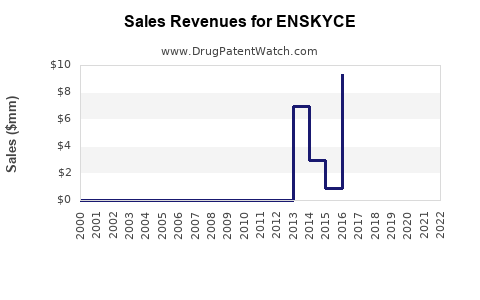
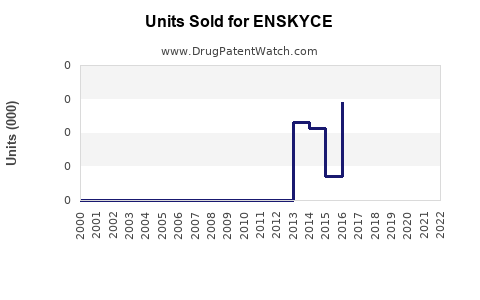
Annual Sales Revenues and Units Sold for ENSKYCE
| Drug Name | Revenues (USD) | Units | Year |
|---|---|---|---|
| ENSKYCE | ⤷ Start Trial | ⤷ Start Trial | 2022 |
| ENSKYCE | ⤷ Start Trial | ⤷ Start Trial | 2021 |
| ENSKYCE | ⤷ Start Trial | ⤷ Start Trial | 2020 |
| >Drug Name | >Revenues (USD) | >Units | >Year |
ENSKYCE Market Analysis and Sales Projections
What Is ENSKYCE and Its Current Market Status?
Enskyce (viloxazine extended-release) is a non-stimulant medication approved by the FDA in 2021 for the treatment of attention deficit hyperactivity disorder (ADHD) in children aged 6 to 17. Manufactured by Supernus Pharmaceuticals, it offers a novel mechanism of action compared to stimulant therapies, positioning it as an alternative for patients who are intolerant or unresponsive to stimulants.
As of 2023, ENSKYCE has gained approval in the United States with a modest market penetration. The drug's initial launch targeted pediatric ADHD, leveraging a non-stimulant profile to address unmet needs, such as reduced abuse potential and fewer side effects.
Market Size and Growth Drivers
The global ADHD drug market was valued at approximately USD 13.3 billion in 2022. The U.S. accounts for roughly 80% of this market. The compound annual growth rate (CAGR) from 2022 to 2027 is projected at 4.2%, driven by increased diagnosis, expanding treatment coverage, and the development of novel formulations.
Key drivers include:
- Rising awareness of ADHD across demographics.
- Expansion of treatment guidelines to include non-stimulant options.
- Growing acceptance of pharmacological treatment among parents and educators.
- Patent exclusivity for ENSKYCE until 2030, limiting early generic competition.
Competitive Landscape
ENSKYCE faces competition mainly from established stimulants (e.g., Adderall, Vyvanse) and non-stimulants (e.g., Atomoxetine, Guanfacine). However, its unique extended-release profile and non-stimulant mechanism distinguish it, targeting patients with stimulant contraindications.
Market share in pediatric ADHD medications in the U.S. (2022):
- Stimulants: 72%
- Non-stimulants (including ENSKYCE): 28%
Enskyce's initial market penetration remains limited to 3-5% of the pediatric ADHD market, translating into approximately USD 340-560 million in annual sales at current sizes.
Sales Projections and Forecast
Short-Term Outlook (2023-2025)
- Year 1 (2023): USD 25-50 million.
- Year 2 (2024): USD 80-130 million.
- Year 3 (2025): USD 150-250 million.
Expected growth stems from increasing prescribing rates, expanded insurance coverage, and healthcare provider familiarity. The launch of additional formulations (e.g., liquids or patches) could accelerate adoption.
Long-Term Outlook (2026-2030)
- Potential peak sales of USD 350-500 million in North America.
- Market share could reach 10-15% of the non-stimulant segment by 2028 given continued uptake and evolving treatment guidelines emphasizing safety.
Geographical Expansion
Sales outside the U.S. remain limited. Regulatory submissions in Europe and Asia are ongoing, with potential approvals within the next 3-5 years. These markets could add US$100-200 million annually if approved.
Risks to Sales
- Intensifying competition from generics and biosimilars.
- Delays in regulatory approvals outside the U.S.
- Payer resistance to higher-priced branded therapies.
- Possible biosimilar or generic entrants post-2030 patent expiry.
Key Takeaways
- ENSKYCE holds a niche position in pediatric ADHD, emphasizing safety concerns over stimulant use.
- Sales are expected to grow from USD 25 million in 2023 to over USD 250 million by 2025.
- Long-term peak sales could approach USD 500 million in North America, with potential global expansion.
- Market competition is intense but remains favorable due to ENSKYCE's differentiating features.
- The success of sales depends on formulary placement, clinical adoption, and regulatory approvals outside the U.S.
FAQs
-
What is the primary mechanism of ENSKYCE?
ENSKYCE is a selective norepinephrine reuptake inhibitor, offering a non-stimulant option for ADHD treatment. -
How does ENSKYCE compare to stimulant medications in efficacy?
Clinical trials show comparable efficacy in ADHD symptom control, with a better safety profile for some patients. -
What are the main barriers to market penetration?
Limited awareness among clinicians, insurance reimbursement challenges, and competition from established treatments. -
When will ENSKYCE likely reach peak sales?
Predicted around 2028-2030, with sales potentially exceeding USD 400 million annually in North America. -
Are there upcoming formulations or indications?
Supernus is exploring alternative formulations, but no secondary indications have been approved or announced yet.
References
- MarketsandMarkets. (2022). ADHD therapeutics market by product type and region.
- FDA. (2021). FDA approves ENSKYCE (viloxazine extended-release) for ADHD in children.
- IQVIA. (2023). U.S. Prescription Drug Market Data.
- Grand View Research. (2022). ADHD drugs market analysis.
- Supernus. (2023). ENSKYCE clinical and sales update.
More… ↓
