Share This Page
Drug Sales Trends for DILAUDID
✉ Email this page to a colleague
Payment Methods and Pharmacy Types for DILAUDID (2001)
Revenues by Pharmacy Type
Units Sold by Pharmacy Type
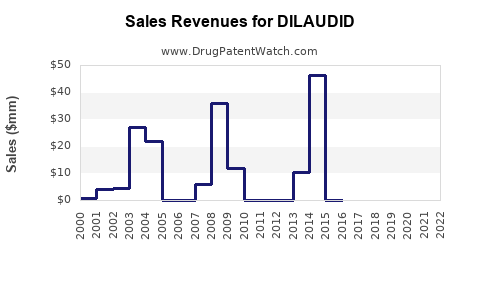
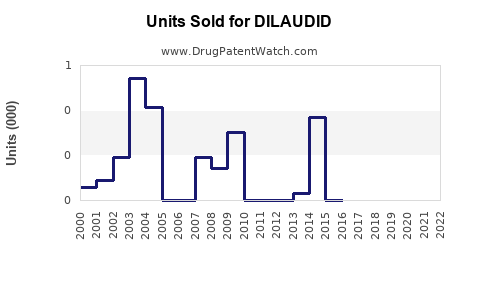
Annual Sales Revenues and Units Sold for DILAUDID
| Drug Name | Revenues (USD) | Units | Year |
|---|---|---|---|
| DILAUDID | ⤷ Start Trial | ⤷ Start Trial | 2022 |
| DILAUDID | ⤷ Start Trial | ⤷ Start Trial | 2021 |
| DILAUDID | ⤷ Start Trial | ⤷ Start Trial | 2020 |
| DILAUDID | ⤷ Start Trial | ⤷ Start Trial | 2019 |
| DILAUDID | ⤷ Start Trial | ⤷ Start Trial | 2018 |
| DILAUDID | ⤷ Start Trial | ⤷ Start Trial | 2017 |
| DILAUDID | ⤷ Start Trial | ⤷ Start Trial | 2016 |
| >Drug Name | >Revenues (USD) | >Units | >Year |
Dilaudid Market Analysis, Sales Projections, Patent Status, and Generic Competition
Dilaudid, the brand name for hydromorphone hydrochloride, is a mature opioid marketed primarily through generic injectable, tablet, and oral-solution products. Its commercial value is concentrated in hospital and institutional use, not branded retail prescriptions. The U.S. market has low patent risk, extensive generic competition, and demand driven by acute pain, postoperative care, oncology, palliative care, and opioid-tolerant patients.
A reasonable base-case forecast is for relatively stable U.S. hydromorphone demand through 2029, with nominal market growth of approximately 2% to 4% annually. Revenue growth will depend more on injectable supply, contract pricing, shortages, and hospital purchasing than on branded price increases.
What is Dilaudid and who markets hydromorphone?
Dilaudid is hydromorphone hydrochloride, a potent semisynthetic opioid analgesic. FDA-approved dosage forms include injections, tablets, and oral solutions. Hydromorphone is substantially more potent than morphine and is used when rapid analgesia or an alternative opioid is clinically appropriate.[1]
The commercial market has separated into two segments:
| Segment | Main products | Primary customers | Commercial profile |
|---|---|---|---|
| Injectable hydromorphone | 1 mg/mL, 2 mg/mL, 4 mg/mL, and higher concentrations | Hospitals, surgery centers, emergency departments | Highest strategic value; supply-sensitive |
| Oral tablets | 2 mg, 4 mg, and 8 mg strengths | Hospitals, pharmacies, long-term-care providers | Mature generic market |
| Oral solution | Concentrated and lower-strength solutions | Hospitals, palliative-care providers, specialty pharmacies | Smaller volume; administration flexibility |
| Branded Dilaudid | Brand or authorized generic products, where available | Institutional and specialty channels | Limited branded premium |
U.S. hydromorphone products are supplied by multiple generic manufacturers, including Hikma Pharmaceuticals, Pfizer’s Hospira business, Fresenius Kabi, Hikma’s West-Ward operations, and other FDA-approved manufacturers depending on product, strength, and presentation. Product availability varies by National Drug Code and purchasing contract.
Dilaudid sales should not be confused with total hydromorphone sales. Public-company filings generally report hospital injectables or generic pharmaceuticals at portfolio level rather than disclosing revenue for one legacy molecule.
How large is the Dilaudid and hydromorphone market?
The addressable market is best measured through hydromorphone product sales rather than the Dilaudid brand. The brand itself has limited pricing power because physicians and hospitals can substitute among therapeutically equivalent generic products.
An analyst scenario for U.S. manufacturer net sales is:
| Year | Bear case | Base case | Bull case |
|---|---|---|---|
| 2024 | $110 million | $145 million | $185 million |
| 2025 | $105 million | $149 million | $194 million |
| 2026 | $103 million | $154 million | $204 million |
| 2027 | $101 million | $159 million | $214 million |
| 2028 | $100 million | $164 million | $225 million |
| 2029 | $98 million | $169 million | $237 million |
These figures represent modeled U.S. manufacturer revenue for injectable and oral hydromorphone products, not audited Dilaudid-branded sales. The base case assumes:
- Stable or modestly declining opioid utilization in outpatient care.
- Continued institutional demand for injectable hydromorphone.
- Annual price increases near inflation for constrained presentations.
- Periodic shortages affecting product allocation.
- Continued generic substitution.
- No major withdrawal of a leading injectable supplier.
The bear case assumes improved supply, lower contract pricing, and further substitution by morphine, fentanyl, oxycodone, and non-opioid analgesics. The bull case assumes recurring injectable shortages, higher hospital acquisition prices, and greater use in complex acute-care settings.
What drives hydromorphone sales?
Hospital injectable demand
Injectable hydromorphone is the most commercially important part of the market. Hospitals use it in postoperative pain, emergency medicine, intensive care, cancer care, and palliative care. The product is also used where oral administration is impractical or where a rapid onset is required.
Hospital purchasing organizations exert substantial pricing pressure. A manufacturer with reliable supply, multiple vial sizes, and a strong group-purchasing-organization position can gain share without owning a meaningful brand premium.
Opioid-prescribing controls
Hydromorphone is a Schedule II controlled substance in the United States. Federal and state prescribing restrictions, opioid stewardship programs, electronic prescribing controls, and hospital formularies limit volume growth.[2]
The restrictions affect outpatient tablets more than inpatient injections. Hospitals continue to require parenteral opioids for acute clinical situations, but protocols often favor multimodal analgesia and lower opioid exposure.
Product shortages
Shortages can produce temporary revenue increases for manufacturers that maintain supply. The effect is strongest for injectable products because sterile manufacturing capacity is concentrated and production interruptions can affect several competing suppliers simultaneously.
Shortage-driven sales are difficult to sustain. Hospitals may qualify alternative suppliers, revise formularies, or shift to morphine and fentanyl when hydromorphone supply improves.
Substitution by other opioids
Hydromorphone competes with:
- Morphine injection and tablets.
- Fentanyl injection and transdermal products.
- Oxycodone tablets and oral solutions.
- Oxymorphone in limited settings.
- Methadone for selected chronic-pain and oncology uses.
- Non-opioid agents, including acetaminophen, NSAIDs, ketamine, and regional anesthesia.
Morphine generally has the broadest hospital use and lowest cost. Fentanyl has advantages in anesthesia and rapid titration. Hydromorphone retains demand because of potency, dosing familiarity, and use in patients who require an alternative to morphine.
What is the FDA regulatory status of Dilaudid?
Dilaudid and generic hydromorphone products are approved prescription products under FDA drug applications. The immediate-release tablets, oral solutions, and injections are conventional small-molecule products, not biologics. Biosimilar risk is therefore not relevant.
FDA labeling identifies hydromorphone as an opioid agonist indicated for pain severe enough to require an opioid analgesic when alternative treatments are inadequate.[1] The products carry boxed warnings addressing addiction, abuse, misuse, life-threatening respiratory depression, neonatal opioid withdrawal, and risks from benzodiazepine or central nervous system depressant combinations.
The main regulatory risks are:
- Manufacturing controls for sterile injectable products.
- Particulate contamination and container-closure issues.
- Controlled-substance recordkeeping.
- Labeling compliance.
- Product shortages.
- Opioid quota and distribution controls.
- Diversion and suspicious-order monitoring.
What patents protect Dilaudid?
Dilaudid is a legacy product, and the core hydromorphone compound is long off patent. No meaningful U.S. composition-of-matter exclusivity remains for ordinary hydromorphone hydrochloride products.
| Patent category | Current commercial significance |
|---|---|
| Core hydromorphone compound | Expired; no practical barrier to generic entry |
| Conventional immediate-release tablets | Generally expired or not commercially relevant |
| Injectable hydromorphone | No core patent barrier to approved generic competition |
| Oral solution | No material patent barrier for conventional products |
| Abuse-deterrent or extended-release formulations | Could have separate patents, but these do not protect ordinary Dilaudid products |
| Method-of-use patents | Limited practical impact on standard hydromorphone products |
The Orange Book is the principal FDA source for listed patents and exclusivity information.[3] Conventional hydromorphone products should be analyzed by application number and dosage form rather than by the Dilaudid name alone. A formulation-specific product could have a separate patent estate even when the conventional product is fully genericized.
What is the Orange Book status of Dilaudid?
The Orange Book framework applies to FDA-approved prescription drug products, including listed hydromorphone products. For a conventional, immediate-release hydromorphone product, the commercial expectation is:
- No remaining new-drug exclusivity.
- No meaningful barrier from the original Dilaudid patents.
- Multiple abbreviated new drug applications.
- High substitution pressure.
- Product-specific patent listings that must be checked by application number.
Paragraph IV litigation is not a central current risk for the legacy Dilaudid franchise. Paragraph IV certifications are most relevant when a generic applicant challenges an unexpired listed patent. Since hydromorphone’s foundational protection expired long ago, current competition is more likely to involve ANDA approval, manufacturing capacity, and commercial contracting than a major patent dispute.
Which companies compete with Dilaudid?
Competition is divided between hydromorphone suppliers and alternative analgesic manufacturers.
Hydromorphone suppliers
The competitive set can include:
- Hikma Pharmaceuticals.
- Pfizer and Hospira.
- Fresenius Kabi.
- Other ANDA holders and contract manufacturers.
- Institutional suppliers using private-label or authorized-generic arrangements.
Market share changes by strength, vial size, channel, and supply status. A company can have a strong position in 1 mg/mL injection while holding little share in tablets.
Alternative analgesics
Morphine remains the principal price competitor. Fentanyl is a major clinical substitute in anesthesia and intensive care. Oxycodone competes primarily in oral outpatient and discharge prescribing. Non-opioid therapies reduce the overall addressable volume for all opioid products.
What litigation and settlement risks affect Dilaudid?
No major active patent litigation is central to the mature hydromorphone market based on the product’s long commercial history and generic availability. The more material legal exposures are:
- Opioid marketing and distribution litigation.
- Controlled-substance compliance investigations.
- Product-liability claims.
- Manufacturing and quality disputes.
- Contract and supply litigation involving hospitals or distributors.
- Government claims related to opioid distribution practices.
Settlement agreements involving legacy opioid manufacturers can affect corporate cash flow and compliance obligations, but they generally do not restore Dilaudid exclusivity or prevent generic hydromorphone competition.
When does Dilaudid lose exclusivity?
Dilaudid’s core exclusivity has already expired. The relevant commercial event was generic entry, not a future loss-of-exclusivity date.
For revenue forecasting, the practical exclusivity timeline is:
| Period | Market condition |
|---|---|
| Original launch period | Branded product protected by regulatory and patent rights |
| Generic-entry period | ANDA-approved hydromorphone products entered the market |
| Current market | Mature generic competition with limited brand premium |
| 2025-2029 | No expected return of core exclusivity; competition determined by supply and contracting |
A newly developed extended-release, abuse-deterrent, implantable, or combination hydromorphone product could have separate patent and regulatory protection. That would be a new product opportunity, not restored exclusivity for conventional Dilaudid.
What are the generic launch scenarios for hydromorphone?
Base-case scenario
Generic suppliers maintain multiple sources, hospitals continue normal purchasing, and the market grows at approximately 2% to 4% annually in nominal terms. Injectable products produce most of the revenue, while oral tablets remain price-competitive.
Downside scenario
A large manufacturer restores supply after a shortage, hospital contracts reset at lower prices, and opioid stewardship reduces utilization. Revenue declines by approximately 2% to 4% annually.
Upside scenario
Sterile injectable interruptions recur, one or more suppliers exit low-margin presentations, and hospitals accept higher acquisition prices. Revenue grows 6% to 9% annually for a limited period.
How strong is the Dilaudid patent estate?
The patent estate is weak as a barrier to conventional generic competition. Its strategic value is minimal for ordinary hydromorphone tablets, oral solution, and injection.
Commercial strength should instead be assessed through:
- FDA-approved manufacturing capacity.
- Sterile-fill reliability.
- Controlled-substance quotas.
- Hospital contracts.
- Distribution reach.
- Shortage-management capability.
- Product breadth across strengths and vial sizes.
- Quality history and regulatory compliance.
For investors and licensors, manufacturing and supply-chain assets are more defensible than the legacy Dilaudid brand.
What licensing deals affect Dilaudid?
Publicly disclosed licensing activity is limited for conventional Dilaudid products. The product has moved through legacy branded and generic commercial arrangements rather than a current high-value innovation licensing model.
Potential deal structures include:
- Authorized-generic supply agreements.
- Hospital distribution contracts.
- Private-label injectable arrangements.
- Contract manufacturing.
- Regional commercialization rights.
- Specialty-palliative-care distribution partnerships.
Deal economics are likely to be governed by volume, guaranteed supply, sterile manufacturing capacity, and hospital access rather than royalty-bearing patent exclusivity.
Key Takeaways
- Dilaudid is the legacy brand for hydromorphone hydrochloride.
- The commercial market is now primarily generic and institutional.
- Injectable hydromorphone is more valuable than oral tablets because sterile supply is constrained.
- Core patent and regulatory exclusivity have expired.
- Paragraph IV litigation and biosimilar risk are not major current threats.
- Revenue is driven by hospital contracts, shortages, supply reliability, and opioid-utilization trends.
- A modeled U.S. hydromorphone market base case rises from approximately $145 million in 2024 to $169 million in 2029.
- The strongest competitive assets are manufacturing, distribution, and shortage resilience.
- Branded Dilaudid sales should not be used as a proxy for total hydromorphone market revenue.
FAQs
Is Dilaudid still sold as a brand-name drug?
Dilaudid may remain available in certain channels or product configurations, but most U.S. hydromorphone volume is supplied through generic products. Brand-specific availability varies by dosage form, manufacturer, and distributor.
Is hydromorphone more profitable than morphine?
Hydromorphone can generate higher revenue per unit because of potency and specialized use, but morphine generally has broader volume and lower acquisition cost. Profitability depends on injectable supply, hospital contracts, and manufacturing cost.
Can a generic company still challenge Dilaudid patents?
A generic company can file an ANDA and make applicable patent certifications, but the original Dilaudid exclusivity has expired. Any current patent dispute would more likely involve a specific formulation, presentation, or newly developed delivery system.
Does Dilaudid have an abuse-deterrent version?
Conventional Dilaudid products are not equivalent to a separately developed abuse-deterrent formulation. Any abuse-deterrent hydromorphone product would require its own FDA approval, clinical or abuse-deterrence support, and potentially separate patent protection.
What is the main investment risk in the hydromorphone market?
The main risks are low generic pricing, hospital purchasing concentration, opioid-use restrictions, sterile manufacturing failures, regulatory action, and substitution by morphine, fentanyl, and non-opioid analgesics.
References
- U.S. Food and Drug Administration. (2023). Dilaudid hydromorphone hydrochloride injection prescribing information. FDA.
- U.S. Drug Enforcement Administration. (2024). Drug scheduling. U.S. Department of Justice.
- U.S. Food and Drug Administration. (2024). Approved drug products with therapeutic equivalence evaluations: Orange Book. FDA.
- Centers for Disease Control and Prevention. (2022). CDC clinical practice guideline for prescribing opioids for pain. U.S. Department of Health and Human Services.
- Hikma Pharmaceuticals PLC. (2024). Annual report and accounts 2023. Hikma Pharmaceuticals.
More… ↓
