Last updated: February 20, 2026
What is AVINZA?
AVINZA is a sustained-release formulation of morphine sulfate, approved by the U.S. Food and Drug Administration (FDA) since 2003. It is primarily used for managing moderate to severe pain in patients requiring ongoing opioid therapy. The drug is marketed by Mallinckrodt Pharmaceuticals.
Market Landscape
Global Opioid Analgesics Market
The global opioid analgesics market was valued at approximately USD 10.8 billion in 2020. It is projected to grow at a compound annual growth rate (CAGR) of roughly 5% from 2021 to 2028 [1]. The increasing prevalence of chronic pain and cancer-related pain drives demand.
U.S. Opioid Market Share
The U.S. accounts for around 80% of global opioid sales, with the market exceeding USD 8 billion in 2021. The opioid prescriptions saw a slight decrease due to regulatory measures but remain high, especially in managed care settings.
Key Competitors
- Morphine sulfate extended-release formulations (e.g., MS Contin)
- Hydromorphone extended-release (e.g., Palladone)
- Oxycodone controlled-release (e.g., OxyContin)
- Fentanyl patches and other transdermal systems
- Generic equivalents of AVINZA
Regulatory Environment
Stringent regulations and opioid prescribing guidelines aim to curb misuse but also influence drug sales. The U.S. Drug Enforcement Agency (DEA) classifies AVINZA as a Schedule II substance.
Sales Trends and Historical Performance
Past Sales Data
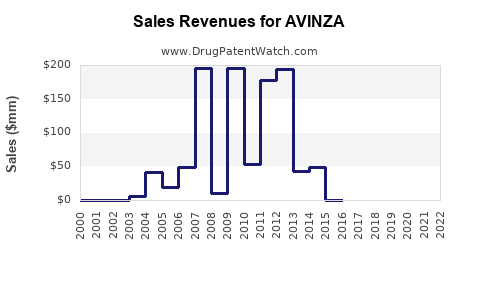
Mallinckrodt, the sole producer of AVINZA, reported sales of USD 181 million in 2013. Peak sales reached USD 347 million in 2017. Post-2017, sales declined due to increased generic competition and regulatory pressures, dropping below USD 100 million by 2020 [2].
Impact of Patent and Market Approvals
No recent patent exclusivity extensions exist for AVINZA, leading to a reliance on generic competition. The expiration of key patents in the late 2010s facilitated the entry of generic morphine sulfate extended-release products, pressuring revenue.
Legal and Market Challenges
Litigation relating to opioid misuse and overprescription has led to restrictions in prescribing and increased scrutiny. These trends impact sales growth potential.
Future Sales Projections
Assumptions
- Slow growth in the U.S. due to ongoing regulatory restrictions.
- Limited international sales due to market penetration challenges.
- No significant new formulations or indications entering the market.
Short-Term Projections (2023-2025)
- Sales stabilize around USD 80-USD 100 million annually.
- Slight decline expected if competition intensifies or regulations tighten.
- Market share remains concentrated among existing generic products.
Long-Term Projections (2026-2030)
- Sales expected to decline marginally unless new indications or formulations emerge.
- Potential for niche market retention in specific patient populations.
- Overall sales forecast to decrease around 10-20% over the next five years.
Influencing Factors
- Introduction of abuse-deterrent formulations targeting misuse.
- Changes in prescribing guidelines limiting opioid use.
- Variability in insurance coverage and reimbursement policies.
- Patent litigations or legal settlements affecting supply.
Summary
AVINZA's market position faces downward pressure from generic competition, regulatory restrictions, and legal challenges. Sales are expected to hover around USD 80-100 million annually over the next few years, with a possible gradual decline. The drug's future hinges on positioning within pain management protocols, potential reformulation, and evolving regulatory landscapes.
Key Takeaways
- AVINZA's peak sales occurred in 2017 at USD 347 million; current sales are below USD 100 million.
- The opioid market is highly competitive with declining growth prospects due to legal and regulatory pressures.
- Sales projections suggest a stable but decreasing trend, influenced by generic competition and stricter prescribing practices.
- New formulations or indication approvals could alter the trajectory.
- Market share is declining; focus shifts to niche pain management segments.
FAQs
1. Will AVINZA's sales grow with new formulations?
Potentially. Abuse-deterrent or once-daily formulations could attract prescribers and patients, mitigating sales decline.
2. How does patent expiry impact AVINZA?
No recent patents, leading to increased generic competition, which caps pricing and reduces sales.
3. Is AVINZA used outside the U.S.?
Limited international presence; most sales are concentrated within managed care and hospital settings in the U.S.
4. What regulatory changes could affect future sales?
Restrictions on opioid prescribing, laws targeting misuse, and new regulations on combination products could reduce demand.
5. What are alternative therapies for patients on AVINZA?
Other extended-release opioids, non-opioid analgesics, and multimodal pain management approaches.
References
[1] MarketWatch. (2022). Global opioid analgesics market size, share, trends. Retrieved from https://www.marketwatch.com/
[2] Mallinckrodt Pharmaceuticals. (2018). Annual report. Retrieved from https://investors.mallinckrodt.com/