Share This Page
Drug Sales Trends for DORZOLAMIDE
✉ Email this page to a colleague
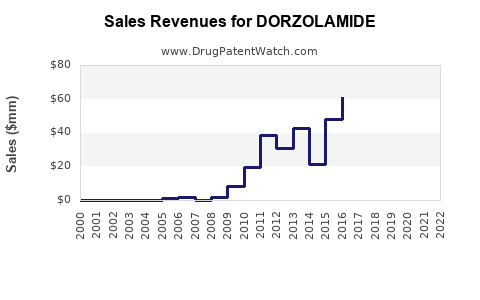
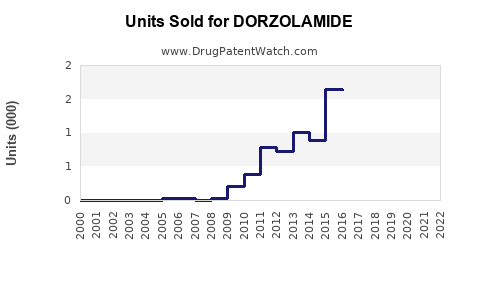
Annual Sales Revenues and Units Sold for DORZOLAMIDE
| Drug Name | Revenues (USD) | Units | Year |
|---|---|---|---|
| DORZOLAMIDE | ⤷ Start Trial | ⤷ Start Trial | 2022 |
| DORZOLAMIDE | ⤷ Start Trial | ⤷ Start Trial | 2021 |
| DORZOLAMIDE | ⤷ Start Trial | ⤷ Start Trial | 2020 |
| DORZOLAMIDE | ⤷ Start Trial | ⤷ Start Trial | 2019 |
| DORZOLAMIDE | ⤷ Start Trial | ⤷ Start Trial | 2018 |
| DORZOLAMIDE | ⤷ Start Trial | ⤷ Start Trial | 2017 |
| >Drug Name | >Revenues (USD) | >Units | >Year |
Dorzolamide Market Analysis, Sales Forecast, Patent Status, and Competitive Outlook
Dorzolamide is a mature generic ophthalmic carbonic anhydrase inhibitor used primarily to reduce intraocular pressure in glaucoma and ocular hypertension. The U.S. market is largely generic, with limited pricing power and no meaningful remaining originator exclusivity. Commercial value is concentrated in dorzolamide/timolol fixed-dose combinations, branded or authorized-generic channels, institutional contracts, and markets where preservative-free or multidose delivery systems command a premium.
Standalone dorzolamide sales are likely to remain stable to modestly declining through 2030. A reasonable base-case estimate places global dorzolamide-related manufacturer revenue at approximately $150 million to $250 million annually across standalone dorzolamide and dorzolamide/timolol products, excluding unrelated glaucoma medicines. The range reflects limited public disclosure for generic products and substantial geographic variation.
What is dorzolamide and how is it used?
Dorzolamide hydrochloride is a topical carbonic anhydrase inhibitor marketed primarily as an ophthalmic solution. It inhibits carbonic anhydrase II in the ciliary processes, reducing aqueous humor production and lowering intraocular pressure.
The main products are:
| Product | Active ingredients | Typical strength | Primary use | Commercial status |
|---|---|---|---|---|
| Trusopt | Dorzolamide hydrochloride | 2% | Glaucoma and ocular hypertension | Originator product; mature |
| Generic dorzolamide | Dorzolamide hydrochloride | 2% | Glaucoma and ocular hypertension | Widely available |
| Cosopt | Dorzolamide hydrochloride and timolol maleate | 2%/0.5% | Glaucoma and ocular hypertension | Mature branded combination |
| Generic dorzolamide/timolol | Dorzolamide/timolol | 2%/0.5% | Glaucoma and ocular hypertension | Widely available |
| Preservative-free products | Dorzolamide or dorzolamide/timolol | Usually 2% or 2%/0.5% | Patients sensitive to benzalkonium chloride | Smaller premium segment |
Dorzolamide is generally used as monotherapy when appropriate, as an adjunct to a prostaglandin analogue or beta blocker, or in fixed-dose combinations. It is not normally the first commercial choice in glaucoma because prostaglandin analogues such as latanoprost have strong efficacy, once-daily dosing, and broad formulary penetration.
How large is the dorzolamide market?
No major pharmaceutical company publicly reports standalone dorzolamide revenue as a separate line item. Generic manufacturers typically report ophthalmic products within broader business segments. Market estimates therefore require a bottom-up model based on prescription volume, product mix, channel pricing, and regional penetration.
Estimated global market size
| Segment | 2024 estimated revenue | 2030 base-case revenue | 2024-2030 outlook |
|---|---|---|---|
| Standalone dorzolamide | $55 million-$90 million | $45 million-$75 million | Declining to stable |
| Dorzolamide/timolol combinations | $95 million-$160 million | $105 million-$175 million | Stable to modest growth |
| Preservative-free and differentiated products | $15 million-$30 million | $25 million-$50 million | Faster growth from small base |
| Total dorzolamide-related market | $165 million-$280 million | $175 million-$300 million | Low-single-digit growth at most |
These are modeled manufacturer-revenue estimates rather than audited market totals. Retail sales can be materially higher because of wholesaler, pharmacy, hospital, and payer markups.
The main demand driver is the aging population. The International Agency for the Prevention of Blindness estimates that glaucoma affects tens of millions of people globally, with prevalence increasing as populations age. Dorzolamide benefits from this underlying disease burden but is constrained by generic competition and the availability of alternative drug classes.[1]
What are the sales projections for dorzolamide through 2030?
The base case assumes stable patient volume, continued generic substitution, modest growth in combination-product use, and price erosion in the United States.
| Year | Standalone dorzolamide | Dorzolamide/timolol | Total estimated global revenue |
|---|---|---|---|
| 2024 | $55 million-$90 million | $95 million-$160 million | $165 million-$280 million |
| 2025 | $53 million-$88 million | $97 million-$163 million | $165 million-$285 million |
| 2026 | $51 million-$86 million | $99 million-$166 million | $160 million-$285 million |
| 2027 | $49 million-$83 million | $101 million-$169 million | $160 million-$285 million |
| 2028 | $47 million-$80 million | $103 million-$172 million | $160 million-$290 million |
| 2029 | $46 million-$78 million | $105 million-$175 million | $155 million-$290 million |
| 2030 | $45 million-$75 million | $105 million-$175 million | $150 million-$300 million |
Scenario analysis
| Scenario | Key assumptions | 2030 estimated market |
|---|---|---|
| Downside | Accelerated generic price erosion, lower use of beta-blocker combinations, limited preservative-free uptake | $120 million-$180 million |
| Base case | Stable disease prevalence, modest fixed-dose-combination growth, continued generic competition | $150 million-$300 million |
| Upside | Strong growth in glaucoma diagnosis, increased preservative-free adoption, supply consolidation | $300 million-$400 million |
The most likely commercial outcome is a flat market in nominal terms and a declining market in real terms. Volume growth may offset price reductions, especially outside the United States.
Which companies sell dorzolamide?
The commercial field is fragmented. Products are sold by originator companies, generic ophthalmic manufacturers, contract manufacturers, and regional distributors.
Relevant companies and commercial participants include:
| Company | Dorzolamide-related role |
|---|---|
| Merck | Originator of Trusopt and Cosopt |
| Sandoz | Generic ophthalmic products in selected markets |
| Teva | Generic dorzolamide and combination products in selected markets |
| Viatris | Generic ophthalmic portfolio in selected markets |
| Bausch + Lomb | Ophthalmic products and glaucoma portfolio exposure |
| Akorn | Historical generic ophthalmic supplier; regulatory and commercial status has changed over time |
| Sun Pharmaceutical | Generic ophthalmic products and international distribution |
| Cipla | Generic ophthalmic products in international markets |
| Micro Labs | Ophthalmic generic supply in selected markets |
| Regional manufacturers | Market-specific supply, particularly in Asia, Latin America, and the Middle East |
The competitive structure differs by country. The United States has a regulated ANDA market with pharmacy substitution. Europe relies on national reimbursement and tender systems. Emerging markets often have more branded-generic competition and wider retail price dispersion.
What is the FDA regulatory status of dorzolamide?
Dorzolamide is FDA-approved as an ophthalmic solution for elevated intraocular pressure associated with ocular hypertension or open-angle glaucoma. Trusopt was approved in the 1990s, followed by generic ANDA approvals after originator exclusivity and patent barriers expired.[2]
Cosopt is an FDA-approved fixed-dose combination of dorzolamide hydrochloride and timolol maleate. Generic dorzolamide/timolol products have entered through the ANDA pathway.
The principal regulatory issues are product quality, sterility, container-closure integrity, preservative concentration, particulate contamination, and manufacturing consistency. Ophthalmic solutions are sterile products, making manufacturing controls more important than for many oral generics.
What is the Orange Book status of dorzolamide?
Dorzolamide has no meaningful remaining U.S. market exclusivity based on its originator approval history. The relevant originator products are mature, and generic products are established.
The FDA Orange Book remains the primary source for listed patents, exclusivity, therapeutic equivalence codes, and reference-listed-drug information.[3] Current commercial risk is therefore driven more by manufacturing, supply, quality, and reimbursement than by an active originator patent barrier.
Patent and exclusivity position
| IP category | Commercial assessment |
|---|---|
| Original compound patents | Expired or commercially exhausted |
| Originator formulation patents | Expired or no longer a major U.S. barrier |
| Method-of-use patents | Limited practical impact for standard glaucoma indications |
| Fixed-dose combination patents | Expired or substantially eroded |
| Delivery-device patents | Potentially relevant for differentiated products |
| Preservative-free formulations | May support current or future product-specific patents |
| Manufacturing patents | Potentially relevant for process efficiency and quality control |
The strongest current intellectual-property opportunities are not the dorzolamide molecule itself. They are differentiated formulations, preservative-free delivery, multidose containers, stability improvements, and combination products with clinically meaningful tolerability advantages.
When did dorzolamide lose exclusivity?
Dorzolamide lost practical U.S. exclusivity after the expiration of the original Trusopt patent and regulatory exclusivity period. The drug has been generic for many years, and the market has moved from originator protection to commodity competition.
For commercial diligence, the relevant conclusion is that no standard generic launch should be modeled as a patent-constrained entry. A new entrant must instead overcome:
- ANDA approval requirements.
- Sterile ophthalmic manufacturing requirements.
- Bioequivalence and quality expectations.
- Pharmacy and wholesaler contracting.
- Formulary and payer access.
- Product liability and recall exposure.
- Minimum efficient scale.
What patent litigation affects dorzolamide?
Dorzolamide is not currently known as a major active U.S. patent-litigation market comparable with newer branded ophthalmic medicines. Historical disputes were more relevant to generic entry around the expiration of originator patents and fixed-dose combination rights.
Paragraph IV risk is now limited for a conventional dorzolamide 2% solution because the key originator protection is old and generic suppliers are established. Litigation exposure may arise if a company launches:
- A new preservative-free formulation.
- A novel multidose container.
- A modified-release or sustained-delivery product.
- A new dorzolamide combination.
- A product with a patented manufacturing process.
- A formulation supported by a new clinical indication.
For these products, the relevant legal analysis shifts from expired molecule patents to formulation, device, method-of-use, and process claims.
What formulations are protected in the dorzolamide market?
The conventional commercial formulation is a 2% ophthalmic solution. Formulation differentiation is limited by the need to maintain sterility, chemical stability, ocular tolerability, and acceptable drop size.
Potentially protectable formulation attributes include:
Preservative-free formulations
Preservative-free dorzolamide may target patients with ocular-surface disease, chronic exposure to benzalkonium chloride, or intolerance to preserved drops. The segment is commercially attractive but smaller than the standard preserved market.
Fixed-dose combinations
Dorzolamide/timolol reduces the number of daily administrations and may improve adherence. Its commercial value is greater than standalone dorzolamide because it addresses convenience and combination therapy.
Multidose delivery systems
Multidose preservative-free containers can command a premium if they maintain sterility without conventional preservatives. Device reliability, extractables, dose uniformity, and patient usability are central barriers.
Novel delivery systems
Contact lenses, ocular inserts, sustained-release implants, and nanoparticle formulations could expand efficacy or reduce dosing frequency. These technologies would face substantially higher development and regulatory costs than standard generic solutions.
How strong is the dorzolamide patent estate?
The conventional dorzolamide patent estate is weak from a lifecycle-management perspective because the molecule and core product concepts are mature. Generic entry is established, and standard formulations have limited differentiation.
| Patent-estate factor | Assessment |
|---|---|
| Core molecule protection | Very weak or expired |
| Standard ophthalmic solution | Weak |
| Dorzolamide/timolol combination | Weak for conventional products |
| Preservative-free delivery | Moderate, depending on claims |
| Device-based delivery | Potentially moderate to strong |
| Manufacturing process | Product-specific; variable |
| Method of treatment | Limited value for established indications |
| Freedom-to-operate complexity | Low for standard generic product; higher for novel devices |
The estate can still have value in a differentiated product, but value depends on enforceable claim scope, remaining patent term, regulatory exclusivity, and demonstrated clinical benefit.
What generic entry risks exist for dorzolamide?
Generic entry risk is high for any branded conventional dorzolamide product. The main risks are commercial rather than legal.
Price erosion
Generic ophthalmic markets can experience sharp price reductions after several suppliers enter. The effect is strongest in the United States and in centralized procurement markets.
Supply interruptions
Sterile ophthalmic manufacturing has a smaller qualified supplier base than many oral solid-dose products. A manufacturer with reliable capacity can gain share during competitor shortages.
Substitution
Pharmacy substitution and payer preference favor lower-cost generic products. Originator brands require a clinical, device, or tolerability advantage to retain meaningful share.
Combination-product pressure
Dorzolamide monotherapy competes with both other carbonic anhydrase inhibitors and combination products. Patients already receiving timolol may shift to dorzolamide/timolol rather than standalone dorzolamide.
How does dorzolamide compare with competing glaucoma drugs?
| Drug class | Representative products | Dosing advantage | Commercial position |
|---|---|---|---|
| Prostaglandin analogues | Latanoprost, bimatoprost, travoprost | Often once daily | Usually preferred first-line class |
| Beta blockers | Timolol | Low cost; established | Often used in combinations |
| Alpha agonists | Brimonidine | Useful adjunct | Ocular and systemic tolerability limits |
| Carbonic anhydrase inhibitors | Dorzolamide, brinzolamide | Useful adjunct; combination flexibility | Mature generic segment |
| Rho kinase inhibitors | Netarsudil | Newer mechanism | Higher price; narrower use |
| Fixed combinations | Dorzolamide/timolol, brimonidine/timolol | Lower drop burden | Commercially stronger than many monotherapies |
Dorzolamide is most defensible as an adjunctive therapy and as part of a fixed-dose combination. It is less attractive as a stand-alone branded product because prostaglandin analogues offer simpler dosing and generic alternatives compete aggressively.
What licensing deals and partnerships affect dorzolamide?
Publicly disclosed licensing activity for conventional dorzolamide is limited. The molecule is mature, and most products are supplied through standard generic commercialization or contract manufacturing arrangements rather than high-value licensing deals.
Potential transaction value is concentrated in:
- Regional rights for preservative-free products.
- Exclusive distribution in emerging markets.
- Contract manufacturing with sterile ophthalmic capacity.
- Device partnerships for multidose delivery.
- Combination products with proprietary packaging.
- Acquisitions of ophthalmic portfolios containing dorzolamide as a broader product line.
A dorzolamide-only licensing transaction would generally have limited strategic value unless it includes a differentiated formulation, regulatory approval, established payer access, or manufacturing scarcity.
What revenue exposure does dorzolamide create for pharmaceutical companies?
For large pharmaceutical companies, dorzolamide is unlikely to be a material standalone revenue driver. It can still contribute strategic value through portfolio breadth, ophthalmology channel access, and bundled sales.
Revenue exposure is highest for:
- Generic manufacturers with ophthalmic scale.
- Companies controlling sterile ophthalmic capacity.
- Suppliers with strong hospital or government contracts.
- Brands offering preservative-free or device-enabled products.
- Distributors with established ophthalmology networks.
A conventional generic entrant should expect low gross margins after launch competition unless it has manufacturing cost advantages, reliable supply, or a contracted market position.
What are the likely generic launch scenarios?
Scenario 1: Standard generic solution
This is the lowest-risk regulatory pathway and the most competitive commercial model. Approval may produce rapid volume uptake but substantial price pressure.
Scenario 2: Dorzolamide/timolol combination
The combination has better commercial positioning because it reduces dosing burden. Competition remains intense, but demand may be more durable than for standalone dorzolamide.
Scenario 3: Preservative-free product
This model can support premium pricing and physician differentiation. The addressable market is smaller, and manufacturing and packaging requirements are more demanding.
Scenario 4: Novel delivery system
This offers the strongest potential patent position but requires clinical development, device validation, and a more complex regulatory strategy. It is unlikely to be economically justified for dorzolamide alone unless the delivery technology supports multiple ophthalmic products.
Key Takeaways
- Dorzolamide is a mature, generic ophthalmic carbonic anhydrase inhibitor.
- The global dorzolamide-related market is estimated at approximately $165 million to $280 million in 2024.
- Base-case 2030 revenue is approximately $150 million to $300 million.
- Dorzolamide/timolol is commercially stronger than standalone dorzolamide.
- Conventional U.S. products face little meaningful originator patent protection.
- Paragraph IV risk is limited for standard dorzolamide solutions.
- The most valuable IP opportunities involve preservative-free formulations, multidose containers, and novel delivery systems.
- Generic price erosion, sterile manufacturing, supply reliability, and payer access are the main commercial variables.
- A dorzolamide-only licensing transaction would generally have limited value without differentiated technology or market access.
FAQs
Is dorzolamide still commercially attractive for generic manufacturers?
Yes, but mainly for manufacturers with sterile ophthalmic capacity, low production costs, reliable supply, or access to institutional and international markets. The molecule alone does not provide strong pricing power.
Is dorzolamide more profitable than latanoprost?
Generally no. Latanoprost has broader first-line use and higher prescription demand, while dorzolamide is more often used as adjunctive therapy or in combination with timolol.
Can a new dorzolamide product receive market exclusivity?
A conventional 2% solution is unlikely to support meaningful new exclusivity. A novel delivery system, preservative-free formulation, pediatric indication, or clinically differentiated combination could create product-specific patent or regulatory protection.
Does dorzolamide have biosimilar competition?
No. Dorzolamide is a chemically synthesized small molecule, so competition proceeds through generic-drug pathways rather than biosimilar regulation.
What is the strongest commercial opportunity in dorzolamide?
The strongest opportunity is a preservative-free dorzolamide/timolol product with reliable multidose delivery, demonstrated ocular-surface tolerability, and access to reimbursement or institutional contracts.
References
- International Agency for the Prevention of Blindness. (2023). Glaucoma. https://www.iapb.org/learn/eye-conditions/glaucoma/
- U.S. Food and Drug Administration. (n.d.). Drugs@FDA: FDA-approved drugs. https://www.accessdata.fda.gov/scripts/cder/daf/
- U.S. Food and Drug Administration. (2024). Approved drug products with therapeutic equivalence evaluations: Orange Book. https://www.fda.gov/drugs/drug-approvals-and-databases/approved-drug-products-therapeutic-equivalence-evaluations-orange-book
- U.S. Food and Drug Administration. (n.d.). DailyMed: Current medication information. National Library of Medicine. https://dailymed.nlm.nih.gov/dailymed/
More… ↓
