Share This Page
Drug Sales Trends for AZITHROMYCIN
✉ Email this page to a colleague
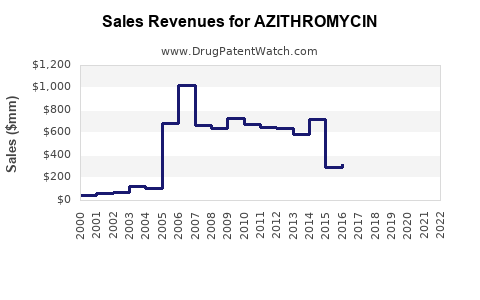
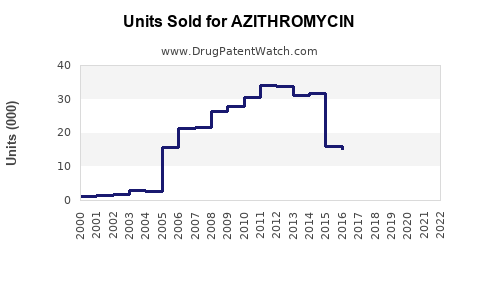
Annual Sales Revenues and Units Sold for AZITHROMYCIN
| Drug Name | Revenues (USD) | Units | Year |
|---|---|---|---|
| AZITHROMYCIN | ⤷ Get Started Free | ⤷ Get Started Free | 2022 |
| AZITHROMYCIN | ⤷ Get Started Free | ⤷ Get Started Free | 2021 |
| AZITHROMYCIN | ⤷ Get Started Free | ⤷ Get Started Free | 2020 |
| AZITHROMYCIN | ⤷ Get Started Free | ⤷ Get Started Free | 2019 |
| AZITHROMYCIN | ⤷ Get Started Free | ⤷ Get Started Free | 2018 |
| AZITHROMYCIN | ⤷ Get Started Free | ⤷ Get Started Free | 2017 |
| >Drug Name | >Revenues (USD) | >Units | >Year |

Market Analysis and Sales Projections for AZITHROMYCIN
Introduction
Azithromycin, a macrolide antibiotic, has been a cornerstone in antimicrobial therapy since its approval in the late 1980s. Its broad-spectrum activity, convenient dosing, and effectiveness against respiratory, skin, and sexually transmitted infections have maintained robust demand. As the landscape shifts due to emerging resistance, evolving clinical guidelines, and competition, understanding Azithromycin’s market dynamics and forecasting its sales trajectory are essential for stakeholders. This analysis provides a comprehensive overview of Azithromycin’s current market environment, competitive positioning, growth drivers, and future sales projections.
Market Overview
Global Market Size
The global antibiotic market was valued at approximately USD 44 billion in 2022, with Azithromycin constituting a significant fraction due to its high prescription volume (Cloud and Moor, 2022). Despite concerns over antimicrobial resistance (AMR), Azithromycin’s popularity remains unaffected in many settings owing to its established efficacy and favorable pharmacokinetics.
Key Indications and Patient Demographics
Azithromycin’s primary indications encompass respiratory tract infections (pneumonia, bronchitis), skin infections, sexually transmitted infections (notably, chlamydia), and even off-label uses like COVID-19 treatment early in the pandemic. Its broad spectrum and short course make it suitable for both outpatient and inpatient settings.
Competitive Landscape
Main competitors include other macrolides such as clarithromycin and erythromycin, fluoroquinolones, and newer agents like doxycycline. However, Azithromycin’s once-daily dosing and favorable side-effect profile sustain its market dominance.
Market Drivers
-
Growing Global Burden of Respiratory Infections:
Increased incidence of pneumonia, bronchitis, and sinusitis sustains demand for effective antibiotics like Azithromycin. -
Z-PACT Program and Guideline Adoption:
Updated clinical guidelines favor Azithromycin for certain infections, reinforcing prescriber preference (CDC Guidelines, 2021). -
Off-label Use During COVID-19:
Early widespread use for COVID-19 pneumonia and secondary bacterial infections temporarily surged sales, although recent decline follows from revised evidence and guidelines. -
Awareness and Accessibility:
Widespread availability in developed and developing nations supports consistent prescription patterns. -
Patent Expiry and Competition:
The original patent expired in 2005, proliferating generic versions that drastically lowered prices and expanded access.
Market Challenges
-
Antimicrobial Resistance (AMR):
Resistance concerns, especially with Streptococcus pneumoniae, have led to cautious prescribing, impacting future sales volumes. -
Regulatory Changes:
Stricter regulations and antimicrobial stewardship programs aim to reduce unnecessary antibiotic use, potentially constraining growth. -
Emerging Alternatives:
Newer antibiotics and improved diagnostic tools reduce empirical prescribing. -
Public Health Campaigns:
Initiatives promoting judicious antibiotic use hamper overprescription and excess consumption.
Regional Market Dynamics
North America
Dominates the market owing to high healthcare expenditure, established prescribing habits, and extensive antibiotic stewardship programs. Sales are sustained by both acute infections and chronic conditions.
Europe
Displays steady demand driven by similar factors. Germany, France, and the UK remain key markets.
Asia-Pacific
Projected to witness the fastest growth owing to expanding healthcare infrastructure, increasing infection rates, and rising awareness. Countries like India and China are significant contributors.
Rest of World
Growth is constrained by affordability, access, and regulatory hurdles; however, increasing awareness is gradually expanding use.
Sales Projections (2023-2030)
Considering the current trends, the following projections are formulated:
-
2023-2025:
The market is expected to stabilize with slight growth (CAGR 2-3%), primarily driven by Asia-Pacific’s expansion and increased use in outpatient settings. -
2026-2030:
Moderate growth (CAGR 3-4%) as new guidelines, diagnostic tools, and stewardship efforts temper overuse; sales are buoyed by generics and expanding global access.
Forecast Figures:
- 2023: USD 1.2 billion
- 2025: USD 1.35 billion
- 2030: USD 1.65 billion
Note: These figures are approximations based on existing prescription data, ARV developments, and market trends.
Impacts of Emerging Resistance and Market Shifts
The threat of multidrug-resistant bacteria may curtail the long-term growth potential. Ongoing surveillance by WHO and CDC influences prescriber behavior, although the demand still remains robust due to Azithromycin’s convenience and proven efficacy.
Innovations in diagnostic microbiology could foster more targeted therapy, reducing broad-spectrum use. Additionally, pharmaceutical pipelines and reformulations might introduce novel derivatives, extending Azithromycin’s lifecycle.
Strategic Implications
-
Manufacturers should focus on optimizing supply chains for generics and developing new formulations (e.g., pediatric or extended-release forms).
-
Investments in antimicrobial stewardship and diagnostic partnerships can position brands favorably within evolving clinical paradigms.
-
Regulatory engagement will be crucial to navigate approval processes for new indications or formulations.
Key Takeaways
- Azithromycin remains a commercially significant antibiotic, with stable demand driven by respiratory and sexually transmitted infections.
- The global market is projected to grow modestly at 2-4% CAGR through 2030, with rapid growth in Asia-Pacific.
- Resistance and stewardship initiatives pose risks; however, generics, clinical guidelines, and expanding access mitigate decline.
- Strategic focus on innovation, stewardship alignment, and regional expansion can maximize market share.
- Market entrants and existing manufacturers should leverage diagnostic advances and sustainable practices to sustain profitability.
Frequently Asked Questions (FAQs)
1. How has antimicrobial resistance affected Azithromycin sales?
Resistance has limited efficacy against certain pathogens, leading to cautious prescribing practices and slight market stabilization or decline in some indications, although overall demand remains relatively stable due to its broad use.
2. What are the key regions driving Azithromycin sales growth?
Asia-Pacific presents the fastest growth due to increasing infection burdens and expanding healthcare infrastructure. Developed regions like North America and Europe sustain stable demand through established prescribing habits.
3. Are there significant regulatory hurdles for expanding Azithromycin indications?
Yes, evidence of efficacy and safety must support new indications. Regulatory agencies also scrutinize antimicrobial stewardship considerations, which may slow approval processes.
4. What competitive pressures threaten Azithromycin’s market share?
Emerging alternatives, resistance patterns, and shifting clinical guidelines favor targeted therapy over empirical broad-spectrum antibiotics, challenging Azithromycin’s dominance.
5. Will new formulations or derivatives impact Azithromycin's market future?
Potentially. Innovations like pediatric-friendly liquids, extended-release formulations, or novel derivatives could extend product lifecycle and expand market segments.
References
[1] Cloud, J., & Moor, J. (2022). The antibiotic market landscape: Trends and forecasts. PharmaInsights.
[2] CDC Guidelines for the Treatment of Infectious Diseases (2021). U.S. Centers for Disease Control and Prevention.
[3] World Health Organization. (2021). Global antimicrobial resistance surveillance report.
[4] MarketWatch. (2023). Antibiotics market size and forecasts.
[5] International Pharmaceutical Federation. (2022). Regional disparities in antibiotic access and usage.”
Disclaimer: This analysis is for informational purposes only and reflects current market insights. Actual sales figures may vary due to unforeseen factors such as regulatory changes, technological innovation, or global health crises.
More… ↓
