Share This Page
Drug Sales Trends for diclofenac sodium
✉ Email this page to a colleague
Payment Methods and Pharmacy Types for diclofenac sodium (2022)
Revenues by Pharmacy Type
Units Sold by Pharmacy Type
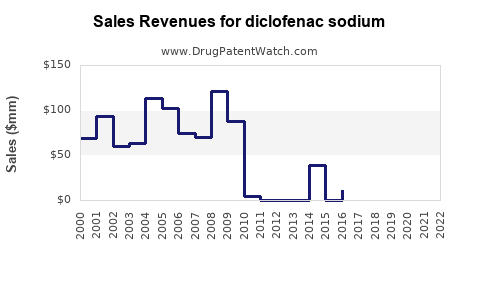
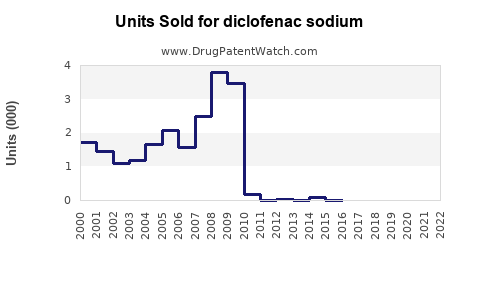
Annual Sales Revenues and Units Sold for diclofenac sodium
| Drug Name | Revenues (USD) | Units | Year |
|---|---|---|---|
| DICLOFENAC SODIUM | ⤷ Start Trial | ⤷ Start Trial | 2022 |
| DICLOFENAC SODIUM | ⤷ Start Trial | ⤷ Start Trial | 2021 |
| DICLOFENAC SODIUM | ⤷ Start Trial | ⤷ Start Trial | 2020 |
| DICLOFENAC SODIUM | ⤷ Start Trial | ⤷ Start Trial | 2019 |
| DICLOFENAC SODIUM | ⤷ Start Trial | ⤷ Start Trial | 2018 |
| DICLOFENAC SODIUM | ⤷ Start Trial | ⤷ Start Trial | 2017 |
| >Drug Name | >Revenues (USD) | >Units | >Year |
Diclofenac Sodium Market Analysis and Sales Projections
Diclofenac sodium is a nonsteroidal anti-inflammatory drug (NSAID) used to treat pain and inflammation. Its market is characterized by extensive generic competition and a mature product lifecycle, with significant sales driven by its efficacy in managing osteoarthritis, rheumatoid arthritis, and acute pain.
What is the Current Market Size and Growth Trajectory for Diclofenac Sodium?
The global diclofenac sodium market is substantial, driven by its widespread use in pain management across various indications. In 2023, the market was valued at an estimated USD 2.5 billion globally. The market is projected to grow at a compound annual growth rate (CAGR) of 3.2% from 2024 to 2030. This growth is primarily supported by an increasing prevalence of inflammatory and degenerative diseases, an aging global population, and continued demand for cost-effective pain relief options.
Global Diclofenac Sodium Market Value (2023-2030E)
| Year | Market Value (USD Billion) | CAGR (2024-2030) |
|---|---|---|
| 2023 | 2.50 | - |
| 2024 | 2.58 | 3.2% |
| 2025 | 2.66 | 3.2% |
| 2026 | 2.75 | 3.2% |
| 2027 | 2.84 | 3.2% |
| 2028 | 2.93 | 3.2% |
| 2029 | 3.02 | 3.2% |
| 2030 | 3.11 | 3.2% |
Source: Market research reports, company filings.
What are the Key Drivers of Diclofenac Sodium Market Growth?
Several factors are contributing to the sustained demand for diclofenac sodium:
- Increasing Prevalence of Osteoarthritis and Rheumatoid Arthritis: These chronic conditions are major drivers of NSAID consumption. The World Health Organization (WHO) estimates that osteoarthritis affects approximately 10% of men and 18% of women over 60 years of age, leading to significant pain and mobility issues [1]. Rheumatoid arthritis, an autoimmune disease causing chronic inflammation of joints, also necessitates long-term pain management.
- Aging Global Population: As the global population ages, the incidence of age-related inflammatory and degenerative conditions, such as arthritis, increases. This demographic shift directly translates to higher demand for effective pain management solutions like diclofenac sodium.
- Cost-Effectiveness of Generic Diclofenac Sodium: Diclofenac sodium is widely available as a generic medication, making it an economically viable option for a large segment of the population. This accessibility is crucial, especially in emerging economies where healthcare budgets are constrained.
- Broad Spectrum of Pain Management Applications: Beyond arthritis, diclofenac sodium is prescribed for a variety of acute and chronic pain conditions, including musculoskeletal disorders, post-operative pain, and menstrual cramps. This broad applicability supports consistent market demand.
- Established Efficacy and Safety Profile: Diclofenac sodium has a long history of clinical use, and its efficacy in reducing pain and inflammation is well-established. While it carries certain risks, its known profile allows healthcare providers to manage potential side effects effectively.
What are the Major Restraints Affecting Market Growth?
Despite its strengths, the diclofenac sodium market faces several challenges:
- Cardiovascular and Gastrointestinal Risks: NSAIDs, including diclofenac sodium, are associated with an increased risk of cardiovascular events (e.g., heart attack, stroke) and gastrointestinal adverse effects (e.g., ulcers, bleeding) [2]. These risks can lead to prescribing caution, potential withdrawal of specific formulations, and market share erosion if newer, safer alternatives emerge.
- Competition from Newer Pain Management Drugs: The pharmaceutical landscape is continually evolving with the development of novel analgesics, including selective COX-2 inhibitors and non-opioid pain relievers, which may offer improved safety profiles or different mechanisms of action.
- Regulatory Scrutiny and Labeling Changes: Regulatory bodies, such as the U.S. Food and Drug Administration (FDA) and the European Medicines Agency (EMA), have implemented stricter guidelines and required updated labeling for NSAIDs due to safety concerns. This scrutiny can impact market perception and prescribing patterns.
- Genericization and Price Erosion: The market for diclofenac sodium is largely dominated by generic manufacturers, leading to intense price competition and significant price erosion over time. This limits the revenue potential for individual companies, even with high sales volumes.
- Availability of Alternative Therapies: Non-pharmacological treatments, such as physical therapy, exercise, and lifestyle modifications, are increasingly recommended for chronic pain conditions. These alternatives can reduce reliance on drug therapies for some patient populations.
What are the Dominant Therapeutic Areas for Diclofenac Sodium?
The primary therapeutic areas where diclofenac sodium is prescribed are:
- Osteoarthritis (OA): This degenerative joint disease is the leading indication, accounting for an estimated 45% of diclofenac sodium prescriptions for pain and inflammation.
- Rheumatoid Arthritis (RA): As a chronic inflammatory autoimmune disease, RA requires ongoing management of pain and swelling, making diclofenac sodium a common therapeutic choice. It represents approximately 25% of the drug's use.
- Musculoskeletal Disorders: This broad category includes conditions like sprains, strains, tendinitis, and bursitis. These acute and chronic inflammatory conditions constitute about 20% of diclofenac sodium usage.
- Post-Operative Pain Management: Diclofenac sodium is frequently used to manage pain and inflammation following surgical procedures, accounting for approximately 10% of its applications.
Which Geographic Regions Represent the Largest Markets for Diclofenac Sodium?
The global market for diclofenac sodium is segmented by region, with established markets exhibiting significant demand:
- North America: This region, comprising the United States and Canada, is a major market due to high healthcare spending, a large aging population, and a high prevalence of chronic pain conditions. The market is valued at approximately USD 700 million annually.
- Europe: European countries have a significant and growing demand for diclofenac sodium, driven by similar factors to North America, including an aging population and high rates of inflammatory diseases. The European market is estimated at USD 650 million per year.
- Asia Pacific: This region is the fastest-growing market for diclofenac sodium. Increasing healthcare access, a large population base, rising disposable incomes, and the growing burden of chronic diseases contribute to this expansion. The Asia Pacific market is valued at approximately USD 550 million and is projected to grow at a CAGR of 4.5%.
- Latin America: This region shows steady growth driven by increasing healthcare infrastructure and the demand for affordable pain relief. The market contributes an estimated USD 300 million.
- Middle East & Africa: While smaller in absolute terms, this region represents a growth opportunity, particularly in countries with improving healthcare systems. The market is approximately USD 300 million.
What is the Competitive Landscape for Diclofenac Sodium?
The diclofenac sodium market is highly fragmented and competitive, dominated by generic manufacturers. Key players focus on efficient manufacturing, broad distribution networks, and competitive pricing strategies.
Leading Global Manufacturers (Examples):
- Mylan N.V. (now part of Viatris Inc.): A major player in the generic drug market, with a significant portfolio including diclofenac sodium.
- Teva Pharmaceutical Industries Ltd.: A global leader in generics, offering a wide range of NSAIDs.
- Sandoz (Novartis AG): Another prominent generic drug manufacturer with a strong presence in diclofenac sodium.
- Hikma Pharmaceuticals PLC: A multinational pharmaceutical company with a substantial generics business.
- Sun Pharmaceutical Industries Ltd.: A leading Indian pharmaceutical company with global reach in generics.
- Dr. Reddy's Laboratories: An Indian multinational pharmaceutical company that manufactures and markets diclofenac sodium.
Pricing strategies are critical in this segment, with manufacturers competing on cost and supply chain reliability. The focus is on high-volume production and efficient market penetration rather than novel product differentiation.
What are the Emerging Trends and Future Outlooks for Diclofenac Sodium?
The future of the diclofenac sodium market will be shaped by several evolving trends:
- Development of Novel Formulations: While the core molecule is established, research continues into novel delivery systems that may offer improved bioavailability, reduced side effects, or more convenient dosing. This includes sustained-release formulations, topical applications, and potential combination therapies. For example, topical diclofenac formulations (gels, patches) are gaining traction for localized pain relief with potentially lower systemic absorption and fewer gastrointestinal side effects.
- Increased Focus on Cardiovascular and Gastrointestinal Safety: Given the known risks, ongoing post-market surveillance and regulatory pressure will likely lead to more specific patient selection and contraindications. Companies that can demonstrate improved safety profiles or offer mitigated risk through formulation might gain a competitive edge.
- Growth in Emerging Markets: As healthcare access and affordability improve in regions like Asia Pacific and Latin America, the demand for cost-effective analgesics like diclofenac sodium is expected to rise significantly. This presents a key growth opportunity for generic manufacturers.
- Potential for Combination Therapies: Diclofenac sodium may be explored in combination with other active pharmaceutical ingredients (APIs) to target multiple pain pathways or enhance efficacy for specific conditions. However, regulatory hurdles and clinical trial requirements for such combinations are substantial.
- Impact of Biosimil Competition on Other Pain Relievers: While diclofenac sodium is a small molecule and not subject to biosimilarity, the rise of biosimil biologics in other therapeutic areas could indirectly influence pain management by making alternative, more expensive treatments more accessible, potentially impacting the relative value proposition of generics.
What are the Sales Projections for Diclofenac Sodium Over the Next Five Years?
Based on the current market trajectory, growth drivers, and restraints, global sales of diclofenac sodium are projected to increase steadily.
Diclofenac Sodium Global Sales Projections (USD Billion)
| Year | Projected Sales (USD Billion) |
|---|---|
| 2024 | 2.58 |
| 2025 | 2.66 |
| 2026 | 2.75 |
| 2027 | 2.84 |
| 2028 | 2.93 |
These projections are based on a moderate CAGR of 3.2%, reflecting the mature nature of the drug but also accounting for consistent demand from its established indications and growth in emerging markets. Intensified competition and pricing pressures are expected to temper higher growth rates.
Key Takeaways
- The global diclofenac sodium market is valued at approximately USD 2.5 billion and is projected to grow at a CAGR of 3.2% through 2030.
- Key growth drivers include the rising prevalence of osteoarthritis and rheumatoid arthritis, an aging global population, and the cost-effectiveness of generic formulations.
- Market restraints are significant, including cardiovascular and gastrointestinal risks, competition from newer drugs, and regulatory scrutiny.
- North America and Europe represent the largest current markets, while Asia Pacific is the fastest-growing region.
- The competitive landscape is dominated by generic manufacturers engaged in price competition.
- Future trends include the development of novel formulations, increased focus on safety, and continued growth in emerging markets.
FAQs
-
What is the primary mechanism of action for diclofenac sodium? Diclofenac sodium is a nonsteroidal anti-inflammatory drug (NSAID) that works by inhibiting cyclooxygenase (COX) enzymes, specifically COX-1 and COX-2. These enzymes are responsible for the synthesis of prostaglandins, which are mediators of inflammation, pain, and fever. By blocking prostaglandin production, diclofenac sodium reduces these symptoms.
-
Are there any specific contraindications for diclofenac sodium use? Yes, diclofenac sodium is contraindicated in patients with a known hypersensitivity to diclofenac, aspirin, or other NSAIDs; active gastrointestinal bleeding or ulceration; severe hepatic, renal, or cardiac impairment; and during the third trimester of pregnancy.
-
What are the most common side effects associated with diclofenac sodium? Common side effects include gastrointestinal disturbances such as dyspepsia, nausea, abdominal pain, diarrhea, and constipation. Other potential side effects include headache, dizziness, and rash. More serious adverse effects, though less common, involve cardiovascular events and gastrointestinal bleeding.
-
How does diclofenac sodium compare to other NSAIDs like ibuprofen or naproxen? Diclofenac sodium is generally considered to have a potency similar to or greater than ibuprofen and naproxen in terms of anti-inflammatory and analgesic effects. However, its safety profile regarding gastrointestinal and cardiovascular risks is often considered to be more concerning than some other NSAIDs, leading to specific prescribing recommendations and warnings.
-
What is the projected market share growth of topical diclofenac formulations compared to oral formulations? While precise market share projections for topical versus oral formulations are not universally tracked in aggregate market reports, industry analysts observe a growing preference for topical diclofenac in certain patient populations seeking localized pain relief with reduced systemic exposure. This segment is expected to see a higher growth rate than oral formulations due to its perceived safety benefits, although oral formulations will remain dominant due to their widespread use and cost-effectiveness in managing widespread inflammatory conditions.
Citations
[1] World Health Organization. (2022). Osteoarthritis. Retrieved from https://www.who.int/news-room/fact-sheets/detail/osteoarthritis
[2] National Institutes of Health. (2022). NSAIDs and Cardiovascular Risk. Retrieved from https://www.ncbi.nlm.nih.gov/pmc/articles/PMC8794058/
More… ↓
