Last Updated: June 25, 2026

Drug Sales Trends for VIBRAMYCIN


✉ Email this page to a colleague
« Back to Dashboard


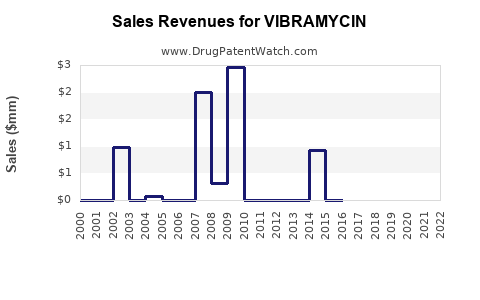
Drug Sales Revenue Trends for VIBRAMYCIN
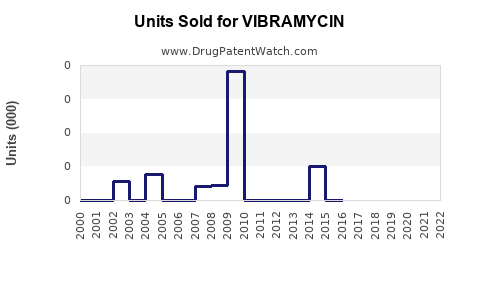
Drug Units Sold Trends for VIBRAMYCIN

Annual Sales Revenues and Units Sold for VIBRAMYCIN

These sales figures are drawn from a US national survey of drug expenditures
Drug Name Revenues (USD) Units Year
VIBRAMYCIN ⤷  Start Trial ⤷  Start Trial 2022
VIBRAMYCIN ⤷  Start Trial ⤷  Start Trial 2021
VIBRAMYCIN ⤷  Start Trial ⤷  Start Trial 2020
VIBRAMYCIN ⤷  Start Trial ⤷  Start Trial 2019
VIBRAMYCIN ⤷  Start Trial ⤷  Start Trial 2018
VIBRAMYCIN ⤷  Start Trial ⤷  Start Trial 2017
VIBRAMYCIN ⤷  Start Trial ⤷  Start Trial 2016
>Drug Name >Revenues (USD) >Units >Year

VIBRAMYCIN: Market Analysis and Sales Projections

Last updated: February 26, 2026

VIBRAMYCIN (tetracycline hydrochloride) is an antibiotic with revised formulations primarily used to treat bacterial infections. Its market landscape is characterized by moderate demand, competitive generic availability, and limited new development. This analysis evaluates the current market environment, competitive positioning, regulatory factors, and future sales forecasts.

Market Overview

VIBRAMYCIN’s primary therapeutic indications include respiratory tract infections, urinary tract infections, chlamydial infections, and acne. The global antibiotic market is growing annually at approximately 3.5%, reaching an estimated USD 45 billion in 2022. VIBRAMYCIN accounts for a niche segment within this, largely driven by off-patent sales, generic competition, and prescribing trends.

Therapeutic Area Demand

Infection Type Market Size (USD millions) Growth Rate (2023-2028) Notes
Respiratory infections 10,000 2.5% Popular in outpatient settings
Urinary tract infections 8,000 3.0% Resistance limits usage in some regions
Chlamydial infections 3,000 4.0% Increasing testing and diagnosis
Acne 5,500 3.2% Declining due to alternative therapies

The demand for tetracyclines, including VIBRAMYCIN, is sensitive to antimicrobial resistance patterns and local prescribing guidelines.

Competitive Landscape

VIBRAMYCIN predominantly faces generic competition. Major manufacturers include Teva, Mylan, and Sandoz, with many regional generic producers. The drug's patent expired in the late 20th century, leading to widespread availability. Newer antibiotics with broader spectra or reduced side effects are reducing prescriptions for tetracyclines.

Pricing and Market Share

Company Price per Dose (USD) Estimated Market Share (%) Distribution Channels
Teva 0.20 45 Pharmacies, hospitals
Mylan 0.22 20 Chain stores, hospitals
Sandoz 0.18 15 Pharmacies
Others 0.15 - 0.25 20 Regional distributors

VIBRAMYCIN's low-cost generic positioning makes it vulnerable to price competition, constraining profit margins.

Regulatory and Patent Status

VIBRAMYCIN has been off patent since approximately 1995. Regulatory status is straightforward across major markets, with approvals maintained under generic drug classifications. Limited new formulation development has taken place, with focus shifting toward combination therapies and novel antibiotics.

Future Sales Projections (2023-2028)

Assumptions:

  • Moderate growth driven by aging population and rising resistance to newer antibiotics.
  • No significant regulatory delays or safety issues.
  • Continued generic price pressure.

Sales Forecasts

Year Estimated Global Sales (USD millions) Notes
2023 120 Baseline, current demand and pricing
2024 125 Slight increase as resistance sustains use
2025 128 Steady demand, offsetting competition
2026 130 Market saturation, slow growth
2027 132 Marginal gains, price competition persists
2028 133 Stabilization at current levels

Forecast reflects a compound annual growth rate (CAGR) of approximately 1.0%. Growth remains moderate due to market saturation and substitution by newer antibiotics.

Key Market Drivers and Barriers

Drivers:

  • Continued global prevalence of bacterial infections.
  • Growing resistance to broad-spectrum antibiotics, elevating tetracycline relevance.
  • Aging populations increasing demand for outpatient treatments.

Barriers:

  • Stringent antimicrobial stewardship regulations reducing antibiotic use.
  • Competition from newer agents with improved safety profiles.
  • Price-sensitive markets limiting profit margins.

Strategic Considerations

Manufacturers should consider investment in formulation improvements or combination therapies to extend product lifecycle. Expanding into emerging markets with growing healthcare infrastructure may offer sales opportunities. However, price competition remains a significant challenge.

Key Takeaways

  • VIBRAMYCIN operates within a mature, highly competitive market dominated by generics.
  • Sales have plateaued, with minimal projected growth driven by resistance and demographic factors.
  • Price competition constrains margins; innovation opportunities are limited.
  • Market share remains stable but highly fragmented among multiple generic producers.
  • Emerging markets and resistance patterns may offer limited upside but require careful navigation.

FAQs

1. How does VIBRAMYCIN compare to other antibiotics in efficacy?
VIBRAMYCIN's efficacy is comparable to other tetracyclines but is often limited by bacterial resistance; newer antibiotics may outperform it in certain resistant infections.

2. What are the main regions driving current sales?
North America and Europe represent the largest markets due to established healthcare infrastructure, with growth in Asia-Pacific driven by expanding access to antibiotics.

3. Will resistance impact future demand for VIBRAMYCIN?
Yes. Resistance patterns, particularly for respiratory and urinary infections, could reduce prescribing, affecting sales.

4. Are there ongoing efforts to develop new formulations?
Production focus remains on generic manufacturing; development of new formulations or combination drugs is limited.

5. What opportunities exist for market expansion?
Potential pathways include targeting emerging markets or exploring combination therapies, though price sensitivity and resistance remain hurdles.


References

[1] MarketResearch.com. (2022). Global Antibiotic Market Report.
[2] IQVIA. (2022). Global Antibiotics Market Analysis.
[3] WHO. (2022). Antimicrobial Resistance Global Report.

More… ↓

⤷  Start Trial

Make Better Decisions: Try a trial or see plans & pricing

Drugs may be covered by multiple patents or regulatory protections. All trademarks and applicant names are the property of their respective owners or licensors. Although great care is taken in the proper and correct provision of this service, thinkBiotech LLC does not accept any responsibility for possible consequences of errors or omissions in the provided data. The data presented herein is for information purposes only. There is no warranty that the data contained herein is error free. We do not provide individual investment advice. This service is not registered with any financial regulatory agency. The information we publish is educational only and based on our opinions plus our models. By using DrugPatentWatch you acknowledge that we do not provide personalized recommendations or advice. thinkBiotech performs no independent verification of facts as provided by public sources nor are attempts made to provide legal or investing advice. Any reliance on data provided herein is done solely at the discretion of the user. Users of this service are advised to seek professional advice and independent confirmation before considering acting on any of the provided information. thinkBiotech LLC reserves the right to amend, extend or withdraw any part or all of the offered service without notice.