Last updated: July 29, 2025
Introduction
Triamcinolone acetonide is a synthetic corticosteroid widely used for its anti-inflammatory, immunosuppressive, and antipruritic properties. It is approved for various indications, including dermatological conditions, allergic reactions, respiratory diseases, and joint disorders. As a mid-to-high potency corticosteroid, it holds a vital position across multiple therapeutic segments, fostering stable demand patterns. This article provides a comprehensive market analysis and sales projection overview for triamcinolone acetonide, crucial for stakeholders such as pharmaceutical companies, investors, and market strategists.
Market Overview
Global Market Size and Growth
The global corticosteroid market, driven by inflammatory and autoimmune disease prevalence, exceeds USD 14 billion (2022), with corticosteroids like triamcinolone acetonide accounting for a significant share. The segment's growth rate is estimated at 3-4% CAGR from 2023 to 2030, reflecting expanding medical applications and increased treatment rates.
In particular, the dermatology segment for triamcinolone acetonide is prominent, owing to its efficacy in conditions like psoriasis, eczema, and dermatitis. Additionally, the respiratory segment benefits from inhaled formulations for asthma and COPD management.
Regional Dynamics
- North America: Dominates the market due to high healthcare expenditure, early adoption of advanced formulations, and prevalence of autoimmune and inflammatory conditions. The US accounts for roughly 40-45% of global sales.
- Europe: Represents a mature market with steady growth, supported by established healthcare infrastructure and regulatory stability.
- Asia-Pacific: Exhibits the fastest growth potential owing to rising healthcare access, increasing prevalence of allergic and inflammatory diseases, and expanding pharmaceutical manufacturing capabilities.
- Latin America and Middle East & Africa: Show moderate growth, primarily driven by improving healthcare access and emerging local markets.
Key Market Drivers
- Chronic Disease Prevalence: Rising incidences of asthma, rheumatoid arthritis, psoriasis, and allergic dermatitis sustain demand for corticosteroids.
- Expanding Dermatology Treatments: Growing awareness and diagnosis of skin conditions increase prescriptions of triamcinolone acetonide topical formulations.
- Product Innovations: Development of long-acting formulations, combination drugs, and improved delivery systems enhances market penetration.
- Regulatory Approvals and Brand launches: New formulations and approvals in emerging markets expand accessibility.
Market Challenges
- Safety Concerns: Adverse effects associated with corticosteroid use, such as skin atrophy and systemic effects, impact prescribing behaviors.
- Generic Competition: Patent expirations and the rise of generic alternatives exert pricing pressure.
- Regulatory Scrutiny: Stringent regulations in different jurisdictions can delay product launches or limit indications.
Sales Projections (2023-2030)
Baseline Scenario
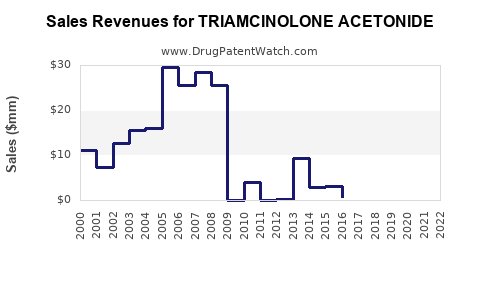
In 2023, global sales of triamcinolone acetonide are estimated at USD 1.2 billion. Considering the ongoing demand growth, the compound annual growth rate (CAGR) is projected at 3.5%. By 2030, global sales could reach approximately USD 1.65 billion.
Segment-Specific Projections
- Topical Formulations: Constituting approximately 70% of sales, the topical segment is forecasted to expand at 3-4% CAGR, driven by dermatological use.
- Inhalation Formulations: Representing about 20%, with a CAGR of around 4%, owing to respiratory indications.
- Injectable and Other Forms: The remaining 10%, with a moderate growth outlook due to niche applications and emerging indications.
Regional Sales Forecasts
- North America: Projected to maintain the largest market share, reaching USD 600 million by 2030.
- Europe: Expected to grow steadily to approximately USD 400 million.
- Asia-Pacific: Anticipated to witness the highest growth rate of 5-6% CAGR, reaching USD 350 million by 2030.
- Rest of the World: Estimated at USD 300 million, driven by expanding healthcare infrastructure.
Competitive Landscape
Major players include Pfizer, Teva Pharmaceuticals, Mylan, Sandoz, and Sun Pharmaceutical Industries. Competitive strategies involve product differentiation, expanding formulation pipelines, and entering emerging markets through partnerships and licensing.
Strategic Opportunities and Outlook
The increasing integration of novel delivery systems (e.g., transdermal patches, inhalers) presents growth opportunities. Additionally, expanding into new indications such as autoimmune diseases and leveraging biosimilar development can enhance sales trajectories.
The regulatory environment favoring biosimilar uptake and increasing healthcare expenditure globally will likely propel sales further. Nevertheless, healthcare providers’ movement towards safer alternatives necessitates continuous innovation.
Key Takeaways
- The global triamcinolone acetonide market is poised for steady growth, with a forecasted USD 1.65 billion in sales by 2030, leveraging emerging markets and formulation innovations.
- Topical formulations dominate current sales but inhaled and injectable forms present growing opportunities.
- North America and Europe currently lead, but Asia-Pacific offers the fastest regional growth owing to increasing healthcare infrastructure and disease prevalence.
- Competition from generics and safety considerations remain vital factors influencing market dynamics.
- Strategic investments in formulation research, regional expansion, and indication diversification can foster sustained revenue streams.
FAQs
1. What are the primary indications for triamcinolone acetonide?
Triamcinolone acetonide is used to treat dermatological conditions (psoriasis, eczema), allergic reactions, respiratory issues (asthma inhalers), and joint disorders (intra-articular injections).
2. How does the patent landscape affect triamcinolone acetonide sales?
Patent expirations enable generic manufacturing, increasing accessibility but exerting price competition. Continued innovation in formulations and delivery routes helps sustain revenue.
3. What regulatory challenges influence the global sales of triamcinolone acetonide?
Regulatory approval varies across jurisdictions, with stringent safety and efficacy requirements potentially delaying product launches or restricting indications, especially in emerging markets.
4. Which regions are expected to see the highest sales growth for triamcinolone acetonide?
Asia-Pacific is projected to demonstrate the highest CAGR (5-6%), driven by rising disease prevalence and expanding healthcare systems.
5. What strategic moves can pharmaceutical companies adopt to enhance market share?
Investing in formulation innovation, expanding into emerging markets, pursuing new indications, and forming strategic partnerships are critical for growth.
References
[1] MarketsandMarkets. Corticosteroids Market Analysis. 2022.
[2] Grand View Research. Global Corticosteroids Market Size, Share & Trends. 2023.
[3] U.S. Food and Drug Administration. Product approvals and regulations overview. 2023.