Share This Page
Drug Sales Trends for ORTHO EVRA
✉ Email this page to a colleague
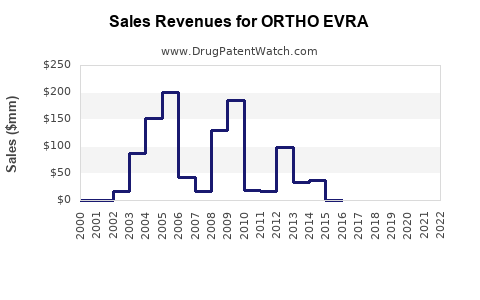
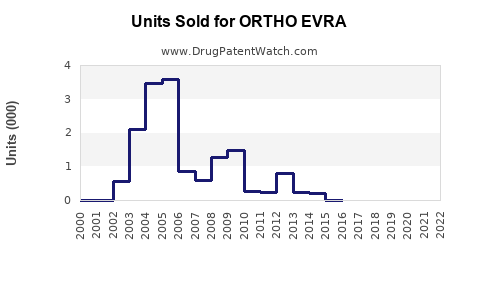
Annual Sales Revenues and Units Sold for ORTHO EVRA
| Drug Name | Revenues (USD) | Units | Year |
|---|---|---|---|
| ORTHO EVRA | ⤷ Start Trial | ⤷ Start Trial | 2022 |
| ORTHO EVRA | ⤷ Start Trial | ⤷ Start Trial | 2021 |
| ORTHO EVRA | ⤷ Start Trial | ⤷ Start Trial | 2020 |
| ORTHO EVRA | ⤷ Start Trial | ⤷ Start Trial | 2019 |
| ORTHO EVRA | ⤷ Start Trial | ⤷ Start Trial | 2018 |
| ORTHO EVRA | ⤷ Start Trial | ⤷ Start Trial | 2017 |
| >Drug Name | >Revenues (USD) | >Units | >Year |
Ortho Evra Market Analysis, Sales Forecast, Patent Status, and Generic Competition
Ortho Evra is no longer the commercial growth product it was at launch. The original Johnson & Johnson contraceptive patch has effectively been replaced in the U.S. by generic norelgestromin/ethinyl estradiol patches, principally Xulane, while Agile Therapeutics’ Twirla competes in the broader contraceptive-patch segment with a different active-ingredient combination. Ortho Evra-specific current sales are not publicly reported as a standalone line item.
The commercial opportunity is therefore a mature, low-share hormonal contraceptive market rather than a branded Ortho Evra relaunch opportunity. A reasonable base case places the U.S. market for norelgestromin/ethinyl estradiol patches in the low tens of millions of dollars annually, with limited growth unless access, adherence, or payer coverage improves.
What is Ortho Evra and what product replaced it?
Ortho Evra is a once-weekly transdermal contraceptive patch containing norelgestromin and ethinyl estradiol. It was approved by the U.S. Food and Drug Administration in 2001 and commercialized by Ortho-McNeil, a Johnson & Johnson company. The patch delivers hormones through the skin over a seven-day dosing interval.
The original product was later marketed as Ortho Evra and, outside the United States, under the name Evra. The U.S. brand was eventually discontinued. Mylan received FDA approval for Xulane, a generic-equivalent norelgestromin/ethinyl estradiol transdermal system, in 2014. Viatris inherited the product through its Mylan business.
| Product | Active ingredients | Dosing | U.S. status | Commercial role |
|---|---|---|---|---|
| Ortho Evra | Norelgestromin / ethinyl estradiol | Weekly patch | Brand discontinued | Historical originator |
| Xulane | Norelgestromin / ethinyl estradiol | Weekly patch | FDA-approved generic equivalent | Main successor product |
| Twirla | Levonorgestrel / ethinyl estradiol | Weekly patch | FDA-approved branded product | Different formulation and product profile |
| Generic equivalents | Norelgestromin / ethinyl estradiol | Weekly patch | Limited or variable availability | Price competition |
FDA labeling identifies Xulane as a transdermal system delivering 150 micrograms of norelgestromin and 35 micrograms of ethinyl estradiol per day, the same hormone combination historically associated with Ortho Evra [1].
What is the current market status of Ortho Evra?
Ortho Evra has no meaningful current branded market presence in the United States. Sales have migrated to generic-equivalent products, primarily Xulane. A market analysis that assigns current Xulane sales to Ortho Evra would overstate the value of the discontinued brand and misclassify generic revenue as originator revenue.
The relevant commercial market is the U.S. transdermal combined hormonal contraceptive market. It competes with:
- Oral combined hormonal contraceptives.
- Progestin-only pills.
- Vaginal rings.
- Long-acting reversible contraceptives.
- Injectable contraceptives.
- Permanent contraception.
- Emergency contraception.
The patch remains a niche delivery system. Its advantages are weekly rather than daily administration and avoidance of daily pill-taking. Its disadvantages include visible wear, skin reactions, estrogen-related contraindications, and a labeling warning that systemic ethinyl estradiol exposure may be higher than with certain oral contraceptives [1].
How large is the Ortho Evra and Xulane market?
Public filings do not provide a reliable standalone current revenue series for Ortho Evra. Viatris reports products within broader business and geographic categories, and the company does not generally disclose a separate Xulane revenue line sufficient to reconstruct market size with precision.
A bottom-up scenario model provides a more defensible estimate.
U.S. revenue scenarios
Assume an annual treated population using 13 patches, with net revenue per monthly-equivalent cycle varying by payer mix and channel.
| Scenario | Annual users | Net revenue per cycle | Annual cycles | Estimated annual market revenue |
|---|---|---|---|---|
| Low | 150,000 | $8 | 13 | $15.6 million |
| Base | 250,000 | $12 | 13 | $39.0 million |
| High | 400,000 | $18 | 13 | $93.6 million |
These figures are market scenarios, not reported sales. They represent the norelgestromin/ethinyl estradiol patch segment, including branded-generic and generic-equivalent products. The base case assumes a small but established user population, substantial Medicaid and commercial insurance exposure, and pricing below historical branded levels.
The market can exceed this range if prescription volume is materially higher or if branded reimbursement remains strong. It can fall below the range if generic substitution is extensive and the product is concentrated in low-reimbursement channels.
What are the sales projections for Ortho Evra-related products?
The outlook is flat to modestly declining for the legacy norelgestromin/ethinyl estradiol franchise. Volume growth is constrained by competition from lower-cost oral contraceptives and long-acting methods. Price growth is limited by generic substitution and payer controls.
Five-year U.S. base-case projection
| Year | Estimated market revenue | Annual growth | Principal assumption |
|---|---|---|---|
| 2025 | $39 million | - | Mature generic-equivalent market |
| 2026 | $39.8 million | 2% | Stable use, modest price normalization |
| 2027 | $40.2 million | 1% | Flat prescription volume |
| 2028 | $39.8 million | -1% | Generic price pressure |
| 2029 | $39.0 million | -2% | Continued substitution by oral and long-acting methods |
Scenario range
| Scenario | 2025 revenue | 2029 revenue | 2025-2029 trend |
|---|---|---|---|
| Bear | $20 million | $14 million | Declining volume and reimbursement |
| Base | $39 million | $39 million | Essentially flat nominal market |
| Bull | $70 million | $88 million | Better access, higher adherence, stronger patch adoption |
The bull case requires more than demographic growth. It depends on increased awareness of weekly administration, improved reimbursement, broader telehealth prescribing, and stronger distribution. The bear case is more likely if insurers place the patch below oral contraceptives in formularies or if manufacturers reduce supply because of low margins.
What companies compete with Ortho Evra and Xulane?
Viatris is the principal commercial company associated with Xulane. Agile Therapeutics markets Twirla, which is a different product and cannot be treated as a generic substitute for Ortho Evra.
Xulane versus Twirla
| Factor | Xulane | Twirla |
|---|---|---|
| Active ingredients | Norelgestromin / ethinyl estradiol | Levonorgestrel / ethinyl estradiol |
| Regulatory relationship to Ortho Evra | Generic equivalent | Different new drug |
| FDA approval | 2014 | 2020 |
| Dosing | Weekly | Weekly |
| Commercial positioning | Established successor, generic pricing | Branded differentiation |
| Key risk | Price erosion and limited market size | Reimbursement, scale, and commercial execution |
Twirla’s lower estrogen delivery profile and different pharmacokinetic characteristics give Agile a product-differentiation argument. It does not eliminate the competitive relevance of Xulane because both products target weekly contraceptive users and compete for the same prescribing occasions.
The larger competitive threat comes from non-patch methods. Oral contraceptives have broad physician familiarity and extensive generic availability. Intrauterine devices and implants have longer duration and high continuation value, although they require procedures and have different upfront access barriers.
What patents protect Ortho Evra and Xulane?
The original Ortho Evra patent estate is no longer a meaningful barrier to U.S. generic entry. The product has been exposed to generic competition for years, and the original brand has been discontinued.
The principal intellectual-property categories were:
- Transdermal delivery systems for contraceptive hormones.
- Adhesive and patch construction.
- Hormone release and reservoir design.
- Dosing schedules.
- Methods of preventing pregnancy.
Those rights were tied to the original product and development program. They did not preserve long-term market exclusivity after the core patent term ended.
Xulane may have product-specific regulatory protections or labeling-related rights, but those rights do not restore Ortho Evra’s lost brand exclusivity. A commercial review should distinguish between:
- Patent protection for the original patch technology.
- FDA approval of a generic-equivalent product.
- Any later patents directed to manufacturing, packaging, adhesive systems, or formulation refinements.
- Regulatory exclusivity associated with a specific FDA application.
No current Ortho Evra patent is likely to prevent routine generic-equivalent supply in the United States. Patent risk is more relevant to manufacturing continuity, formulation changes, and competing patch products than to restoration of originator exclusivity.
What is the FDA regulatory status of Ortho Evra and Xulane?
Ortho Evra is not the active U.S. commercial product. Xulane is FDA-approved as a norelgestromin/ethinyl estradiol transdermal system and is the principal successor product.
The FDA label identifies important safety restrictions, including contraindications involving thrombotic risk, certain migraine histories, uncontrolled hypertension, smoking in older users, and other estrogen-related conditions [1]. The label also includes weight-related considerations. These restrictions reduce the addressable population relative to the total population seeking contraception.
FDA regulatory status affects market potential in three ways:
- Prescribers may select non-estrogen methods for higher-risk patients.
- Payers may prefer low-cost oral or long-acting alternatives.
- Label warnings can reduce adoption among patients concerned about systemic estrogen exposure.
Are there Paragraph IV challenges or generic litigation risks?
The principal Paragraph IV event occurred when Mylan challenged the relevant Ortho Evra intellectual-property position before launching Xulane. FDA approval of Xulane in 2014 confirms that the generic pathway ultimately succeeded.
The current litigation risk is not a conventional originator-versus-generic launch dispute. The more relevant risks are:
- Patent disputes over later patch formulations.
- Manufacturing and adhesive patents.
- ANDA litigation involving future generic entrants.
- Product-liability litigation concerning thromboembolic events.
- Supply disputes and manufacturing deviations.
- Competition between Xulane and Twirla over labeling and market claims.
No active, high-value Ortho Evra settlement structure is central to the current market outlook. The historic settlement and launch arrangements that governed early generic entry have largely been superseded by ordinary generic competition.
What manufacturing and intellectual-property barriers affect sales?
Manufacturing a contraceptive patch is more complex than manufacturing a conventional tablet. Commercial performance depends on:
- Uniform hormone loading.
- Controlled transdermal release.
- Adhesion through bathing, exercise, and repeated wear.
- Skin tolerability.
- Protection from heat and humidity.
- Consistent pouch and packaging integrity.
- Low rates of patch detachment.
- Batch-to-batch quality control.
These factors can create supply barriers even when core patents have expired. A manufacturer with an approved facility, stable adhesive system, and reliable regulatory history can retain share despite limited legal exclusivity.
For investors and licensees, manufacturing reliability may matter more than patent duration. A short supply interruption can transfer prescriptions rapidly, but restoring them may require payer reauthorization, pharmacy substitution, and prescriber effort.
What is the commercial value of Ortho Evra-related licensing?
The original Ortho Evra franchise is unlikely to support a material new licensing transaction because the brand has been discontinued and the core commercial rights have matured.
Potential transaction value would instead arise from:
- Regional rights to Xulane or equivalent products.
- Contract manufacturing.
- Patch adhesive technology.
- Alternative estrogen or progestin combinations.
- Improved skin adhesion.
- Lower-exposure or lower-risk formulations.
- Digital adherence and telehealth distribution.
- Rights to Twirla or another branded patch product.
A licensing deal based solely on the Ortho Evra name would have limited value. A transaction involving manufacturing technology or differentiated delivery could support a stronger valuation if it improves adhesion, reduces skin reactions, or lowers production cost.
What generic launch scenarios exist for Ortho Evra products?
Base scenario
Xulane retains the majority of the established norelgestromin/ethinyl estradiol patch market. Revenue remains stable in nominal terms but declines on a per-unit basis as generic substitution expands.
Downside scenario
A second or third generic entrant increases pharmacy-level substitution. Net pricing falls, manufacturers reduce promotional activity, and total market revenue contracts despite stable prescription volume.
Upside scenario
Telehealth and expanded contraceptive access increase patch use. The product remains attractive to patients who have difficulty adhering to daily pills. Revenue grows through volume rather than premium pricing.
Disruption scenario
A safety signal, supply interruption, or major label change shifts patients to Twirla, oral contraception, or progestin-only methods. The patch segment contracts rapidly.
How strong is the Ortho Evra patent estate?
The historical estate was commercially significant before generic entry but is weak as a current exclusionary asset. Its remaining value is primarily defensive, historical, or manufacturing-related.
| Patent-estate factor | Current assessment |
|---|---|
| Core composition protection | Expired or commercially exhausted |
| Brand exclusivity | No current meaningful protection |
| Generic-entry barrier | Low |
| Formulation and adhesive protection | Potentially relevant for specific later products |
| Litigation leverage | Limited for the discontinued brand |
| Licensing value | Low for brand rights; higher for differentiated technology |
What is the revenue exposure for manufacturers and investors?
Revenue exposure is concentrated in product-level sales rather than in the Ortho Evra brand. The market is too small to materially affect a diversified pharmaceutical company, but it can matter to a specialty contraceptive company.
For Viatris, Xulane is unlikely to be a primary enterprise-value driver. For Agile Therapeutics, Twirla’s performance is more strategically important because the product is part of the company’s core commercial portfolio.
The main valuation variables are prescription volume, net price, reimbursement, generic entry, manufacturing cost, and product availability. Patent life has a secondary role because the originator exclusivity period has already passed.
Key Takeaways
- Ortho Evra is a discontinued originator brand, not a current high-growth pharmaceutical asset.
- Xulane is the principal U.S. successor and generic-equivalent product.
- The relevant market is weekly transdermal combined hormonal contraception.
- A reasonable U.S. market estimate is approximately $20 million to $90 million annually, with a base case near $39 million.
- Five-year revenue is more likely to remain flat or decline than to expand substantially.
- Twirla is the main branded patch competitor, but it uses a different hormone combination.
- Core Ortho Evra patent protection no longer creates a meaningful generic barrier.
- Manufacturing quality, supply reliability, payer coverage, and labeling are more important than historical patent rights.
- No standalone current Ortho Evra sales figure is publicly reported.
- The strongest commercial opportunities are in differentiated patch technology, regional rights, manufacturing, and improved contraceptive access.
FAQs About Ortho Evra Market Size and Sales
Is Ortho Evra still available in the United States?
No. The original Ortho Evra brand has been discontinued in the U.S. Xulane is the principal FDA-approved successor using the same active ingredients.
Is Xulane exactly the same as Ortho Evra?
Xulane is the generic-equivalent product associated with the Ortho Evra formulation, but commercial product presentation, labeling, packaging, and manufacturing may differ.
Does Ortho Evra have remaining patent protection?
The original patent estate no longer provides a meaningful barrier to U.S. generic competition. Any relevant later rights would likely concern specific manufacturing, adhesive, or formulation features.
Is Twirla a generic version of Ortho Evra?
No. Twirla contains levonorgestrel and ethinyl estradiol, while Ortho Evra and Xulane contain norelgestromin and ethinyl estradiol.
What is the investment outlook for the contraceptive patch market?
The market has limited absolute size and modest growth potential. Upside depends on prescription-volume expansion, reimbursement, telehealth distribution, and differentiated patch technology rather than on premium pricing or legacy Ortho Evra exclusivity.
References
-
U.S. Food and Drug Administration. (2023). Xulane: Prescribing information. FDA. https://www.accessdata.fda.gov/drugsatfda_docs/label/2023/020703s015lbl.pdf
-
U.S. Food and Drug Administration. (2014). FDA approves first generic version of Ortho Evra contraceptive patch. FDA. https://www.fda.gov
-
U.S. Food and Drug Administration. (2020). Twirla prescribing information. FDA. https://www.accessdata.fda.gov/drugsatfda_docs/label/2020/021203s000lbl.pdf
-
Viatris Inc. (2024). 2023 annual report. Viatris. https://investor.viatris.com
-
Agile Therapeutics, Inc. (2024). Annual report and corporate filings. U.S. Securities and Exchange Commission. https://www.sec.gov/edgar/browse/?CIK=1401914
More… ↓
