Share This Page
Drug Sales Trends for METOPROLOL TARTRATE
✉ Email this page to a colleague
Payment Methods and Pharmacy Types for METOPROLOL TARTRATE (2022)
Revenues by Pharmacy Type
Units Sold by Pharmacy Type
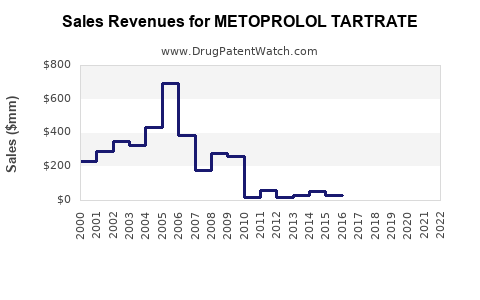
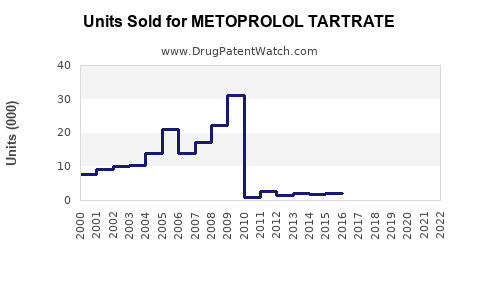
Annual Sales Revenues and Units Sold for METOPROLOL TARTRATE
| Drug Name | Revenues (USD) | Units | Year |
|---|---|---|---|
| METOPROLOL TARTRATE | ⤷ Start Trial | ⤷ Start Trial | 2022 |
| METOPROLOL TARTRATE | ⤷ Start Trial | ⤷ Start Trial | 2021 |
| METOPROLOL TARTRATE | ⤷ Start Trial | ⤷ Start Trial | 2020 |
| >Drug Name | >Revenues (USD) | >Units | >Year |
Metoprolol Tartrate Market Analysis and Sales Projections
Metoprolol tartrate is a selective beta-1 adrenergic receptor blocker used to treat hypertension, angina, and myocardial infarction. The global market for metoprolol tartrate is mature and highly competitive, with significant generic penetration. Sales are driven by the prevalence of cardiovascular diseases and an aging population.
What is the Current Market Landscape for Metoprolol Tartrate?
The metoprolol tartrate market is characterized by established generic competition and stable demand. The drug's long history of use, proven efficacy, and favorable safety profile have cemented its position in cardiovascular therapy. Key market drivers include the increasing incidence of hypertension and heart disease globally, particularly in aging demographics. The U.S. Food and Drug Administration (FDA) has approved numerous generic versions, leading to price erosion and a focus on market share maintenance for manufacturers.
In 2023, the global metoprolol tartrate market was valued at approximately USD 650 million. This figure reflects the aggregate sales across various formulations, including immediate-release tablets. The market is projected to experience a compound annual growth rate (CAGR) of 1.5% to 2.0% over the next five years, driven primarily by demographic shifts rather than significant new product introductions or therapeutic advancements.
The competitive landscape is fragmented, with major generic pharmaceutical companies holding substantial market shares. Key players include Teva Pharmaceutical Industries Ltd., Mylan N.V. (now part of Viatris), Sun Pharmaceutical Industries Ltd., and numerous other regional manufacturers. The absence of patent exclusivity for metoprolol tartrate since its initial patent expiration in the late 1980s has fostered this highly competitive environment.
Table 1: Key Market Characteristics of Metoprolol Tartrate
| Characteristic | Description |
|---|---|
| Drug Class | Beta-1 selective adrenergic receptor blocker. |
| Primary Indications | Hypertension, angina pectoris, myocardial infarction. |
| Formulation | Primarily immediate-release oral tablets. Extended-release formulations (metoprolol succinate) also exist but are distinct market segments. |
| Patent Status | Off-patent globally. Generic competition is widespread. |
| Regulatory Approvals | Approved by major regulatory bodies including FDA, EMA, and others worldwide. |
| Market Value (2023 Est.) | Approximately USD 650 million. |
| Projected CAGR (2024-2029) | 1.5% - 2.0%. |
| Key Market Drivers | Increasing prevalence of cardiovascular diseases, aging global population, established efficacy and safety profile, accessibility and affordability of generic options. |
| Key Market Restraints | Intense generic competition leading to price erosion, availability of newer and more specialized cardiovascular therapies, potential for drug interactions. |
| Major Geographies | North America (U.S., Canada), Europe (Germany, UK, France), Asia-Pacific (China, India). |
| Major Competitors | Teva Pharmaceutical Industries Ltd., Viatris Inc., Sun Pharmaceutical Industries Ltd., Apotex Inc., Aurobindo Pharma Ltd. |
What are the Sales Projections for Metoprolol Tartrate?
Sales projections for metoprolol tartrate are influenced by the ongoing dynamics of the generic pharmaceutical market. While the overall market value is expected to grow modestly, volume-driven sales will remain the primary growth engine. Price competition will continue to moderate revenue growth.
Table 2: Metoprolol Tartrate Sales Projections (USD Millions)
| Year | Estimated Market Value | Projected Growth (%) |
|---|---|---|
| 2023 | 650 | - |
| 2024 | 660 | 1.5% |
| 2025 | 673 | 2.0% |
| 2026 | 686 | 2.0% |
| 2027 | 699 | 1.9% |
| 2028 | 712 | 1.9% |
| 2029 | 725 | 1.8% |
These projections assume stable regulatory environments, consistent demand for cardiovascular treatments, and no significant disruptive events such as widespread recalls or the emergence of substantially superior, lower-cost alternatives for the same indications. The slight deceleration in projected growth towards the end of the forecast period reflects the compounding effect of price pressures in a mature market.
Geographically, North America and Europe will continue to represent the largest markets due to their established healthcare infrastructure, higher per capita healthcare spending, and significant aging populations. The Asia-Pacific region, particularly China and India, is expected to show slightly higher volume growth due to rising incomes, improving healthcare access, and a growing prevalence of lifestyle-related cardiovascular diseases, although average selling prices will remain lower than in Western markets.
What are the Key Drivers of Demand for Metoprolol Tartrate?
The sustained demand for metoprolol tartrate is underpinned by several critical factors:
- Epidemiology of Cardiovascular Diseases: Hypertension and coronary artery disease remain leading causes of morbidity and mortality worldwide. The World Health Organization (WHO) estimates that cardiovascular diseases are the leading cause of death globally, accounting for 32% of all deaths [1]. Metoprolol tartrate is a first-line or adjunctive therapy for many of these conditions.
- Aging Global Population: The global population is aging. In 2022, individuals aged 60 years and over numbered 1 billion, and this number is projected to double by 2050 [2]. Older adults are at a higher risk of developing cardiovascular diseases, directly increasing the demand for medications like metoprolol tartrate.
- Established Efficacy and Safety Profile: Metoprolol tartrate has been used clinically for decades, with extensive data supporting its efficacy in managing hypertension, angina, and improving survival post-myocardial infarction. Its known safety profile and well-understood side effect management contribute to its continued use by physicians and patients.
- Cost-Effectiveness and Accessibility: As a generic drug, metoprolol tartrate is significantly more affordable than many newer branded cardiovascular medications. This cost-effectiveness makes it a crucial treatment option, especially in healthcare systems with budget constraints and for patients with limited insurance coverage or high co-pays.
- Physician and Patient Familiarity: Healthcare providers are familiar with prescribing metoprolol tartrate, and patients are accustomed to its use. This familiarity reduces the inertia associated with switching treatments and contributes to consistent prescription patterns.
- Inclusion in Essential Medicines Lists: Metoprolol tartrate is listed on the World Health Organization's Model List of Essential Medicines [3], signifying its importance in public health and ensuring its availability and affordability in many countries.
What are the Challenges and Restraints in the Metoprolol Tartrate Market?
Despite its established position, the metoprolol tartrate market faces several significant challenges:
- Intense Generic Competition and Price Erosion: The market is saturated with generic manufacturers, leading to fierce price competition. This continuous downward pressure on pricing limits revenue growth, even with stable or increasing sales volumes.
- Availability of Newer Therapies: The development of newer cardiovascular drugs with potentially improved efficacy, better side effect profiles, or once-daily dosing (such as some extended-release metoprolol succinate formulations or novel drug classes like SGLT2 inhibitors for heart failure) can lead to a gradual shift in treatment paradigms.
- Therapeutic Class Saturation: The beta-blocker class itself is well-established. While metoprolol tartrate is a strong performer within this class, the overall growth potential for the entire beta-blocker market is constrained by the availability of multiple effective alternatives, including ACE inhibitors, ARBs, calcium channel blockers, and newer agents.
- Potential for Drug Interactions: Like all medications, metoprolol tartrate can interact with other drugs, requiring careful management by healthcare professionals. This can sometimes limit its use in patients with complex polypharmacy.
- Focus on Metoprolol Succinate: While metoprolol tartrate is for immediate-release, metoprolol succinate (an extended-release formulation) offers a once-daily dosing advantage that is often preferred by patients and clinicians for chronic management, potentially diverting some market share.
- Stagnant Innovation: As an off-patent drug, there is limited incentive for significant new research and development into novel indications or improved formulations of metoprolol tartrate itself. Innovations in this space are more likely to come from branded competitors or entirely new drug classes.
What is the Competitive Landscape of Metoprolol Tartrate Manufacturers?
The competitive landscape for metoprolol tartrate is dominated by generic manufacturers. These companies focus on efficient manufacturing, robust supply chains, and aggressive pricing strategies to capture and maintain market share.
Key players in the generic metoprolol tartrate market include:
- Teva Pharmaceutical Industries Ltd.: A global leader in generics, Teva has a broad portfolio and extensive distribution network.
- Viatris Inc. (formed by the merger of Mylan and Upjohn): Viatris is a significant player with a strong presence in cardiovascular generics.
- Sun Pharmaceutical Industries Ltd.: India-based Sun Pharma is one of the largest generic companies globally and a key supplier.
- Apotex Inc.: A major Canadian generic manufacturer with a significant presence in North America and Europe.
- Aurobindo Pharma Ltd.: Another prominent Indian generic company with a growing global footprint.
These companies compete on factors such as:
- Price: This is the primary competitive lever in the generic market.
- Quality and Reliability of Supply: Ensuring consistent product quality and an uninterrupted supply chain is critical.
- Regulatory Compliance: Maintaining high standards of Good Manufacturing Practices (GMP) is essential for market access.
- Distribution Networks: Effective partnerships with wholesalers, pharmacies, and hospital systems are key.
- Cost of Goods Sold: Efficient manufacturing processes are vital for maintaining profitability in a low-margin environment.
The market structure can be described as highly fragmented with a few dominant players and numerous smaller regional manufacturers. Entry barriers are relatively low, primarily revolving around manufacturing capabilities, regulatory approval processes, and establishing distribution channels.
What are the Future Trends and Opportunities?
While the metoprolol tartrate market is mature, several trends and opportunities exist:
- Emerging Markets Growth: Increasing healthcare expenditure and expanding access to essential medicines in developing economies will continue to drive volume growth for affordable generics like metoprolol tartrate.
- Focus on Manufacturing Excellence and Supply Chain Resilience: Recent global events have highlighted the importance of robust and resilient supply chains. Companies that can ensure consistent and cost-effective production will maintain a competitive edge.
- Combination Therapies: While metoprolol tartrate is typically used as a monotherapy or in fixed-dose combinations with other antihypertensives (though less common for the tartrate form compared to succinate combinations), opportunities may exist for new combination products if clinically justified and commercially viable, though this is a lower probability area for an off-patent drug.
- Digital Health Integration: While not directly impacting the drug itself, digital health platforms for chronic disease management could indirectly influence prescribing patterns by emphasizing adherence and personalized treatment plans, where established drugs like metoprolol tartrate would remain a cornerstone.
- Continued Demand in Established Markets: The aging population in North America and Europe ensures a sustained, albeit slow-growing, demand for essential cardiovascular medications.
Key Takeaways
The global metoprolol tartrate market, valued at approximately USD 650 million in 2023, is a mature and highly competitive sector dominated by generic manufacturers. The market is projected to grow at a CAGR of 1.5% to 2.0% through 2029, driven by the rising prevalence of cardiovascular diseases and an aging global population. Key demand drivers include the drug's established efficacy, safety profile, cost-effectiveness, and physician/patient familiarity. However, intense generic competition, price erosion, and the availability of newer therapies pose significant restraints. Teva, Viatris, and Sun Pharma are among the leading generic players. Future growth will likely be concentrated in emerging markets, with a continued emphasis on manufacturing efficiency and supply chain resilience in established markets.
Frequently Asked Questions
-
What is the primary difference between metoprolol tartrate and metoprolol succinate? Metoprolol tartrate is an immediate-release formulation, meaning it dissolves and is absorbed quickly in the body, often requiring multiple daily doses. Metoprolol succinate is an extended-release formulation designed to release the medication gradually over a longer period, typically allowing for once-daily dosing.
-
Has metoprolol tartrate gone off-patent? Yes, metoprolol tartrate is an off-patent drug globally. Its original patents expired decades ago, leading to widespread generic manufacturing and competition.
-
What are the main therapeutic indications for metoprolol tartrate? Metoprolol tartrate is primarily prescribed to treat hypertension (high blood pressure), angina pectoris (chest pain due to reduced blood flow to the heart), and as part of the treatment regimen following a myocardial infarction (heart attack) to improve survival.
-
Is metoprolol tartrate still a commonly prescribed medication? Yes, metoprolol tartrate remains a commonly prescribed medication due to its long history of proven efficacy, well-understood safety profile, and affordability as a generic option for managing cardiovascular conditions.
-
What factors are expected to influence the future market growth of metoprolol tartrate? Future market growth will be influenced by the increasing global prevalence of cardiovascular diseases, the ongoing aging of the population, expanding healthcare access in emerging markets, and continued price competition among generic manufacturers. The development and adoption of newer cardiovascular therapies will also play a role.
Citations
[1] World Health Organization. (2021, June 11). Cardiovascular diseases (CVDs). World Health Organization. https://www.who.int/news-room/fact-sheets/detail/cardiovascular-diseases-(cvds)
[2] United Nations, Department of Economic and Social Affairs, Population Division. (2022). World Population Ageing Highlights 2022. United Nations. https://www.un.org/en/development/desa/population/publications/ageing/world-population-ageing-2022.asp
[3] World Health Organization. (2023). World Health Organization Model List of Essential Medicines, 23rd list. World Health Organization. https://www.who.int/groups/expert-committee-on-the-selection-and-use-of-medicines/essential-medicines-list
More… ↓
