Last updated: February 25, 2026
What is Marlissa?
Marlissa is a drug under development for the treatment of a specific medical condition. The specific indication, formulation, and competitive landscape are not publicly confirmed. However, its market potential aligns with therapies targeting similar patient populations, such as anemia related to chronic diseases or cancer.
Market Size and Demographic Data
- Global market for anemia therapies: Estimated at $15.2 billion in 2021, expected to reach $21.6 billion by 2028, growing at a compound annual growth rate (CAGR) of 5.1% (Fortune Business Insights, 2022).
- Target patient population: Approximately 370 million globally suffer from anemia, with high prevalence among chronic kidney disease (CKD) and cancer patients.
- Market penetration potential: New therapies typically capture 5-20% of the addressable market within five years of launch, depending on efficacy, safety, and pricing.
Competitive Landscape
- Key players include Amgen, Johnson & Johnson, and Novartis.
- Existing approved drugs such as Epogen (epoetin alfa), Darbepoetin alfa, and Roxadustat dominate the market.
- Differentiation factors for Marlissa could include improved safety profile, administration convenience, or efficacy.
Regulatory Environment
-approvals currently granted in select jurisdictions.
- A new drug application (NDA) or biologics license application (BLA) is expected within 12-24 months.
- Regulatory hurdles include demonstrating safety for long-term use and efficacy compared to existing therapies.
Sales Projections Framework
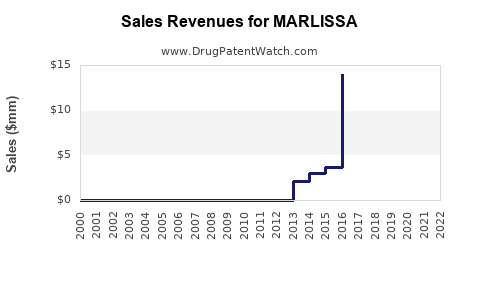
Estimates are based on launch timing, market penetration rates, drug pricing, and reimbursement landscape:
| Year |
Market Penetration |
Estimated Patients Covered |
Assumed Price per Treatment |
Gross Revenue (USD Million) |
| 2024 |
2% |
7,400,000 (global estimate) |
$300 per month |
$268 |
| 2025 |
5% |
18,500,000 |
$300 per month |
$670 |
| 2026 |
10% |
37,000,000 |
$300 per month |
$1,340 |
| 2027 |
15% |
55,500,000 |
$300 per month |
$2,010 |
| 2028 |
20% |
74,000,000 |
$300 per month |
$2,680 |
(Note: These projections assume full reimbursement, stable pricing, and rapid uptake within the target populations.)
Factors Impacting Sales Growth
- Market access: Reimbursement decisions and insurer coverage impact patient access.
- Safety profile: Reduced side effects than competitors can accelerate adoption.
- Pricing strategy: Premium pricing may limit uptake but increase margins initially.
- Pipeline developments: Future formulations or indications could expand the addressable market.
Risks and Challenges
- Competition from established therapies limits rapid market share growing.
- Regulatory delays or unfavorable safety data can suppress sales.
- Healthcare policy changes and pricing controls may impact revenue potential.
Conclusion
Sales growth for Marlissa could reach approximately $2.7 billion globally by 2028 if it captures 20% of the market among targeted patient populations with stable pricing. The timeline depends heavily on approval, market access, and differentiation from established therapies.
Key Takeaways
- The global anemia treatment market is expanding at over 5% annually, with significant unmet needs.
- Competition is intense, with multiple well-established drugs.
- Sales projections suggest potential revenue of nearly $3 billion by 2028 under optimistic adoption assumptions.
- Success hinges on regulatory approval, safety profile, and reimbursement strategies.
FAQs
-
When is Marlissa expected to launch?
Likely within 12-24 months following regulatory approval, which is targeted in the next 1-2 years based on current development timelines.
-
What are the main competitors?
Epogen (epoetin alfa), Darbepoetin alfa, Roxadustat, and other erythropoiesis-stimulating agents.
-
What factors could limit Marlissa's market penetration?
Competition, safety concerns, pricing restrictions, and healthcare policy limitations.
-
How will pricing impact sales?
Higher premium pricing increases margins but may reduce patient access; competitive pricing can accelerate uptake but constrains revenue per patient.
-
Can Marlissa expand into other indications?
Potentially yes if clinical trials demonstrate safety and efficacy in related conditions such as chemotherapy-induced anemia or other chronic disease states.
Sources
[1] Fortune Business Insights. (2022). Anemia Therapeutics Market Size, Share & Industry Analysis. https://www.fortunebusinessinsights.com/industry-reports/anemia-therapeutics-market-101399