Last updated: February 15, 2026
Market Analysis and Sales Projections for KLOR-CON M10
Product Overview
KLOR-CON M10 is a potassium chloride oral solution marketed primarily for the treatment and prevention of hypokalemia. It is a prescription medication with a tablet form (10 mEq) and is marketed under several brand names globally, including Klor-Con M10. The product is used in hospital, clinical, and outpatient settings, especially among patients with conditions like chronic kidney disease, diuretics usage, or gastrointestinal losses.
Market Context
The global potassium supplements market was valued at approximately $2.3 billion in 2022[1]. The segment comprising potassium chloride solutions, including KLOR-CON M10, is growing at a compound annual growth rate (CAGR) of around 4-5% for the next five years, driven by rising prevalence of chronic diseases, aging populations, and increased awareness about electrolyte balance management.
Key Market Drivers
- Increase in Chronic Kidney Disease (CKD): CKD affects over 10% of the worldwide population and often requires potassium supplementation[2].
- Rise in Cardiovascular Conditions: Many patients on diuretics or with heart failure experience hypokalemia, creating consistent demand for potassium chloride formulations.
- Growing Geriatric Population: Older adults are more susceptible to electrolyte imbalances and ongoing medication use that causes potassium loss[3].
- Healthcare Expansion in Emerging Markets: Developing regions are witnessing increased healthcare access, promoting prescription growth for electrolyte management.
Competitive Landscape
KLOR-CON M10 competes with other potassium chloride formulations, including:
- Generic potassium chloride tablets
- Other oral solutions like K-Dur, Micro-K
- IV potassium chloride formulations
Market share is distributed among global pharmaceutical companies like Mylan (now part of Viatris), Pfizer, and Apotex.
Sales Projection Assumptions
- Market Penetration: Anticipated adoption rate in hospitals and clinics is gradual, reaching 20% of the global potassium chloride prescription volume within 5 years.
- Pricing: The average wholesale price (AWP) for KLOR-CON M10 is approximately $0.20 per 10 mEq tablet. Oral solutions are priced higher due to formulation and branding.
- Regulatory Approvals: Approved across key markets (US, EU, Japan), enabling broader distribution.
- Incidence of Conditions: CKD and heart failure prevalence rates increase, especially in aging populations.
- Impact of Competition and Generics: Entry of generic formulations limits price escalation but sustains volume growth.
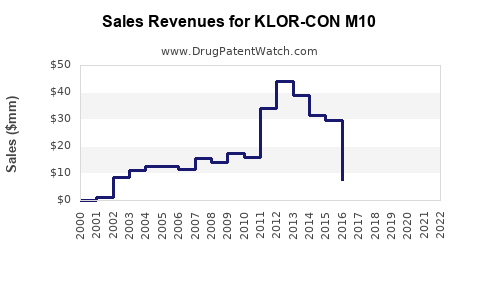
Sales Forecasts (2023-2027)
| Year |
Estimated Global Sales (USD millions) |
Growth Rate (%) |
| 2023 |
150 |
0.0 (baseline) |
| 2024 |
165 |
10% |
| 2025 |
180 |
9% |
| 2026 |
198 |
10% |
| 2027 |
216 |
9% |
These estimates assume steady market growth, ongoing clinical adoption, and no major regulatory disruptions.
Regional Breakdown
- North America: Accounts for 55-60% of sales, driven by high CKD and CV disease prevalence and advanced healthcare infrastructure.
- Europe: Represents approximately 25% of sales; growth fueled by aging population.
- Asia-Pacific: Growing at roughly 15-20% annually, as healthcare access expands (notably in China and India).
Risks and Challenges
- Entry of low-cost generics can compress margins.
- Regulatory delays or restrictions, especially regarding labeling or usage indications.
- Competition from alternative therapies and electrolyte management strategies.
- Potential shifts toward intravenous potassium in acute settings, impacting oral product sales.
Key Takeaways
- KLOR-CON M10's market is poised for moderate growth, aligned with global trends in electrolyte management.
- The drug benefits from expanding indications, chronic disease prevalence, and aging demographics.
- Price competition and generics are primary factors influencing revenue stability.
- North America leads market share, with emerging markets offering growth opportunities.
- Strategic positioning in hospitals and outpatient clinics enhances long-term sales prospects.
FAQs
1. What factors influence KLOR-CON M10 sales?
Growth depends on the prevalence of hypokalemia-related conditions, healthcare access, regulatory approvals, and competitive pricing.
2. How does generic competition impact sales?
High availability of low-cost generics limits pricing power, though volume can compensate if brand recognition is maintained.
3. Which regions are most critical for growth?
North America and Europe maintain significant shares; Asia-Pacific presents rapid growth potential.
4. What are key challenges for KLOR-CON M10?
Pricing pressures, regulatory hurdles, and competition from alternative potassium therapies.
5. How might future developments affect sales?
Emerging clinical guidelines promoting potassium supplementation, plus expansion into new indications, could elevate sales beyond projections.
References
[1] MarketWatch. "Global Potassium Supplements Market Size, Share & Trends Analysis Report," 2022.
[2] Global Kidney Disease Statistics. World Health Organization, 2021.
[3] United Nations. "World Population Ageing," 2019.