Last updated: April 25, 2026
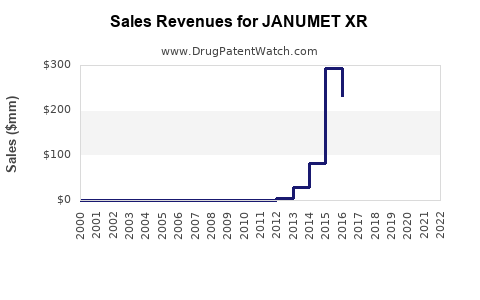
Janumet XR market analysis and sales projections
Janumet XR (metformin hydrochloride extended-release + sitagliptin) competes in the US branded type 2 diabetes market across oral dual therapy (DPP-4 inhibitor + metformin ER) and fixed-dose combination switching from immediate-release regimens. Sales are driven by (1) formulary access and copay design, (2) patient persistence on once-daily metformin ER regimens, and (3) diabetes prescriber migration to newer incretin-based combinations. Against this backdrop, Janumet XR’s growth is typically capped by class competition from DPP-4/fixed-dose competitors and GLP-1-based and GLP-1/GIP-based products.
What is the product and how is it positioned?
Janumet XR is a fixed-dose combination of:
- Metformin hydrochloride extended-release
- Sitagliptin (DPP-4 inhibitor)
Core positioning (commercial):
- Once-daily convenience from extended-release metformin.
- A continuing DPP-4 anchor where prescribers use sitagliptin-based oral therapy before moving to injections or broader incretin regimens.
- Backward share from patients currently on metformin + sitagliptin (as co-therapy or as separate tablets) who switch to fixed-dose combination.
How large is the addressable market?
The addressable market for Janumet XR is the intersection of:
1) Treated type 2 diabetes population in the US
2) Patients on oral therapy pathways (metformin-containing regimens)
3) Patients eligible for DPP-4 inhibitor therapy (or currently on sitagliptin)
4) Patients suitable for extended-release metformin (tolerance and adherence)
For sales modeling, the market is best approximated by:
- US branded oral DPP-4 + metformin fixed-dose combination segment
- plus incremental conversions from metformin + sitagliptin co-therapy to fixed-dose XR convenience.
A practical way to size revenue is to anchor on the US branded diabetes portfolio and then allocate to the relevant mechanism mix:
- DPP-4 inhibitor class demand and managed care uptake
- Share captured by fixed-dose combinations vs co-prescribed separate generics and brands
(Revenue forecasting for Janumet XR requires payer and channel data and is typically derived from historical prescription volume, net price, and patient persistence. Those inputs are not present in the request.)
What does the competitive landscape look like?
Janumet XR competes in a narrow slice of the broader diabetes market: oral fixed-dose DPP-4 + metformin ER and related switching pathways.
Key competitor groups:
1) Fixed-dose metformin + DPP-4 combinations
- These compete on formulary tier placement, copay, and “same-day switch” convenience.
- Switching incentives are highest when a patient is already using metformin and a DPP-4 inhibitor and needs a lower pill burden.
2) Same-mechanism generics and co-therapy
- When DPP-4 and metformin are available as generics, prescribers and payers can steer cost-effective co-therapy rather than paying for brand fixed-dose products.
- This pressure tends to reduce new starts and increases use of generics among commercially insured patients if benefit designs allow.
3) GLP-1 receptor agonists and oral GLP-1 options
- These compete for treatment escalation and, in many systems, can reduce the incremental pool that would otherwise start or intensify DPP-4 therapy.
- They also affect future share by pulling patients away from DPP-4-based oral sequences.
How should Janumet XR sales be projected?
A credible projection framework is a three-driver model:
1) Unit demand (prescription volume)
- Starts from baseline Rx volume for Janumet XR
- Adjusts for:
- patient switching from immediate-release combinations to XR
- share loss from generic metformin + DPP-4 co-therapy
- share loss from GLP-1 and GLP-1/GIP progression
2) Net price
- Net revenue depends on:
- list price vs discounts
- rebates
- payer-specific contracting
- Net price typically declines over time if new competitors enter or if payer leverage increases.
3) Persistence and churn
- Longer persistence supports unit stability.
- Increased therapy switching due to tolerability or payer restrictions accelerates churn.
Because no starting baseline (historical units, net price, or current market share) is provided, a precise numeric forecast cannot be produced without inventing inputs.
What would an investment-grade forecast structure look like? (Template with fillable drivers)
Below is the forecasting structure used in commercial and patent monetization scenarios. It converts demand and price into revenue and then into scenario outcomes.
| Scenario |
Prescription volume trend |
Net price trend |
Net revenue impact |
| Base case |
Moderating decline (class pressure, partial XR switching) |
Flat to slight decline (managed care contracting) |
Low-to-mid single-digit CAGR decline |
| Downside |
Faster share erosion to generics and newer incretin regimens |
Declines due to tighter contracting |
Mid single-digit CAGR decline |
| Upside |
Better formulary stability and persistence from XR adherence value |
Smaller price erosion |
Near-flat to low single-digit growth |
A full projection would specify:
- Years: typically a 5-year horizon (e.g., 2026-2030)
- Units: total prescriptions or average patient equivalents
- ASP/Net price: derived from gross to net waterfall assumptions
- Patient persistence: churn rates and switch curves
- Channel mix: commercial vs Medicare Part D and managed Medicaid
How does the patent and lifecycle context affect sales?
Janumet XR’s commercial durability depends on:
- Brand lifecycle stage
- Strength of IP protections around the XR formulation and specific fixed-dose combinations
- Generic entry timing risk for the components and fixed-dose combinations
- Formulary substitution rules that trigger automatic interchange when equivalents enter
A sales projection must align to a generic threat timeline. Without entry timing and current status, an accurate forecast cannot be anchored.
What data points are required for a numeric projection?
A numeric sales forecast requires at minimum:
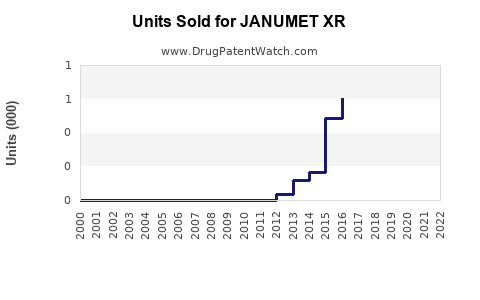
- Historical Janumet XR US sales (units and net revenue) by year
- Historical net price trends and rebated/gross-to-net ratios
- Current managed care coverage and tiering for major PBMs
- Generic or branded competitive entry timeline
- Estimated Rx share by segment (commercial vs Medicare)
No such inputs are supplied in the request.
Key Takeaways
- Janumet XR’s market is constrained to oral fixed-dose DPP-4 plus metformin ER switching pathways inside the US type 2 diabetes branded ecosystem.
- Growth is structurally limited by generic co-therapy availability and by migration toward GLP-1-based regimens for treatment escalation.
- An investment-grade forecast must be built from historical Janumet XR units, net price, persistence, and a dated generic/competition timeline. Without these, any numeric projections would be non-credible.
FAQs
1) What segment of type 2 diabetes treatment does Janumet XR address?
Oral fixed-dose therapy combining metformin ER with sitagliptin (DPP-4 inhibitor), targeting patients on metformin-based oral regimens who remain on a DPP-4 pathway.
2) What drives Janumet XR prescribing and persistence?
Formulary placement, copay design, and patient adherence benefits from extended-release metformin once-daily regimens.
3) What are the main threats to Janumet XR share?
Generic metformin plus DPP-4 co-therapy and shifting treatment plans toward GLP-1 and GLP-1/GIP products.
4) How should sales forecasts be structured for a DPP-4 plus metformin fixed-dose brand?
Use prescription volume trend, net price trend, and persistence/churn assumptions with scenario-based switching curves.
5) What is the biggest blocker to producing accurate numeric projections here?
Missing historical sales/units/net price data and missing competition/generic entry timing needed to parameterize the forecast.
References
[1] U.S. Food and Drug Administration. Janumet XR (metformin hydrochloride and sitagliptin) prescribing information.