Share This Page
Drug Sales Trends for E.E.S. GRAN
✉ Email this page to a colleague
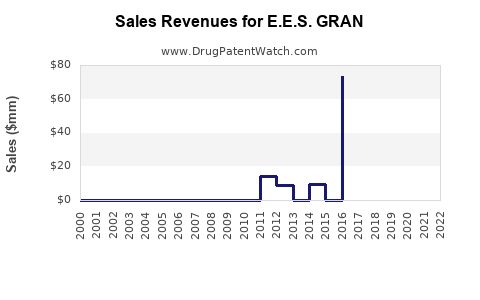
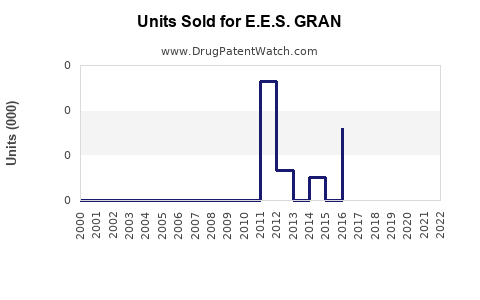
Annual Sales Revenues and Units Sold for E.E.S. GRAN
| Drug Name | Revenues (USD) | Units | Year |
|---|---|---|---|
| E.E.S. GRAN | ⤷ Get Started Free | ⤷ Get Started Free | 2022 |
| E.E.S. GRAN | ⤷ Get Started Free | ⤷ Get Started Free | 2021 |
| E.E.S. GRAN | ⤷ Get Started Free | ⤷ Get Started Free | 2020 |
| E.E.S. GRAN | ⤷ Get Started Free | ⤷ Get Started Free | 2019 |
| E.E.S. GRAN | ⤷ Get Started Free | ⤷ Get Started Free | 2018 |
| E.E.S. GRAN | ⤷ Get Started Free | ⤷ Get Started Free | 2017 |
| >Drug Name | >Revenues (USD) | >Units | >Year |
Market Analysis and Sales Projections for E.E.S. GRAN
Introduction
E.E.S. GRAN is an established pharmaceutical formulation primarily used to treat parasitic infections such as roundworms, hookworms, and other helminths. Comprising a combination of active ingredients like mebendazole, pyrantel pamoate, and praziquantel, E.E.S. GRAN has cemented its position in antiparasitic therapy. This analysis evaluates the current market landscape, competition, regulatory environment, and growth prospects to project future sales and identify strategic opportunities for stakeholders.
Market Overview
The global antiparasitic drugs market was valued at approximately USD 4.8 billion in 2022, growing at a compound annual growth rate (CAGR) of around 5% (2023-2028) [1]. The increasing prevalence of parasitic infections driven by tropical and subtropical climates, improved diagnostic protocols, and rising awareness about parasitic diseases contribute significantly to market growth. E.E.S. GRAN, with its broad-spectrum efficacy and established safety profile, remains a vital product in this segment, particularly in endemic regions.
Therapeutic Indications and Demographics
E.E.S. GRAN's primary indications include treatment of soil-transmitted helminths (STHs) among children and adults in both developed and developing nations. The World Health Organization (WHO) estimates that over 1.5 billion people globally are infected with soil-transmitted helminths, primarily in Africa, Asia, and Latin America [2]. The high burden of these diseases fosters sustained demand for effective antiparasitic treatments like E.E.S. GRAN.
Geographic Distribution
The highest consumption of antiparasitic drugs, including E.E.S. GRAN, originates from developing nations with inadequate sanitation infrastructure. Regions like Sub-Saharan Africa, South Asia, and Latin America account for a substantial share of market volume due to endemic parasitic infections. Conversely, developed regions exhibit steady but comparatively lower consumption, mainly for travel-related infections and prophylactic use.
Competitive Landscape
E.E.S. GRAN operates in a competitive environment characterized by several branded and generic antiparasitic formulations. Noteworthy competitors include:
- Albendazole-based combinations: Broadly used due to their efficacy and affordability.
- Praziquantel monotherapy: Predominantly for schistosomiasis and certain trematode infections.
- Combination products: Such as pyrantel pamoate combined with other agents, similar to E.E.S. GRAN.
Market leaders are often distinguished by their established manufacturing reputation, regulatory approvals, and distribution networks. Generic formulations exert pressure on pricing but also expand accessibility, especially in underserved markets.
Regulatory and Manufacturing Considerations
E.E.S. GRAN’s formulations align closely with WHO prequalification standards, facilitating procurement by government health programs and NGOs. Regulatory approvals in key markets such as India, Brazil, and African nations underpin its availability. Ongoing efforts for patent expiration further open the market to generic producers, escalating competitive dynamics but also expanding market penetration.
Market Drivers and Challenges
Drivers:
- Rising parasitic disease prevalence: Driven by poor sanitation and hygiene.
- Global health initiatives: WHO-led mass drug administration (MDA) programs target school-aged children.
- Increasing healthcare access: Particularly in emerging markets.
- Regulatory support: Approvals and prequalification facilitate procurement.
Challenges:
- Pricing pressures: Particularly from generics.
- Development of resistance: Emerging resistance to certain antiparasitics threatens long-term efficacy.
- Supply chain constraints: Affecting distribution, especially during pandemics.
- Limited patent protection: While opening markets, it reduces potential for premium pricing.
Sales Projections (2023-2028)
Methodology
Forecasting considers market growth rates, endemic disease prevalence, current market share, regulatory environment, and emerging competition. Given the commodity-like nature of E.E.S. GRAN, projections prioritize volume growth, with moderate price adjustments influenced by regional economic factors.
Base Case Scenario
- 2023 sales estimate: USD 120 million globally.
- Annual growth rate: 4.5%, aligned with the projected CAGR of the antiparasitic market.
- 2028 forecast: Approximately USD 163 million.
Regional Breakdown
- Africa: 50% of sales, driven by large-scale MDA campaigns.
- Asia: 30%, with high endemicity and increasing healthcare access.
- Latin America: 10%, stable demand due to endemicity.
- Other regions: 10%, primarily travel-related use and niche indications.
Key Factors Influencing Growth
- Expansion of WHO-supported mass deworming campaigns.
- Increased procurement through government and NGO programs.
- Product availability through generic channels.
- Potential for new combination formulations enhancing efficacy.
Strategic Opportunities
- Formulation innovations: Developing pediatric-friendly formulations or sustained-release versions to enhance compliance and capture higher margins.
- Regional expansion: Targeting underserved markets in Southeast Asia and Africa.
- Partnerships: Collaborating with global health agencies to secure procurement contracts.
- Regulatory modernization: Accelerating product approvals and prequalification processes to widen market access.
Conclusions
E.E.S. GRAN is positioned within a steady-growth market, with opportunities driven by endemic disease prevalence and healthcare infrastructure improvement. Its broad-spectrum efficacy and existing regulatory endorsements underpin sustained demand, particularly in developing regions. Stakeholders should focus on expanding manufacturing capacity, leveraging global health initiatives, and innovating formulations to maximize sales potential over the forecast period.
Key Takeaways
- The global antiparasitic market is expected to grow at around 5% CAGR, with E.E.S. GRAN maintaining a strong foothold, especially in endemic regions.
- Geographies with high parasitic disease burdens, notably Africa and Asia, contribute the majority of demand.
- The availability of generic formulations enhances access but intensifies price competition.
- Future growth hinges on expanding procurement through health campaigns, regional market penetration, and product innovation.
- Monitoring emerging resistance patterns and regulatory shifts is critical for sustaining market share and optimizing sales.
FAQs
1. What is the current global demand for E.E.S. GRAN?
Global demand principally exists in endemic regions such as Africa and Asia, accounting for approximately USD 120 million in sales in 2023, with steady growth driven by ongoing mass drug administration programs.
2. How will increased resistance impact E.E.S. GRAN sales?
Emerging resistance to antiparasitic agents can reduce treatment efficacy, potentially lowering demand. Continuous surveillance and development of combination therapies are necessary to counter resistance concerns.
3. What opportunities exist for expanding E.E.S. GRAN’s market share?
Opportunities include formulation innovation, strategic partnerships with health organizations, regional expansion into underserved markets, and obtaining regulatory approvals in high-growth areas.
4. How does patent expiration influence E.E.S. GRAN’s competitive landscape?
Patent expiry enables generic producers to enter the market, increasing competition and potentially reducing prices but also broadening access to the medication.
5. What role do global health initiatives play in E.E.S. GRAN's sales projections?
Programs like WHO’s deworming campaigns significantly drive demand, especially in children, contributing to an anticipated annual growth rate that sustains sales over the forecast period.
Sources
[1] MarketsandMarkets, "Antiparasitic Drugs Market," 2023.
[2] World Health Organization, "Soil-Transmitted Helminth Infections," 2022.
More… ↓
