Share This Page
Drug Sales Trends for BESIVANCE
✉ Email this page to a colleague
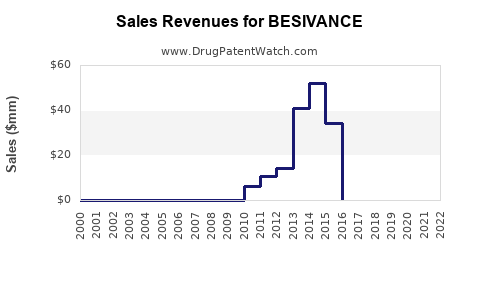
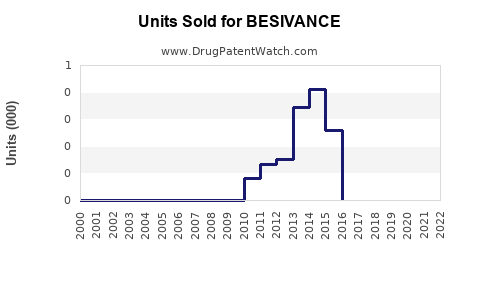
Annual Sales Revenues and Units Sold for BESIVANCE
| Drug Name | Revenues (USD) | Units | Year |
|---|---|---|---|
| BESIVANCE | ⤷ Start Trial | ⤷ Start Trial | 2022 |
| BESIVANCE | ⤷ Start Trial | ⤷ Start Trial | 2021 |
| BESIVANCE | ⤷ Start Trial | ⤷ Start Trial | 2020 |
| >Drug Name | >Revenues (USD) | >Units | >Year |
BESIVANCE Market Analysis and Sales Projections
BESIVANCE, the branded ophthalmic antibiotic containing besifloxacin hydrochloride 0.6%, is a mature U.S. prescription product marketed by Bausch + Lomb. Its commercial opportunity is concentrated in bacterial conjunctivitis and perioperative ophthalmic prescribing, particularly cataract-related care. The product has clinical differentiation through its DuraSite-based suspension and dosing profile, but its market is constrained by generic fluoroquinolones, limited treatment duration, low refill frequency, and the absence of a large chronic-use population.
A reasonable base-case estimate places U.S. BESIVANCE net sales in the range of $25 million to $45 million annually, with a declining-to-stable trajectory absent a major access expansion or new indication. A modeled five-year outlook produces approximately $135 million in cumulative U.S. net sales under the base case.
What is BESIVANCE and how is it used?
BESIVANCE is a sterile ophthalmic suspension containing besifloxacin hydrochloride equivalent to 0.6% besifloxacin. The FDA approved it in 2009 for the treatment of bacterial conjunctivitis caused by susceptible organisms. The labeled regimen is one drop three times daily for seven days in the affected eye or eyes. The drug is approved for adults and pediatric patients one year of age and older. (FDA, 2009)
Product profile
| Attribute | BESIVANCE |
|---|---|
| Active ingredient | Besifloxacin hydrochloride |
| Strength | 0.6% ophthalmic suspension |
| Drug class | Fluoroquinolone antibacterial |
| FDA dosage form | Ophthalmic suspension |
| Primary approved use | Bacterial conjunctivitis |
| Standard treatment duration | Seven days |
| Standard frequency | Three times daily |
| Marketing company | Bausch + Lomb |
| U.S. approval | 2009 |
| Primary channel | Retail pharmacy, ophthalmology offices, ambulatory surgery |
Besifloxacin is a topical fluoroquinolone developed specifically for ophthalmic use. Its value proposition includes activity against common ocular pathogens and local formulation characteristics intended to improve retention on the ocular surface. The product is positioned against moxifloxacin, gatifloxacin, ofloxacin and tobramycin products.
How large is the BESIVANCE market?
The addressable market is the U.S. topical ophthalmic anti-infective market, but BESIVANCE competes for only a portion of that demand. Bacterial conjunctivitis is often treated with lower-cost generic antibiotics, while many postoperative ophthalmic prescriptions use combination products or generic fluoroquinolones.
The principal demand segments are:
- Acute bacterial conjunctivitis.
- Ophthalmology and optometry prescriptions for suspected bacterial infection.
- Pediatric conjunctivitis.
- Perioperative cataract and other ocular-surgery protocols.
- Patients for whom physicians prefer a branded fluoroquinolone suspension.
The market is prescription-driven and highly sensitive to formulary status. Patients usually complete one short course, which limits recurring revenue. Product demand depends more on new prescriptions than on chronic adherence or refills.
Market drivers
BESIVANCE demand benefits from:
- Continued cataract surgery volume in the United States.
- High prevalence of outpatient eye infections.
- Physician preference for branded ophthalmic products in pediatric or postoperative cases.
- Concern over ocular antimicrobial resistance.
- Bausch + Lomb’s established ophthalmology sales force and distribution network.
Market constraints
The main constraints are:
- Competition from low-cost generic moxifloxacin and other fluoroquinolones.
- Short treatment duration.
- Limited clinical need for repeated courses.
- Payer substitution and prior authorization.
- Physician use of combination antibiotic-steroid products in postoperative settings.
- Lack of a broad chronic-use indication.
What are the BESIVANCE sales projections?
Public company disclosures do not generally report BESIVANCE revenue as a separate line item. Bausch + Lomb reports ophthalmic products at broader portfolio or segment levels, making product-level historical revenue difficult to verify from public filings. The projections below are therefore market-model estimates, not reported company guidance.
Base-case sales projection
Assumptions:
- U.S. net price per treated course: $150 to $175.
- Annual treated courses: approximately 220,000 to 250,000.
- Annual volume erosion: 1% to 3%.
- No major new indication.
- No material expansion in payer coverage.
- Continued availability of generic competing antibiotics.
- Stable Bausch + Lomb distribution and promotion.
| Year | Estimated U.S. net sales, base case | Estimated treated courses |
|---|---|---|
| 2025 | $34 million | 225,000 |
| 2026 | $32 million | 219,000 |
| 2027 | $31 million | 215,000 |
| 2028 | $30 million | 211,000 |
| 2029 | $29 million | 207,000 |
| 2025-2029 cumulative | $156 million | 1.08 million |
The model assumes modest price retention but gradual volume erosion. Net sales could remain stable if Bausch + Lomb raises gross pricing while maintaining access through rebates and commercial contracting.
Scenario analysis
| Scenario | 2025 sales | 2029 sales | Principal assumptions |
|---|---|---|---|
| Downside | $22 million | $14 million | Greater generic substitution, payer restrictions, reduced promotion |
| Base case | $34 million | $29 million | Stable brand access and gradual volume decline |
| Upside | $48 million | $55 million | Higher postoperative adoption, improved formulary status, stronger physician promotion |
The upside case requires a change in prescribing behavior. A simple price increase would be unlikely to create durable growth because treatment courses are short and generic substitutes are widely available.
How does BESIVANCE compare with competing ophthalmic antibiotics?
BESIVANCE competes primarily on formulation, brand support and physician preference rather than price.
| Product | Active ingredient | Typical positioning | Commercial advantage |
|---|---|---|---|
| BESIVANCE | Besifloxacin 0.6% | Branded treatment for bacterial conjunctivitis | Branded suspension and ophthalmology support |
| Vigamox | Moxifloxacin 0.5% | Broad-use ophthalmic fluoroquinolone | Strong historical adoption and generic availability |
| Moxeza | Moxifloxacin 0.5% | Ophthalmic anti-infective | Branded formulation and reduced dosing frequency |
| Zymaxid | Gatifloxacin 0.5% | Bacterial conjunctivitis | Established fluoroquinolone category |
| Ocuflox | Ofloxacin 0.3% | Generic ophthalmic antibiotic | Low price |
| Tobramycin ophthalmic | Tobramycin 0.3% | Generic antibacterial treatment | Low cost and broad prescribing familiarity |
BESIVANCE’s most material competitive weakness is price. Generic moxifloxacin and tobramycin can be prescribed at a fraction of the branded product’s out-of-pocket cost. Its main commercial defense is physician preference for a specific branded suspension, particularly when prescribers believe formulation characteristics or antimicrobial coverage justify the premium.
What FDA regulatory status applies to BESIVANCE?
The FDA approved BESIVANCE under New Drug Application 022308 in 2009 for bacterial conjunctivitis. The approval established the product’s principal commercial use and enabled pediatric labeling for patients at least one year old. (FDA, 2009)
BESIVANCE is not a biologic and has no biosimilar pathway. Competitive entry would occur through an abbreviated new drug application for a generic ophthalmic product, subject to the requirements for pharmaceutical equivalence, bioequivalence and manufacturing quality.
The principal regulatory risk is product substitution through an approved generic suspension. Even where clinical differentiation remains, FDA approval of a therapeutically equivalent generic could materially reduce branded volume.
What patents and exclusivity protect BESIVANCE?
BESIVANCE’s original market exclusivity has expired. The product was approved in 2009, and any pediatric extension associated with the original approval would not remain commercially material today.
The relevant protection categories are:
- Active-ingredient patents covering besifloxacin chemistry.
- Formulation patents involving the ophthalmic suspension or delivery vehicle.
- Manufacturing patents covering synthesis or sterile formulation.
- Method-of-use patents covering treatment of ocular bacterial infections.
- Regulatory exclusivity associated with the original NDA.
The commercial importance of these rights has diminished because the product is more than 15 years from initial approval and competes in a mature fluoroquinolone market. The current risk assessment should rely on the FDA Orange Book and USPTO records for live claims, listed patents, pediatric extensions and any later supplemental approvals. The FDA Orange Book identifies patent and exclusivity information associated with approved drug products. (FDA, 2024)
Patent-strength assessment
| Factor | Assessment |
|---|---|
| Core composition protection | Low current commercial value |
| Formulation protection | Potentially relevant if live claims remain |
| Method-of-use protection | Narrow practical value for a short-course antibiotic |
| Regulatory exclusivity | Expired or no longer commercially significant |
| Generic substitution risk | Moderate to high |
| Manufacturing barriers | Moderate because sterile ophthalmic suspension production requires validated facilities |
| Litigation leverage | Limited absent a currently enforceable, commercially relevant patent |
Formulation and manufacturing complexity can delay entry even after composition protection ends. They do not necessarily prevent entry. A competitor must demonstrate consistent particle size, suspension uniformity, sterility, preservative performance and container-closure compatibility.
Are there Paragraph IV challenges or generic entry risks?
Generic entry is the central long-term risk for BESIVANCE. A Paragraph IV certification would assert that a listed patent is invalid, unenforceable or not infringed. The commercial impact would depend on whether a listed patent remained enforceable and whether the challenger secured approval and 180-day exclusivity.
For a mature ophthalmic product, the most plausible entry paths are:
- A conventional ANDA for a therapeutically equivalent suspension.
- A Paragraph IV challenge to any remaining formulation or method-of-use patent.
- A non-infringing formulation that avoids live patent claims.
- A private-label or contract-manufactured generic supplied through pharmacy channels.
The principal entry barriers are technical rather than clinical. A generic manufacturer must establish sterile production, physical stability, suspension performance and acceptable ophthalmic tolerability. These requirements can reduce the number of credible entrants, but they are unlikely to support a durable branded premium if one or more approved generics achieve broad payer coverage.
What patent litigation affects BESIVANCE?
No major, currently material BESIVANCE litigation is reflected in the core public commercial profile of the product. Any litigation assessment should distinguish between historical disputes involving besifloxacin, broader Bausch + Lomb ophthalmic technologies and live litigation directed specifically at the BESIVANCE NDA or listed patents.
The absence of major active litigation supports a commercial view based on ordinary generic-entry risk rather than an imminent litigation-driven disruption. If a generic applicant files a Paragraph IV certification, the relevant litigation window would depend on the timing of the notice, patent listing and any 30-month stay under the Hatch-Waxman framework. (FDA, 2024)
Does Bausch + Lomb have licensing or partnership exposure?
BESIVANCE is associated with Bausch + Lomb’s ophthalmology business. The product’s formulation technology has historical links to ophthalmic drug-delivery platforms developed and licensed within the eye-care industry, including technologies used to improve ocular residence time.
The commercial analysis should separate product ownership from technology licensing. A license can affect:
- Royalty expense.
- Manufacturing rights.
- Geographic commercialization rights.
- Patent enforcement authority.
- Net sales reported by the sponsor.
- Economics of a generic settlement.
Public product-level disclosures do not establish a separately reported BESIVANCE royalty burden. The principal business risk remains branded erosion rather than a disclosed licensing obligation.
What is the geographic market for BESIVANCE?
The United States is the most important market for BESIVANCE because the product’s approval, reimbursement and commercial history are U.S.-centered. International opportunities are limited by country-specific approvals, local generic competition and different ophthalmology prescribing patterns.
| Region | Commercial outlook |
|---|---|
| United States | Core market; strongest brand infrastructure |
| Canada | Smaller opportunity; reimbursement and approval dependent |
| Europe | Limited opportunity without broad national reimbursement |
| Japan | Regulatory and commercial requirements reduce near-term attractiveness |
| Emerging markets | Price-sensitive; generic competition is strong |
A global launch would require country-specific regulatory filings, local pricing strategies and supply-chain support. The likely return would be lower than the U.S. opportunity unless the product obtained a differentiated label or hospital formulary position.
What generic launch scenarios exist for BESIVANCE?
Scenario 1: No approved generic
Bausch + Lomb retains most branded demand, but sales decline gradually as prescribers use cheaper alternatives. This scenario supports the base-case projection.
Scenario 2: One authorized or therapeutically equivalent generic
Branded volume could fall 25% to 45% within two years, depending on pharmacy substitution and payer policy. Net sales could decline toward $15 million to $25 million annually.
Scenario 3: Multiple generic entrants
Three or more entrants could reduce branded share by 50% to 75%. Under this scenario, BESIVANCE would depend on protected formulary accounts, physician loyalty and patients who remain on the branded product despite higher cost.
Scenario 4: Generic entry delayed by formulation barriers
BESIVANCE could preserve a higher share for several years if sterile suspension development, patent disputes or FDA review delays slow competition. This would support the upside case but would not eliminate eventual price pressure.
How strong is the BESIVANCE commercial position?
BESIVANCE has a moderate product position and a weak-to-moderate long-term exclusivity position.
Its commercial strengths are:
- Recognized Bausch + Lomb ophthalmology brand.
- Established FDA approval.
- Differentiated active ingredient.
- Use in a high-volume outpatient specialty.
- Potential physician preference in pediatric and postoperative cases.
Its weaknesses are:
- Short treatment duration.
- Generic substitutes.
- Limited chronic-use revenue.
- No biologic or device-based barrier to substitution.
- Expired original exclusivity.
- Limited public evidence of strong product-level growth.
Revenue exposure is therefore modest relative to Bausch + Lomb’s broader eye-care portfolio. BESIVANCE is more likely to remain a profitable niche product than become a major growth driver.
Key Takeaways
- BESIVANCE is a mature branded ophthalmic antibiotic containing besifloxacin 0.6%.
- Its primary approved use is bacterial conjunctivitis, treated with a seven-day course.
- Estimated U.S. net sales are approximately $25 million to $45 million annually.
- Base-case sales are modeled at $34 million in 2025 and $29 million in 2029.
- Generic moxifloxacin, tobramycin and other fluoroquinolones are the main competitive threats.
- Original regulatory exclusivity has expired; any remaining patent value depends on live Orange Book and USPTO records.
- The principal generic-entry barriers are sterile ophthalmic suspension manufacturing and regulatory approval.
- There is no biosimilar risk because BESIVANCE is a small-molecule ophthalmic drug.
- The commercial outlook is stable to declining, with upside dependent on postoperative adoption and formulary access.
- A successful generic launch could reduce branded sales by 25% to 75%, depending on the number of entrants.
FAQs
Is BESIVANCE still commercially relevant?
Yes. It remains a recognized branded ophthalmic antibiotic, but its commercial relevance is concentrated in a niche of prescriptions where physicians prefer besifloxacin or the branded formulation.
What is the expected BESIVANCE market size in 2029?
The base-case estimate is approximately $29 million in U.S. net sales in 2029, with a downside range near $14 million and an upside range near $55 million.
Can BESIVANCE be replaced by generic moxifloxacin?
In many cases, physicians and payers can substitute generic moxifloxacin or another ophthalmic antibiotic. The decision depends on diagnosis, physician preference, formulary rules and patient cost.
Is BESIVANCE used after cataract surgery?
Ophthalmologists may use topical antibiotics in perioperative protocols, including after cataract surgery. The exact regimen depends on the surgeon’s protocol and applicable clinical guidance.
Does BESIVANCE have biosimilar competition?
No. Besifloxacin is a small-molecule active ingredient, so competitive products would be generics regulated through the ANDA pathway rather than biosimilars.
References
-
U.S. Food and Drug Administration. (2009). BESIVANCE (besifloxacin hydrochloride ophthalmic suspension) prescribing information. FDA.
-
U.S. Food and Drug Administration. (2024). Approved drug products with therapeutic equivalence evaluations: Orange Book. FDA.
-
Bausch + Lomb Corporation. (2024). Annual report for the fiscal year ended December 31, 2023. U.S. Securities and Exchange Commission.
-
U.S. Food and Drug Administration. (2024). Abbreviated new drug application process and patent certification requirements. FDA.
-
American Academy of Ophthalmology. (2023). Preferred practice pattern: Conjunctivitis. American Academy of Ophthalmology.
More… ↓
