You're using a free limited version of DrugPatentWatch: Upgrade for Complete Access

Last Updated: April 1, 2026

Drug Sales Trends for ATENOLOL


✉ Email this page to a colleague

« Back to Dashboard


Payment Methods and Pharmacy Types for ATENOLOL (2022)

Revenues by Pharmacy Type

Pharmacy Type Revenues
MAIL-ORDER $16,297,008
INSIDE ANOTHER STORE $24,463,130
[disabled in preview] $93,616,369
This preview shows a limited data set
Subscribe for full access, or try a Trial

Units Sold by Pharmacy Type

Pharmacy Type Units
MAIL-ORDER 1,341,497
INSIDE ANOTHER STORE 3,066,082
[disabled in preview] 6,123,281
This preview shows a limited data set
Subscribe for full access, or try a Trial

Revenues by Payment Method

Payment Method Revenues
MEDICAID $5,224,619
MEDICARE $66,712,950
[disabled in preview] $63,204,568
This preview shows a limited data set
Subscribe for full access, or try a Trial
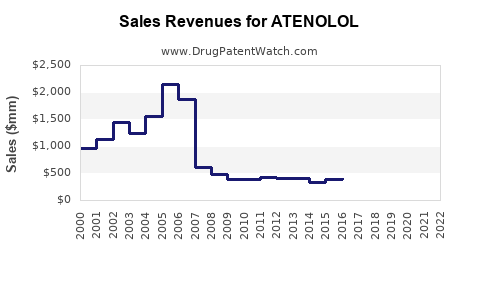
Drug Sales Revenue Trends for ATENOLOL
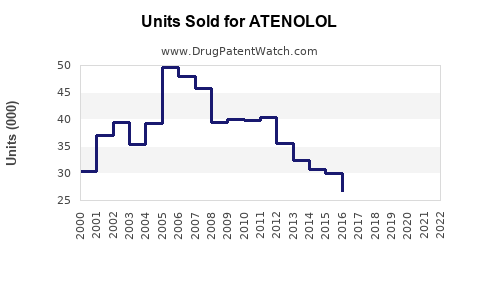
Drug Units Sold Trends for ATENOLOL

Annual Sales Revenues and Units Sold for ATENOLOL

These sales figures are drawn from a US national survey of drug expenditures
Drug Name Revenues (USD) Units Year
ATENOLOL ⤷  Start Trial ⤷  Start Trial 2022
ATENOLOL ⤷  Start Trial ⤷  Start Trial 2021
ATENOLOL ⤷  Start Trial ⤷  Start Trial 2020
ATENOLOL ⤷  Start Trial ⤷  Start Trial 2019
ATENOLOL ⤷  Start Trial ⤷  Start Trial 2018
ATENOLOL ⤷  Start Trial ⤷  Start Trial 2017
ATENOLOL ⤷  Start Trial ⤷  Start Trial 2016
>Drug Name >Revenues (USD) >Units >Year

ATENOLOL Market Analysis and Sales Projections

Last updated: February 19, 2026

Atenolol is a beta-adrenergic blocking agent used to treat cardiovascular conditions including hypertension, angina, and arrhythmias. The drug's market presence is mature, characterized by widespread generic availability and stable demand.

What is the Current Market Landscape for Atenolol?

The global market for atenolol is primarily driven by its generic formulations. The drug has been off-patent for decades, leading to intense price competition among manufacturers. This has resulted in a highly accessible and affordable treatment option for patients, particularly in developed markets.

The prevalence of cardiovascular diseases remains a consistent driver of atenolol demand. Hypertension, in particular, affects a significant portion of the global population, with estimates suggesting that over one billion people worldwide have high blood pressure. This demographic factor ensures a baseline level of prescription for atenolol and its generic equivalents.

Key Market Segments:

  • Hypertension: This is the largest therapeutic segment for atenolol.
  • Angina Pectoris: Atenolol is used to manage chest pain caused by reduced blood flow to the heart.
  • Cardiac Arrhythmias: The drug is prescribed to control irregular heartbeats.

Competitive Landscape:

The competitive landscape is dominated by generic pharmaceutical companies. Major players include Teva Pharmaceutical Industries, Mylan (now Viatris), and Sanofi, among others, all of whom offer atenolol at competitive price points. The lack of patent protection means that innovation in this space is limited to formulation improvements or novel delivery mechanisms, which have not significantly altered market dynamics.

Geographic Distribution:

The market for atenolol is globally distributed, with significant consumption in North America, Europe, and Asia. Developed markets, due to higher healthcare spending and established diagnostic infrastructure, represent a substantial portion of sales. However, the affordability of generic atenolol also makes it a crucial treatment option in emerging economies.

Regulatory Environment:

Atenolol is approved by major regulatory bodies worldwide, including the U.S. Food and Drug Administration (FDA) and the European Medicines Agency (EMA). Its long history of use and established safety profile contribute to its continued availability. The regulatory landscape for generic drugs is well-defined, focusing on bioequivalence and manufacturing standards.

What are the Primary Drivers of Atenolol Demand?

The demand for atenolol is fundamentally linked to the persistent global burden of cardiovascular diseases.

Demographic Trends:

  • Aging Population: The increasing global life expectancy leads to a larger elderly population, which is disproportionately affected by cardiovascular conditions. This demographic shift directly fuels demand for antihypertensive and anti-anginal medications like atenolol.
  • Rising Incidence of Hypertension: Lifestyle factors such as poor diet, lack of physical activity, and obesity contribute to a global increase in hypertension rates. This chronic condition requires long-term management, making atenolol a consistently prescribed drug.

Clinical Application:

  • Established Efficacy: Atenolol has a decades-long track record of demonstrating efficacy in managing hypertension, angina, and certain arrhythmias. Its established therapeutic benefits make it a go-to option for clinicians.
  • Cost-Effectiveness: As a generic medication, atenolol offers a significant cost advantage over newer, branded therapies. This is a critical factor for healthcare systems and patients managing chronic conditions on a budget.
  • Physician Familiarity: Healthcare providers are highly familiar with atenolol's dosing, side effects, and therapeutic profile, contributing to its continued prescription.

Healthcare Access:

  • Generic Drug Accessibility: The widespread availability of generic atenolol through various pharmaceutical manufacturers ensures that it is accessible across different healthcare settings, from large hospitals to local pharmacies.
  • National Health Programs: Many national health programs and formularies include atenolol due to its proven efficacy and low cost, further solidifying its market position.

What are the Key Restraints on Atenolol Market Growth?

While atenolol maintains a stable market, several factors limit its growth potential.

Competition from Newer Therapies:

  • Advanced Beta-Blockers: Newer generations of beta-blockers (e.g., carvedilol, nebivolol) often offer improved selectivity, reduced side effects, and additional cardiovascular benefits. These drugs are increasingly favored in specific patient populations.
  • Other Drug Classes: The market is also impacted by other antihypertensive drug classes, including ACE inhibitors, ARBs, calcium channel blockers, and diuretics. These alternatives offer different mechanisms of action and may be preferred based on individual patient profiles and comorbidities.

Side Effect Profile and Contraindications:

  • Common Side Effects: Atenolol can cause side effects such as fatigue, bradycardia (slow heart rate), cold extremities, and dizziness. These can impact patient adherence and lead to prescription switches.
  • Contraindications: It is contraindicated in patients with severe bradycardia, heart block, cardiogenic shock, and decompensated heart failure, limiting its use in certain patient groups.

Shift Towards Combination Therapies:

  • Polypharmacy: Many patients with cardiovascular conditions require multiple medications to manage their health effectively. This trend favors fixed-dose combination therapies, where atenolol might be one component, but limits its standalone market expansion.
  • Targeted Therapies: The development of more targeted therapies for specific genetic predispositions or advanced stages of cardiovascular disease can reduce the reliance on broad-acting drugs like atenolol.

Limited Differentiation:

  • Generic Commodity: As a widely available generic, atenolol has little room for product differentiation or premium pricing. Innovation is largely absent, focusing on maintaining manufacturing efficiency rather than developing new market segments.

What is the Projected Sales Trajectory for Atenolol?

The sales trajectory for atenolol is projected to remain largely stable with a low single-digit annual decline.

Current Market Value:

The global market for atenolol, considering all generic formulations, is estimated to be in the range of $300 million to $400 million annually. This figure fluctuates based on pricing strategies and regional demand variations.

Projected Growth Rate (2024-2029):

The market is expected to experience a Compound Annual Growth Rate (CAGR) of -1.0% to -2.5% over the next five years. This decline is attributed to the increasing adoption of newer therapeutic alternatives and the inherent limitations of a mature, generic drug market.

Key Factors Influencing Projections:

  • Continued Hypertension Prevalence: The persistent high prevalence of hypertension will sustain a significant baseline demand for atenolol.
  • Cost-Consciousness in Healthcare: In many regions, cost-effective treatments remain a priority for healthcare systems and patients, supporting continued usage of generic atenolol.
  • Emerging Market Penetration: While developed markets may see a slight decline, increasing access to healthcare and prescription of essential medicines in emerging economies could provide some offset.

Regional Outlook:

  • North America and Europe: These markets are expected to see a moderate decline (-2% to -3% CAGR) as newer drugs gain traction and healthcare systems optimize treatment protocols.
  • Asia-Pacific: This region may exhibit more stable demand or a slight decline (-0.5% to -1.5% CAGR) due to expanding healthcare access and a large population requiring cost-effective treatments.
  • Latin America and Middle East/Africa: These regions could show more stable or flat growth as generic atenolol becomes a cornerstone of primary cardiovascular care.

Potential Upsides (Limited):

Any significant upside would likely stem from unforeseen shifts in pricing dynamics, substantial increases in the prevalence of specific cardiovascular conditions that are particularly responsive to atenolol, or major policy shifts favoring older, less expensive drugs. These scenarios are considered low probability.

Potential Downsides:

Accelerated decline could occur if regulatory bodies implement stricter guidelines on the use of older beta-blockers in favor of newer agents, or if significant advancements in preventative cardiology drastically reduce the incidence of conditions treated by atenolol.

What are the Key Takeaways for Stakeholders?

Atenolol operates within a mature, highly competitive generic drug market. Its demand is anchored by the persistent global prevalence of cardiovascular diseases, particularly hypertension, and its proven cost-effectiveness.

The market is characterized by price erosion due to widespread generic availability, limiting significant growth potential. Newer beta-blockers and alternative drug classes, along with a trend towards combination therapies, represent the primary restraints.

Sales projections indicate a stable to slightly declining market, with a CAGR of -1.0% to -2.5% anticipated over the next five years. This trajectory is influenced by demographic trends, established clinical utility, and ongoing competition.

Stakeholders should focus on efficient manufacturing, robust distribution networks, and maintaining competitive pricing to secure market share. Innovation opportunities are minimal; strategic focus lies in optimizing production and supply chain logistics for a high-volume, low-margin product.

Frequently Asked Questions

  1. What is the primary indication for atenolol use globally? The primary indication for atenolol use globally is the management of hypertension.

  2. Are there significant differences in the efficacy of generic atenolol formulations compared to the original branded product? No, regulatory standards require generic atenolol formulations to be bioequivalent to the original branded product, meaning they have the same active ingredient, dosage form, and strength and are expected to have the same therapeutic effect.

  3. What is the typical patent expiry date for atenolol? Atenolol has been off-patent for many years, with its initial patents expiring in the late 1980s and early 1990s.

  4. Can atenolol be used in combination with other cardiovascular medications? Yes, atenolol is often used in combination with other cardiovascular medications such as diuretics, ACE inhibitors, and ARBs to achieve better blood pressure control or manage complex cardiovascular conditions.

  5. What are the main therapeutic alternatives to atenolol for hypertension? Main therapeutic alternatives to atenolol for hypertension include Angiotensin-Converting Enzyme (ACE) inhibitors, Angiotensin II Receptor Blockers (ARBs), calcium channel blockers, and thiazide diuretics.


Citations

[1] World Health Organization. (2021). Guideline: Sodium intake and hypertension. World Health Organization. [2] National Institutes of Health. (2023). High Blood Pressure: What is High Blood Pressure? National Heart, Lung, and Blood Institute. [3] Food and Drug Administration. (n.d.). Generic Drugs. U.S. Food and Drug Administration. [4] European Medicines Agency. (n.d.). Generic medicines. European Medicines Agency.

More… ↓

⤷  Start Trial

Make Better Decisions: Try a trial or see plans & pricing

Drugs may be covered by multiple patents or regulatory protections. All trademarks and applicant names are the property of their respective owners or licensors. Although great care is taken in the proper and correct provision of this service, thinkBiotech LLC does not accept any responsibility for possible consequences of errors or omissions in the provided data. The data presented herein is for information purposes only. There is no warranty that the data contained herein is error free. We do not provide individual investment advice. This service is not registered with any financial regulatory agency. The information we publish is educational only and based on our opinions plus our models. By using DrugPatentWatch you acknowledge that we do not provide personalized recommendations or advice. thinkBiotech performs no independent verification of facts as provided by public sources nor are attempts made to provide legal or investing advice. Any reliance on data provided herein is done solely at the discretion of the user. Users of this service are advised to seek professional advice and independent confirmation before considering acting on any of the provided information. thinkBiotech LLC reserves the right to amend, extend or withdraw any part or all of the offered service without notice.