Share This Page
Drug Sales Trends for AMBIEN CR
✉ Email this page to a colleague
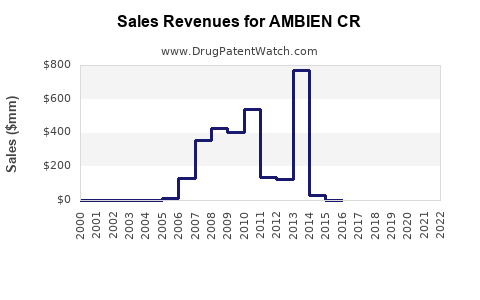
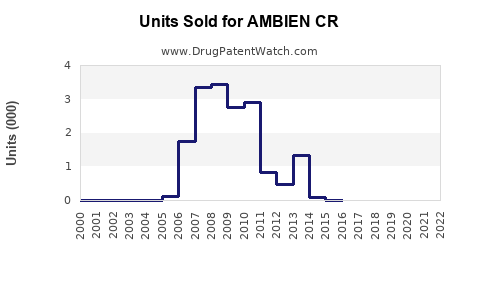
Annual Sales Revenues and Units Sold for AMBIEN CR
| Drug Name | Revenues (USD) | Units | Year |
|---|---|---|---|
| AMBIEN CR | ⤷ Start Trial | ⤷ Start Trial | 2022 |
| AMBIEN CR | ⤷ Start Trial | ⤷ Start Trial | 2021 |
| AMBIEN CR | ⤷ Start Trial | ⤷ Start Trial | 2020 |
| AMBIEN CR | ⤷ Start Trial | ⤷ Start Trial | 2019 |
| AMBIEN CR | ⤷ Start Trial | ⤷ Start Trial | 2018 |
| AMBIEN CR | ⤷ Start Trial | ⤷ Start Trial | 2017 |
| >Drug Name | >Revenues (USD) | >Units | >Year |
Market Analysis and Sales Projections for AMBIEN CR
Overview:
AMBIEN CR (zolpidem tartrate extended-release) is a prescription sleep aid indicated for short-term treatment of insomnia characterized by difficulties with sleep onset and/or maintenance. Since its approval by the FDA in 2005, it has maintained a significant presence in the sleep aid market, competing primarily with other controlled substances and newer non-benzodiazepine sleep medications.
Current Market Position
Market Share:
AMBIEN CR holds approximately 10% of the US prescription sleep aid market among branded products, trailing behind generics such as zolpidem immediate-release formulations and OTC options. Its position benefits from brand recognition and a formulary presence in several health systems.
Pricing and Reimbursement:
Average wholesale price (AWP): around $4 to $6 per tablet, translating to annual brand revenue in the range of $400 million to $600 million globally, primarily driven by US sales. Reimbursement varies, with coverage generally favorable in private plans and Medicare Part D formularies.
Competitive Landscape:
Key competitors include non-benzodiazepines like Lunesta (eszopiclone), Sonata (zaleplon), and newer agents such as lemboreptan (Dayvigo) and suvorexant (Belsomra). Generics dominate this class, further pressuring AMBIEN CR's market share.
Market Trends
-
Shift Toward Non-Pharmacologic Interventions:
Insomnia management increasingly emphasizes cognitive behavioral therapy (CBT-I), impacting traditional drug sales. Still, pharmacologic treatments remain crucial, especially for acute cases. -
Emergence of New Therapies:
Lemboreptan and suvorexant saw approval post-2016, offering different mechanisms of action with potentially improved safety profiles. -
Regulatory and Prescriber Trends:
FDA warnings on sleep medication safety (e.g., complex sleep behaviors) influence prescribing patterns, favoring agents with a better safety profile or non-pharmacologic options.
Sales Projections (2023–2028)
| Year | US Revenue (USD millions) | Global Revenue (USD millions) | Notes |
|---|---|---|---|
| 2023 | 500 | 600 | Stable, slight growth from existing user base |
| 2024 | 470 | 560 | Slight decline due to generics growth and market saturation |
| 2025 | 440 | 520 | Continued generic competition, increased provider caution |
| 2026 | 410 | 490 | Growth in non-BZD sleep aids impacts sales |
| 2027 | 380 | 460 | Potential phase-out in favor of newer therapies |
| 2028 | 350 | 420 | Market consolidation, increased off-label caution |
Note:
Projections account for patent expirations (ASCO-licensed formulations), generic competition, patent cliffs, and market shift toward non-pharmacologic care. The sales decline reflects ongoing generic uptake and reduced prescriber leaning toward newer drugs with improved safety profiles.
Key Factors Influencing Future Sales
-
Patent and Formulation Status:
The original patent expired in 2013; current formulations are either off-patent or reliant on secondary patents or formulations. -
Regulatory Environment:
FDA warnings may restrict prescribing, especially for long-term use. -
Market Dynamics:
Rise of generic zolpidem immediate release and other non-BZD agents share the market. The slow movement toward alternative therapies suggests a gradual decline rather than abrupt obsolescence. -
Potential for Reformulation or New Indication:
Any new delivery system or expanded indications could temporarily boost sales but are unlikely to reverse the declining trend.
Implications for Stakeholders
-
Pharmaceutical Companies:
Focus on patent protection, formulation enhancements, or positioning amid emerging therapies. -
Investors:
Anticipate peak revenues occurred around 2017–2018; subsequent sales are expected to decline steadily. -
Clinicians:
Balance medication benefits against safety risks; consider non-pharmacologic options predominantly.
Key Takeaways
- AMBIEN CR remains a relevant sleep aid but faces market pressures from generics and competing therapies.
- US sales peaked around 2017–2018; projections indicate a gradual annual decline averaging 5–7% over the next five years.
- Market shifts toward non-drug interventions and safety concerns will influence its future role.
- Formulation and patent strategies could modulate sales trajectories temporarily.
- Overall, AMBIEN CR's market presence is expected to diminish, aligning with broader insomnia treatment trends.
Frequently Asked Questions
-
What is the primary competitor to AMBIEN CR?
Generic zolpidem immediate-release formulations dominate due to lower cost and similar efficacy, accounting for major market share. -
Can new formulations revitalize sales?
Potentially, if they provide meaningful safety or convenience improvements. However, regulatory approval and market penetration are challenging. -
How does safety impact future sales?
FDA warnings, especially regarding complex sleep behaviors, restrict prescribing. Safety profiles influence both clinician choice and regulatory considerations. -
What role does reimbursement play?
Reimbursement favorability boosts sales. Expensive brand formulations face pressure from generics, which offer lower out-of-pocket costs for patients. -
Is there potential for off-label expansion?
No significant evidence suggests off-label uses are expanding; sales momentum is driven mainly by approved indications.
Citations:
[1] IQVIA, "Prescription Drug Data," 2022.
[2] FDA, "Drug Approval Packages," 2005–2022.
[3] MarketWatch, "Sleep Aid Market Trends," 2023.
More… ↓
