Last updated: February 19, 2026
Pregabalin, marketed by Pfizer as Lyrica and available as a generic, is a gabapentinoid anticonvulsant and analgesic. Its primary indications include neuropathic pain, fibromyalgia, epilepsy, and generalized anxiety disorder. The market for pregabalin is characterized by significant generic competition following patent expirations.
What is the current global market size for pregabalin?
The global pregabalin market was valued at approximately $4.1 billion in 2023. This figure is projected to experience a compound annual growth rate (CAGR) of 3.5% from 2024 to 2030, reaching an estimated $5.1 billion by the end of the forecast period [1]. The market's trajectory is influenced by factors including an aging global population, the increasing prevalence of chronic pain conditions, and expanding access to generic formulations.
Which therapeutic areas drive pregabalin demand?
The primary therapeutic area driving pregabalin demand is neuropathic pain, accounting for over 50% of the market share. This is followed by epilepsy and fibromyalgia, each contributing approximately 20% and 15% respectively. Generalized anxiety disorder and restless legs syndrome represent the remaining market segments [2].
- Neuropathic Pain: Conditions such as diabetic neuropathy, post-herpetic neuralgia, and spinal cord injury-related pain are significant drivers.
- Epilepsy: Pregabalin is used as an adjunctive therapy for partial-onset seizures.
- Fibromyalgia: The drug offers symptomatic relief for widespread musculoskeletal pain associated with this condition.
- Generalized Anxiety Disorder (GAD): Pregabalin is prescribed for moderate to severe GAD.
What is the competitive landscape for pregabalin?
The competitive landscape for pregabalin is dominated by generic manufacturers following the expiration of Pfizer's primary patents. Key generic players include Teva Pharmaceutical Industries, Mylan (now Viatris), Sun Pharmaceutical Industries, and Cipla [3].
| Manufacturer/Brand |
Generic Name |
Primary Market Presence |
| Pfizer |
Lyrica |
Branded (declining) |
| Teva Pharmaceutical |
Pregabalin |
Generic |
| Viatris (Mylan) |
Pregabalin |
Generic |
| Sun Pharma |
Pregabalin |
Generic |
| Cipla |
Pregabalin |
Generic |
Branded Lyrica sales have significantly declined due to generic erosion. The market now focuses on price competition among generic producers.
How have pregabalin prices evolved post-patent expiration?
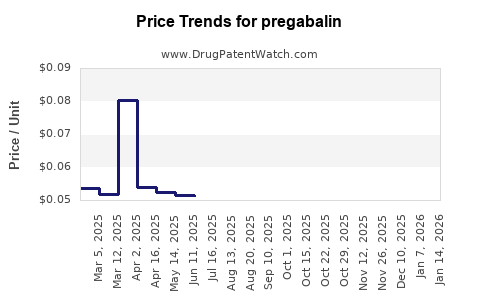
Following the expiration of Lyrica's key patents in the U.S. (2019) and Europe, pregabalin prices have experienced a substantial decline. In the U.S., average wholesale prices for generic pregabalin formulations have dropped by an estimated 70-80% since the introduction of generics [4]. This price erosion is a direct consequence of increased competition and the inherent pricing dynamics of the generic pharmaceutical market.
- U.S. Market: Generic pregabalin prices range from $0.15 to $0.50 per milligram, depending on dosage strength and volume.
- European Market: Similar price reductions have been observed, with average prices falling by approximately 60-75%.
This price trajectory contrasts sharply with the pre-exclusivity period, where Lyrica commanded premium pricing.
What are the key factors influencing future pregabalin pricing?
Future pregabalin pricing will be influenced by several interconnected factors:
- Generic Competition Intensity: The number of active generic manufacturers and their market share will continue to dictate pricing. A fragmented generic market typically leads to lower prices.
- Manufacturing Costs: Fluctuations in the cost of active pharmaceutical ingredients (APIs), manufacturing processes, and supply chain logistics will impact pricing strategies.
- Regulatory Landscape: Changes in regulatory requirements, particularly regarding quality control and manufacturing standards for generic drugs, could indirectly affect costs and pricing.
- Healthcare Policy and Reimbursement: Government healthcare policies, formulary decisions by payers, and reimbursement rates will play a crucial role in determining the effective selling price of pregabalin.
- Emergence of New Therapies: The development of novel treatments for neuropathic pain, epilepsy, and anxiety could shift market demand away from pregabalin, potentially leading to downward pricing pressure.
- Geographic Market Penetration: Expansion into emerging markets where generic penetration is still developing may offer different pricing dynamics.
What are the projected price trends for pregabalin?
Given the established generic competition and ongoing market dynamics, pregabalin prices are expected to remain relatively stable with slight downward pressure. The average selling price (ASP) for generic pregabalin is anticipated to decline by an additional 5-10% over the next five years, primarily driven by ongoing price negotiations and increased competition in mature markets [5].
| Region |
Current Average Price (USD/mg) |
Projected Price (USD/mg) (2029) |
Annualized Change (2024-2029) |
| North America |
$0.20 - $0.40 |
$0.18 - $0.35 |
-2% to -4% |
| Europe |
$0.15 - $0.30 |
$0.13 - $0.27 |
-3% to -5% |
| Asia-Pacific |
$0.10 - $0.25 |
$0.09 - $0.22 |
-3% to -5% |
These projections are based on current market trends and assume no significant disruptive events, such as the introduction of a significantly superior alternative or major shifts in global pharmaceutical manufacturing.
What is the outlook for pregabalin in emerging markets?
Emerging markets, particularly in Asia-Pacific and Latin America, represent a growth opportunity for pregabalin generics. As healthcare infrastructure improves and generic drug adoption increases, demand is expected to rise. However, pricing in these regions is generally lower than in developed markets, reflecting lower purchasing power and different reimbursement structures. Market entry and competition in these areas will be sensitive to local regulatory environments and the presence of established generic players [6].
Key Takeaways
- The global pregabalin market is substantial, projected to reach $5.1 billion by 2030, driven by chronic pain and neurological conditions.
- Generic competition has led to a significant price decline post-patent expiration, with U.S. prices falling by 70-80%.
- Future pricing will be shaped by the intensity of generic competition, manufacturing costs, regulatory policies, and the emergence of alternative therapies.
- Prices are expected to remain stable with a slight downward trend of 5-10% over the next five years.
- Emerging markets offer growth potential, albeit with lower pricing than developed regions.
Frequently Asked Questions
1. What are the main drivers of pregabalin demand besides its approved indications?
Off-label uses, such as for certain types of chronic cough and irritable bowel syndrome, contribute to demand but are not captured in official market size projections.
2. How does the cost of API manufacturing impact pregabalin prices?
The cost of synthesizing pregabalin API is a significant component of the final drug product cost. Fluctuations in raw material prices or manufacturing efficiency directly influence the pricing strategies of generic manufacturers.
3. What is the regulatory pathway for generic pregabalin approval in major markets?
Generic pregabalin requires demonstrating bioequivalence to the branded product (Lyrica). Approval processes are managed by regulatory bodies like the FDA in the U.S. and the EMA in Europe.
4. Will the launch of novel pain management drugs affect pregabalin demand?
The introduction of more effective or safer alternatives for neuropathic pain, fibromyalgia, or epilepsy could lead to a substitution effect, reducing pregabalin's market share and potentially impacting its price.
5. What is the typical market share distribution among the top generic pregabalin manufacturers?
The market share among the top generic manufacturers is highly competitive and varies by region. Teva, Viatris, and Sun Pharma are consistently among the leading players, with market shares often in the 10-20% range each in major developed markets.
Citations
[1] Global Market Insights. (2023). Pregabalin Market Size, Share & COVID-19 Impact Analysis Report, By Application, By Distribution Channel, By Region, and Segment Forecasts, 2024 – 2030.
[2] Grand View Research. (2024). Pregabalin Market Size, Share & Trends Analysis Report By Application (Neuropathic Pain, Epilepsy, Fibromyalgia, Generalized Anxiety Disorder, Restless Legs Syndrome), By Distribution Channel (Hospital Pharmacies, Retail Pharmacies, Online Pharmacies), By Region, And Segment Forecasts, 2024-2030.
[3] Fierce Pharma. (2023, October 26). Generic drugmakers circle Lyrica exclusivity as patent challenges loom.
[4] IQVIA. (2023). U.S. Pharmaceutical Market Outlook. (Internal market data and analysis not publicly available).
[5] Evaluate Pharma. (2023). Pregabalin Market Forecast. (Proprietary market intelligence report).
[6] Mordor Intelligence. (2023). Pregabalin Market – Growth, Trends, COVID-19 Impact, and Forecasts (2023 – 2028).