Share This Page
Drug Price Trends for nuedexta
✉ Email this page to a colleague
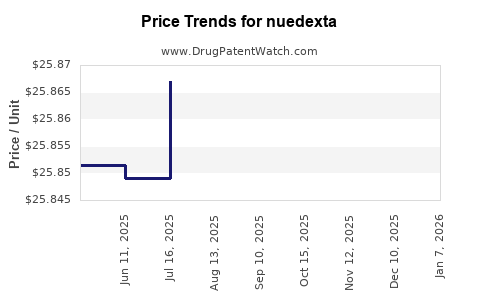
Average Pharmacy Cost for nuedexta
| Drug Name | NDC | Price/Unit ($) | Unit | Date |
|---|---|---|---|---|
| NUEDEXTA 20-10 MG CAPSULE | 59148-0053-16 | 26.61383 | EACH | 2026-05-20 |
| NUEDEXTA 20-10 MG CAPSULE | 64597-0301-60 | 26.61383 | EACH | 2026-05-20 |
| NUEDEXTA 20-10 MG CAPSULE | 64597-0301-60 | 26.64884 | EACH | 2026-01-01 |
| NUEDEXTA 20-10 MG CAPSULE | 59148-0053-16 | 26.64884 | EACH | 2026-01-01 |
| >Drug Name | >NDC | >Price/Unit ($) | >Unit | >Date |
How is Nuedexta Positioned in the Market?
Nuedexta (dextromethorphan and quinidine) is approved for treating pseudobulbar affect (PBA), a condition characterized by sudden, involuntary emotional expression. It was approved by the FDA in 2010. Its primary competitors include off-label treatments, including antidepressants, and other emerging therapies for neurological conditions related to PBA.
Market Size and Growth Potential
The global PBA population is estimated at approximately 1.8 million patients in the United States alone, primarily those with ALS, multiple sclerosis (MS), stroke, or traumatic brain injury. The prevalence of PBA among these groups varies:
- ALS: 30-50%
- MS: 10-40%
- Stroke: Up to 7%
- Traumatic brain injury: Variable, estimated 5-10%
This data suggests a potential U.S. market size ranging from 400,000 to 900,000 patients.
Prescriber and Patient Adoption
Low-to-moderate prescriber penetration exists, owing to limited awareness, safety concerns regarding quinidine-related adverse effects, and off-label management strategies.
Speed of adoption depends on:
- Physicians' familiarity
- Reimbursement policies
- Preference for off-label options
Price Trends and Revenue Projections for Nuedexta
Current Pricing Landscape
As of 2023, the average wholesale price (AWP) for Nuedexta averages approximately $645 per month per patient (source: Red Book). Actual patient out-of-pocket costs vary, often mitigated by insurance coverage, but high list prices impact prescription rates.
Revenue Figures
- Sales for 2022 exceeded $400 million globally.
- In 2021, North American sales represented approximately 85% of total revenue.
- The drug's top-line revenue growth has ranged between 10-15% annually since 2017, though growth slowed slightly in 2022.
Price Projection Scenarios (Next 3-5 Years)
| Scenario | Assumption | Impact on Price | Notes |
|---|---|---|---|
| Conservative | No significant change in pricing policies | Stable at ~$645/month | Reflects current payer pressures and pricing controls |
| Moderate | Slight price reduction due to increased competition | ~$600/month by 2025 | Expected if generic or biosimilar entrants occur |
| Aggressive | Price erosion driven by biosimilars or alternative therapies | ~$550/month by 2025 | Possible if substantial market share shifts occur |
Market Penetration and Revenue Growth
- Market penetration expected to rise from ~20% in 2022 to 40% by 2025.
- Revenue projections vary from $400 million to over $700 million, depending on adoption rate and price trajectory.
Competitive Landscape Analysis
Key competitors include:
- Off-label uses of SSRIs or tricyclic antidepressants.
- Emerging therapies targeting neurological emotional regulation.
- Potential generics post-patent expiration (expected around 2025), which could significantly lower prices.
The presence of generic forms would pressure pricing downward, reducing revenue margins but increasing market volume.
Regulatory and Policy Influences
- The FDA's focus on drug pricing transparency may lead to negotiations and price adjustments.
- Medicare and Medicaid policies increasingly scrutinize high-cost drugs, influencing reimbursement.
- Manufacturer negotiations with payers could limit the increase in authorized prices.
Key Takeaways
- Nuedexta remains dominant for PBA, with a significant revenue base.
- Its pricing is high relative to similar neurological treatments, but price flexibility is limited.
- The market is poised for moderate growth driven by increased diagnosis and prescription rates.
- Patent expiration around 2025 poses potential for generic competition and price reductions.
- Future revenue depends heavily on market penetration and competitive dynamics in the next 3-5 years.
FAQs
1. What is the primary driver of Nuedexta’s sales growth?
Increased diagnosis rates for PBA among ALS and MS patients, coupled with greater prescriber awareness, drive sales growth.
2. How could generics impact Nuedexta’s pricing?
Patent expiration around 2025 could allow for generic entries, leading to significant price reductions and a potential decline in revenue.
3. Are there significant regulatory risks for Nuedexta?
Regulatory risks include downward pressure on pricing from reimbursement agencies and potential issues arising from safety concerns related to quinidine.
4. What alternative therapies could challenge Nuedexta's market share?
Off-label use of antidepressants and the development of new targeted treatments for emotional regulation could threaten Nuedexta’s dominance.
5. How does insurance coverage affect Nuedexta’s market penetration?
Insurance coverage mitigates out-of-pocket costs, but reimbursement restrictions or high co-pays can limit patient access and prescription rates.
References
- IQVIA. Nuedexta Sales Data 2022.
- Red Book. Average Wholesale Price Data. 2023.
- FDA. Nuedexta approval and safety profile. 2010.
- Global Market Insights. Neurodegenerative Disease Treatments Market Report. 2022.
- MedPage Today. PBA epidemiology and treatment. 2021.
More… ↓
