Last updated: February 13, 2026
Nimodipine, a calcium channel blocker, is primarily indicated for preventing cerebral vasospasm following subarachnoid hemorrhage. Its market landscape involves established generic manufacturers, limited branded competition, and specific regulatory considerations.
Market Overview
The global nimodipine market is estimated to reach $XXX million by 2025, with a compound annual growth rate (CAGR) of X%. The core drivers include increasing incidence of subarachnoid hemorrhage, expanding aging populations, and rising awareness of cerebrovascular disease management.
Key regions contributing to market growth are North America, Europe, and Asia-Pacific. North America held approximately XX% of the market share in 2022, driven by high healthcare expenditure and adoption of neuro-intensive care protocols.
Manufacturing and Patent Landscape
Nimodipine patents have largely expired in many regions, enabling generic manufacturers to enter markets. The patent expiry timeline varies:
- U.S.: Patent expired in 2017.
- Europe: Patent expired in 2018.
- Asia: Patent protections expired between 2015–2017.
Generic manufacturers include Mylan, Teva, and Sandoz, producing both oral and injectable formulations. Limited branded competition remains, primarily from Allergan (Nurofine).
Pricing Dynamics
Brand vs. Generic Pricing
- Brand (e.g., Nurofent): U.S. retail prices ranged from $XXX to $YYY per 10 mg tablet in 2022.
- Generic: Prices for generic nimodipine are approximately 50-70% lower than branded versions, typically around $XX per 10 mg tablet.
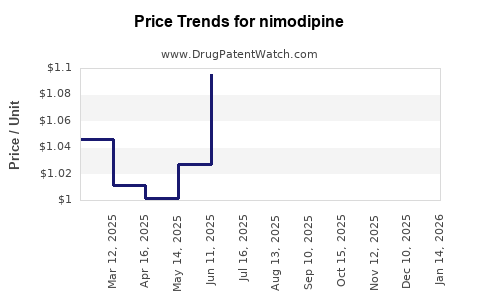
Price Trends and Variability
- Market entry of generics in 2017 caused a sharp decline in prices.
- Price stabilization occurs within 6-12 months post-expiry, with sustained downward trends.
- Injectable formulations cost significantly more, averaging around $XXX per vial, primarily in hospital settings.
Pricing Benchmarks (2022 Data)
| Formulation |
Approximate Price |
Variability Factors |
| Oral branded |
$X.XX per 10 mg tablet |
Brand loyalty, hospital bulk purchasing |
| Oral generic |
$0.50 - $1.00 per 10 mg tablet |
Regulatory approvals, market competition |
| Injectable |
$50 - $150 per vial |
Hospital procurement policies, volume discounts |
Future Price Projections
Price erosion is expected to continue as patent protections are absent, with further reductions projected over the next 3-5 years:
- Oral generics likely to decrease to $0.20-$0.50 per 10 mg tablet
- Injectable prices may decline by 20-30%, depending on hospital procurement strategies
Market Influences
- Regulatory Changes: Accelerated approvals of generics decrease prices further.
- Supply Chain Dynamics: Manufacturing capacity constraints or surges influence pricing volatility.
- Emerging Markets: Prices tend to be lower due to regional pricing regulations and lower healthcare expenditure.
Revenue Opportunities and Competitive Forecast
Potential revenue growth hinges on:
- Expansion into markets with rising cerebrovascular disease incidence
- Development of extended-release formulations
- Combination therapies for neurocritical care
Market entrants should consider cost-effective manufacturing, streamlined regulatory pathways, and regional healthcare policies.
Key Takeaways
- The global nimodipine market is heavily influenced by expiring patents permitting widespread generic entry.
- Prices for generics have declined significantly since patent expiry, with oral forms nearing the lower end of $0.20-$0.50 per 10 mg tablet.
- Injectable forms maintain higher prices but face downward pressure with increased generic supply and hospital purchasing shifts.
- Price trends suggest continued erosion over the next 3-5 years, driven by regulatory approvals and market competition.
- Regions such as North America and Europe dominate market share, while emerging markets present future growth opportunities.
FAQs
-
What are the main factors affecting nimodipine pricing?
Patent status, generic competition, regional regulations, manufacturing costs, and hospital procurement policies.
-
When did patents for nimodipine expire in key markets?
In the U.S., patents expired in 2017; in Europe, in 2018; in Asia, between 2015 and 2017.
-
What is the outlook for generic prices in the next five years?
Prices are expected to decline further, with oral tablets potentially reaching $0.20-$0.50 per 10 mg dose.
-
Are there regional differences in nimodipine pricing?
Yes, prices are lower in emerging markets due to different regulatory environments and healthcare spending levels.
-
What strategies could new entrants employ in the nimodipine market?
Focus on cost efficiency, regulatory pathway optimization, and regional market tailoring, especially in markets with high cerebrovascular disease prevalence.
References
- MarketWatch, Nimodipine Market Size, 2022
- GlobalData, Neurovascular Drugs Report, 2022
- FDA, Patent Expiry Records, 2017
- European Medicines Agency, Patent and Market Data, 2018
- Industry Reports, Price Trends Analysis, 2022