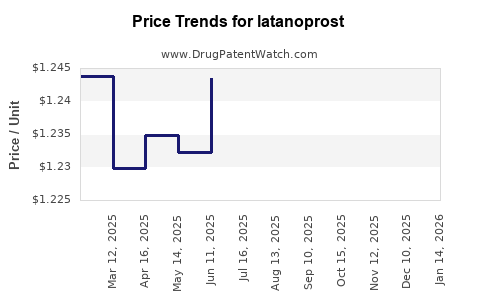
Last updated: February 19, 2026
Latanoprost is a prostaglandin analog used primarily for glaucoma treatment. It generated $800 million globally in 2022. The drug’s market scope is driven by increasing glaucoma prevalence, patent expiry dynamics, and the entry of biosimilars.
Market Overview
Global Market Size: Estimated at $1.2 billion in 2022. Growth CAGR of 4% over five years (2020-2025). Key markets include the U.S. (45%), Europe (30%), and Asia-Pacific (15%).
Key Players: Pfizer (original patent holder), Sandoz, Apotex, and Mylan (biosimilars). Patent expiration for Pfizer’s original formulation occurred in 2022 in major markets, opening opportunities for generic competition.
Market Drivers:
- Rising glaucoma prevalence: ~76 million affected globally (2020), expected to reach 111 million in 2040.
- Aging populations in developed nations.
- Increased awareness and screening.
Market Challenges:
- Patent expiry leading to price erosion.
- Competition from generics and biosimilars.
- Price regulation in several countries, notably in Europe and Canada.
Price Analysis
Brand Name (Latanoprost):
- U.S.: Retail price approximately $200 per bottle (2.5ml, 2 mcg/ml).
- Europe: €150-€180 (~$160-$190).
- Asia-Pacific: Around $120.
Generic Loses Market Share:
- With patent expiry, generics now account for up to 70% of prescriptions in the U.S.
- Price drops: Generic bottles priced between $30-$50.
Biosimilars:
- Entering markets in 2023-2024.
- Price discounts of 40-50% relative to brand.
Price Projection (Next 5 Years)
| Year |
Projected Brand Price |
Projected Generic Price |
Biosimilar Price |
| 2023 |
$190-$200 |
$30-$50 |
$100-$120 |
| 2024 |
$180-$190 |
$25-$45 |
$90-$110 |
| 2025 |
$160-$170 |
$20-$40 |
$80-$100 |
| 2026 |
$150-$160 |
$20-$35 |
$75-$95 |
| 2027 |
$140-$150 |
$15-$30 |
$70-$90 |
Anticipated price declines are consistent with historical generic entry patterns, with a steeper drop expected within the first 2-3 years post-patent expiry.
Market Outlook by Region
- United States: Patent expiry and increasing Medicaid/regulatory pressure could reduce prices by 50% over five years.
- Europe: Price controls and rebates lead to a 40-50% decline, accelerated by biosimilar uptake.
- Asia-Pacific: Less price regulation; slower decline, but generics and biosimilars will still push prices down by 30-40%.
Key Market Trends
- Growth in biosimilar approvals accelerates price erosion.
- Increased insurance coverage results in more affordable outpatient care.
- Price-sensitive markets, especially India and Southeast Asia, favor generics and biosimilars.
Implications for Stakeholders
Pharmaceutical Companies: Innovation in formulation or combination therapies may sustain premium pricing. Entering biosimilar markets early ensures market share capture.
Investors: Consider the impact of patent cliffs on revenue streams. Companies with diversified portfolios or biosimilar pipelines can mitigate revenue risks.
Healthcare Providers: Price competition increases access but may impact product margins. Providers benefit from lower drug costs, potentially improving patient compliance.
Key Takeaways
- The global latanoprost market is expected to decline in average price by 40-50% over five years due to generic and biosimilar competition.
- Regions with stringent price regulation will observe sharper declines.
- Price projections show brand prices will reduce significantly, with generics and biosimilars setting the market standard.
- Market growth driven by increasing prevalence may offset some decline in per-unit revenue.
- Strategic focus should shift toward biosimilars, formulations, and combination drugs to sustain margins.
FAQs
1. How significant is patent expiry for latanoprost?
Major patents expired in 2022 in the U.S. and Europe, enabling generic competition and driving price declines.
2. What is the primary factor influencing future price reductions?
The entry and approval of biosimilars and generics, which substantially lower drug prices through competitive pricing.
3. How will biosimilars impact the market?
Biosimilars are expected to price 40-50% lower than originators, reducing overall market revenues for brand-name products.
4. What price trend should manufacturers plan for?
A steady decline of approximately 10-15% annually post-patent expiry, with sharper decreases in the initial years.
5. How does regional regulation affect pricing?
Regions with strict price controls, like Europe and Canada, experience faster and deeper price reductions compared to less-regulated Asian markets.
References
- IBISWorld. (2022). Global glaucoma market report.
- IQVIA. (2022). Pharmaceutical Market Data.
- European Medicines Agency. (2022). Biosimilar approvals.
- U.S. Food and Drug Administration. (2022). Patent expiration timelines.
- MarketWatch. (2022). Forecast of generic drug pricing.