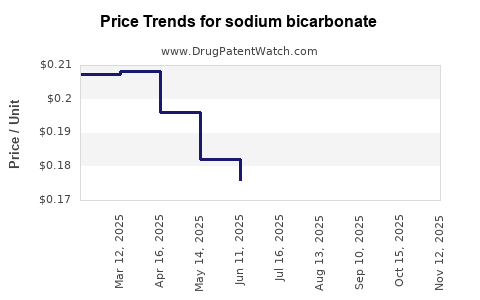
Last updated: July 27, 2025
Introduction
Sodium bicarbonate, commonly known as baking soda, is a versatile chemical used across diverse industries such as pharmaceuticals, food and beverage, personal care, and industrial applications. Its medical utility as an antacid, alkalinizing agent, and in clinical care for conditions like metabolic acidosis emphasizes its significance in healthcare. As the global demand for affordable, effective medicinal compounds increases, understanding the current market landscape and future pricing trajectories of sodium bicarbonate is crucial for stakeholders. This analysis provides an in-depth overview of market dynamics, key regulatory factors, supply-demand trends, competitive landscape, and future price projections.
Market Overview
Global Market Size and Growth
The global sodium bicarbonate market was valued at approximately USD 1.16 billion in 2022 and is projected to grow at a compound annual growth rate (CAGR) of 4.5% through 2028 (source: MarketsandMarkets). The demand is spurred by its broad application spectrum, affordability, and regulatory approval for various pharmaceutical and industrial uses.
Geographical Distribution
- North America: Leading regional market driven by high healthcare expenditure, extensive pharmaceutical use, and consumer awareness.
- Europe: Steady growth owing to strict regulatory standards and the presence of major chemical manufacturing hubs.
- Asia-Pacific: The fastest-growing segment, fueled by expanding pharmaceutical manufacturing, dairy, food processing, and increasing urbanization in China, India, and Southeast Asia.
- Latin America and Middle East & Africa: Emerging markets with increasing pharmaceutical penetration and industrialization.
Key End-Use Sectors
- Pharmaceutical & Healthcare: Predominant driver, accounting for approximately 40% of sales, used for indigestion, metabolic alkalosis, and in dialysis.
- Food & Beverage: Significant segment, especially in baking, food preservation, and pH regulation.
- Industrial Use: Includes water treatment, chemical manufacturing, and fire extinguishers.
Supply Chain and Production Dynamics
Raw Material Access
Sodium bicarbonate production largely hinges on the availability of soda ash (sodium carbonate), derived from mineral (trona or nahcolite) deposits or synthetic processes such as Solvay’s process. Market fluctuations in soda ash prices directly influence sodium bicarbonate costs.
Manufacturing Capacities
Major players like Luxottica Group, Jiangsu Yuyue Medicine, and Forge Resources have consolidated large manufacturing capacities globally. New plant installations, especially in Asia, are anticipated to augment supply, stabilizing prices.
Regulatory and Environmental Factors
Strict regulations around manufacturing emissions and waste management are compelling producers to adopt greener technologies, impacting operational costs and, consequently, product pricing.
Competitive Landscape
The market features a combination of large chemical conglomerates, regional producers, and emerging players focusing on plant-based and eco-friendly manufacturing. Key companies include:
- Jungbunzlauer
- Hengshui Salt Chemical Co.
- Ciech S.A.
- Sodium Bicarbonate Company (India)
- Lanxess AG
Investments in R&D for pharmaceutical-grade sodium bicarbonate, alongside capacity expansions, are expected to influence pricing strategies.
Pricing Analysis (Current & Historical)
Base Price Range
As of Q1 2023, the average market price for pharmaceutical-grade sodium bicarbonate ranges from USD 1.50 to USD 2.50 per kilogram, depending on purity, form, and volume.
Historical Trends
Between 2018 and 2022, prices have fluctuated within a narrow band, primarily influenced by raw material costs and regional supply-demand imbalances. The COVID-19 pandemic temporarily disrupted supply chains but also increased demand for alkaline agents in certain medical applications.
Cost Influencers
- Raw material costs (soda ash and other reagents)
- Manufacturing standards and certification (e.g., USP, EP)
- Energy costs and environmental compliance expenses
- Transportation and logistics
Price Projections (2023-2028)
Based on current market conditions, industry reports, and supply-demand forecasts, sodium bicarbonate prices are expected to rise modestly at a CAGR of approximately 3.5% to 4.5% over the next five years. Predicted factors include:
- Rising raw material costs: As soda ash prices, influenced by global calcium carbonate and mineral extraction, trend upward.
- Regulatory shifts: Stricter environmental standards may elevate operating costs.
- Industrial expansion: Increased manufacturing in developing regions could tighten supply, exerting upward pricing pressure.
- Pharmaceutical demand: Growing need for high-purity grades in healthcare may sustain premium pricing segments.
The price increase is projected to stabilize around USD 2.50–3.50 per kilogram for pharmaceutical-grade sodium bicarbonate by 2028.
Market Opportunities and Risks
Opportunities
- Expansion in emerging markets bolsters volume sales.
- Development of eco-friendly and organic manufacturing methods can command premium pricing.
- Growing awareness of health benefits and acceptance of bicarbonate therapies sustain demand.
Risks
- Oversupply due to capacity expansions could suppress prices.
- Regulatory delays or bans on certain manufacturing practices may hinder supply.
- Fluctuations in raw material availability or geopolitical disruptions could lead to price volatility.
Impact of Regulatory Environment
Pharmaceutical applications are governed by stringent standards, ensuring high purity but also increasing costs for compliance and certifications, which in turn influence pricing. Conversely, non-pharmaceutical grades face less regulation but are more sensitive to industrial supply-demand dynamics.
Conclusion
The sodium bicarbonate market exhibits stable, modest growth driven by its versatility across healthcare, food, and industrial sectors. Despite current stability, evolving supply-chain complexities, raw material costs, and regulatory requirements are poised to incrementally increase prices over the coming years. Companies that invest in sustainable manufacturing, diversify sourcing, and focus on high-purity product segments will likely capitalize on emerging opportunities, maintaining a competitive edge.
Key Takeaways
- The global sodium bicarbonate market is projected to grow at approximately 4.0% annually through 2028, driven mainly by pharmaceutical and industrial demand.
- Price projections indicate a gradual increase to USD 2.50–3.50 per kilogram for high-purity grades, fueled by raw material costs and regulatory pressures.
- Supply chain resilience, environmental compliance, and innovation in production will influence market stability and pricing.
- Emerging markets present significant growth opportunities, especially where industrial and healthcare infrastructure expand.
- Staying ahead of regulatory standards and investing in sustainable manufacturing practices are vital for competitive positioning.
FAQs
1. What are the main factors influencing sodium bicarbonate prices?
Raw material costs (notably soda ash), regulatory compliance expenses, manufacturing capacity, energy prices, and global supply-demand dynamics are primary factors affecting prices.
2. How does the pharmaceutical-grade sodium bicarbonate market differ from industrial grades?
Pharmaceutical-grade demands strict purity standards, resulting in higher production costs and stable pricing. Industrial grades are more price-sensitive and tend to fluctuate based on raw material supply and industrial demand.
3. Are emerging markets expected to influence future sodium bicarbonate prices significantly?
Yes. Rapid industrialization and expanding healthcare sectors in regions like Asia-Pacific are expected to increase demand, potentially tightening supply and exerting upward pressure on prices.
4. What environmental factors could impact future sodium bicarbonate production costs?
Implementation of stricter environmental regulations, requiring greener manufacturing processes and emissions controls, may raise operational costs and, consequently, product prices.
5. How can industry players capitalize on future market trends?
Investing in sustainable, high-quality production, expanding capacity in high-growth regions, and developing premium, eco-friendly grades will enable companies to leverage market growth opportunities and buffer against volatility.
Sources
[1] MarketsandMarkets. "Sodium Bicarbonate Market – Global Outlook & Forecast 2023-2028"
[2] IBISWorld. "Pharmaceutical & Healthcare Chemical Market Analysis"
[3] ResearchAndMarkets. "Global Food & Industrial Grade Sodium Bicarbonate Market"
[4] Industry Reports on Raw Material Trends & Regulatory Standards
[5] Company Reports and Press Releases from leading producers