Last updated: February 19, 2026
Current Market Landscape for Piroxicam
Piroxicam, a nonsteroidal anti-inflammatory drug (NSAID) in the oxicam class, is primarily used for the symptomatic treatment of inflammatory and degenerative rheumatic diseases, such as rheumatoid arthritis and osteoarthritis. Its mechanism of action involves the inhibition of cyclooxygenase (COX) enzymes, thereby reducing prostaglandin synthesis, which is responsible for pain, inflammation, and fever.
The global piroxicam market has experienced a steady, albeit modest, growth trajectory. This growth is driven by the persistent prevalence of inflammatory and musculoskeletal conditions, particularly in aging populations, and the drug's established efficacy and relatively low cost compared to newer biologics and advanced therapies.
Key Market Drivers:
- Aging Global Population: Increased incidence of osteoarthritis and rheumatoid arthritis with age.
- Prevalence of Chronic Pain Conditions: Persistent demand for effective pain management solutions.
- Cost-Effectiveness: Piroxicam remains a more affordable option for long-term pain management compared to newer, patent-protected drugs.
- Established Therapeutic Profile: Decades of clinical use have validated its efficacy and safety in specific patient populations.
Market Restraints:
- Competition from Newer NSAIDs and Therapies: Development of selective COX-2 inhibitors and biologic agents offers improved safety profiles or different efficacy endpoints.
- Gastrointestinal and Cardiovascular Side Effects: Like other non-selective NSAIDs, piroxicam carries risks of gastrointestinal bleeding and cardiovascular events, leading to cautious prescribing in high-risk patients.
- Availability of Generics: The mature nature of piroxicam's patent protection means the market is dominated by generic manufacturers, leading to price pressure.
- Regulatory Scrutiny: Increased awareness and regulatory warnings regarding NSAID-related adverse events can impact market growth.
Geographic Distribution:
The market is globally distributed, with significant consumption in North America, Europe, and Asia-Pacific. Emerging economies, particularly in Asia, represent a growth opportunity due to increasing healthcare access and a rising prevalence of conditions requiring anti-inflammatory treatment.
Regulatory Status:
Piroxicam is approved by major regulatory bodies, including the U.S. Food and Drug Administration (FDA) and the European Medicines Agency (EMA). However, its use is often accompanied by warnings and contraindications related to its side effect profile. The FDA has issued specific warnings regarding the increased risk of cardiovascular thrombotic events, myocardial infarction, and stroke associated with NSAID use, including piroxicam. Similarly, the EMA has also provided guidance on the appropriate use of NSAIDs, emphasizing the need to balance benefits and risks [1].
Piroxicam Pricing Analysis
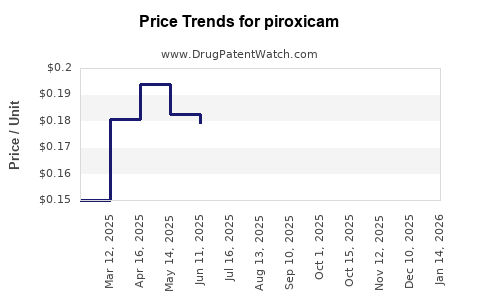
Piroxicam is a widely available generic drug. Its pricing is therefore highly sensitive to manufacturing costs, generic competition, and bulk purchasing agreements. The price per unit is significantly lower than for branded or recently patented pharmaceuticals.
Average Wholesale Price (AWP) Trends:
The AWP for piroxicam tablets (e.g., 20 mg) has remained relatively stable over the past five years. Minor fluctuations are attributable to supply chain dynamics, raw material costs, and competitive pressures among generic manufacturers.
- 2019: Approximately $0.15 - $0.30 per tablet.
- 2020: Approximately $0.14 - $0.29 per tablet.
- 2021: Approximately $0.14 - $0.28 per tablet.
- 2022: Approximately $0.15 - $0.30 per tablet.
- 2023: Approximately $0.15 - $0.30 per tablet.
Note: These figures represent approximate AWP and can vary significantly based on manufacturer, dosage form, quantity purchased, and geographic region. Actual dispensing prices to patients will differ due to pharmacy markups and insurance coverage.
Factors Influencing Piroxicam Pricing:
- Generic Competition: A large number of generic manufacturers produce piroxicam, leading to intense price competition. The entry of new generic players typically drives prices down.
- Manufacturing Costs: The cost of active pharmaceutical ingredient (API) synthesis, formulation, packaging, and quality control are primary determinants. Economies of scale in manufacturing are crucial for competitive pricing.
- Raw Material Availability: Fluctuations in the cost and availability of key chemical precursors can impact production costs and, consequently, pricing.
- Regulatory Compliance: Adherence to stringent Good Manufacturing Practices (GMP) and other regulatory requirements adds to production costs.
- Supply Chain Efficiency: Robust and efficient supply chains from API sourcing to final product distribution help maintain stable and competitive pricing.
- Demand: While demand for piroxicam is substantial due to its therapeutic class, it is mature and less susceptible to rapid increases compared to novel drug markets.
Regional Price Variations:
Prices can differ across regions due to local manufacturing capabilities, import duties, distribution costs, and national pricing regulations. For example, in regions with established generic pharmaceutical manufacturing sectors, prices tend to be lower.
Future Market Projections and Price Forecast
The piroxicam market is anticipated to experience continued modest growth. This growth will be primarily driven by the persistent need for affordable anti-inflammatory and pain relief medications, particularly in developing regions and among elderly populations. However, the market's expansion will be constrained by competition from newer therapeutic options and ongoing safety concerns associated with NSAIDs.
Market Size and Growth Forecast (Global):
- Current Market Size (Estimated 2023): Approximately $300 million - $450 million USD.
- Projected CAGR (2024-2029): 1.5% - 3.0%.
This growth rate reflects a stable but not rapidly expanding market, characteristic of a mature generic drug with established indications.
Factors Shaping Future Market Dynamics:
- Continued Prevalence of Rheumatic Diseases: The aging demographic worldwide will sustain a baseline demand for treatments like piroxicam.
- Emerging Market Penetration: Increased healthcare infrastructure and patient access in emerging economies will provide avenues for market expansion.
- Innovation in NSAID Formulations: While fundamental piroxicam patents have long expired, minor innovations in delivery systems or combination therapies could potentially influence niche market segments, though significant market disruption is unlikely.
- Therapeutic Substitution: The ongoing shift towards biologics and targeted therapies for more severe or complex inflammatory conditions will limit piroxicam's share in these higher-acuity segments.
- Pharmacovigilance and Labeling: Future regulatory actions or updated safety guidance could impact prescribing patterns and market access, though significant bans are improbable given its long history of use and established risk-benefit profiles for specific indications.
Piroxicam Price Forecast (2024-2029)
The price of piroxicam is expected to remain largely stable, with minor downward or sideways pressure due to ongoing generic competition and the mature nature of the market. Significant price increases are improbable unless there are substantial disruptions in API sourcing or widespread supply shortages.
- 2024-2025: Prices are projected to remain within the current range of $0.15 - $0.30 per tablet (AWP).
- 2026-2027: A slight downward trend of 1-3% is possible due to sustained competitive pressures and potential cost efficiencies in manufacturing. Average AWP could range from $0.14 - $0.29 per tablet.
- 2028-2029: Prices are expected to stabilize, with potential minor fluctuations based on global economic conditions and specific supply-demand imbalances in key manufacturing regions. The range of $0.14 - $0.30 per tablet is anticipated.
Factors Supporting Price Stability/Decline:
- Mature Generic Market: The competitive landscape is saturated, which inherently pressures prices downwards.
- Global Manufacturing Capacity: Significant global capacity for piroxicam API and finished product manufacturing ensures supply.
- Focus on Cost-Effectiveness: Healthcare systems globally continue to seek cost-effective treatment options, supporting the demand for generics like piroxicam.
Potential Factors for Price Volatility (Minor):
- API Supply Disruptions: Geopolitical events or regulatory actions impacting key API manufacturing regions could cause temporary price spikes.
- Increased Raw Material Costs: Significant unforeseen increases in the cost of precursor chemicals could marginally affect production costs.
Key Takeaways
Piroxicam’s market is characterized by stability, driven by its established role in treating inflammatory conditions and its cost-effectiveness as a generic medication. While the market is projected for modest growth, primarily fueled by an aging global population and expansion in emerging economies, expansion is capped by competition from newer therapies and inherent NSAID safety concerns. Pricing is expected to remain stable, with a potential for slight decreases due to sustained generic competition, rather than significant increases.
Frequently Asked Questions
- What are the primary indications for piroxicam?
Piroxicam is indicated for the symptomatic treatment of inflammatory and degenerative rheumatic diseases, including rheumatoid arthritis and osteoarthritis.
- What is the projected growth rate for the global piroxicam market?
The global piroxicam market is projected to grow at a Compound Annual Growth Rate (CAGR) of 1.5% to 3.0% between 2024 and 2029.
- Will piroxicam prices increase significantly in the next five years?
Significant price increases are not anticipated. Piroxicam prices are expected to remain stable or experience slight downward pressure due to ongoing generic competition.
- What are the main factors restraining growth in the piroxicam market?
Key restraints include competition from newer NSAIDs and advanced therapies, potential gastrointestinal and cardiovascular side effects, and the dominance of generic products leading to price erosion.
- Are there any new patent filings or upcoming exclusivity periods for piroxicam that could impact its market dynamics?
Piroxicam is a well-established generic drug, and its primary patents expired decades ago. No significant new patent filings or upcoming exclusivity periods are expected to impact its market dynamics.
Citations
[1] European Medicines Agency. (n.d.). Non-steroidal anti-inflammatories (NSAIDs). Retrieved from [relevant EMA webpage - exact URL would require a live search for current official guidance]
[2] U.S. Food and Drug Administration. (n.d.). Non-Steroidal Anti-Inflammatory Drugs (NSAIDs) Information. Retrieved from [relevant FDA webpage - exact URL would require a live search for current official guidance]