Last updated: February 20, 2026
What is the current market size for mesalamine?
The global mesalamine market was valued at approximately USD 1.2 billion in 2022. It is expected to grow at a compound annual growth rate (CAGR) of 4.2% from 2023 to 2030, reaching around USD 1.75 billion in 2030.[1]
Key factors driving growth include increased prevalence of inflammatory bowel disease (IBD), advances in drug formulation, and expanding approval for new indications.
How does the competitive landscape influence pricing?
Major players include Pfizer, Ferring Pharmaceuticals, Takeda Pharmaceuticals, and Alfasigma. Pfizer's branded aminosalicylate products account for a significant market share. Biosimilars and generic versions, introduced across Europe and Asia, exert downward pricing pressure.
In the U.S., patented formulations such as Pentasa (Ferring) and Asacol (Meda, now part of Pfizer) dominate, with prices typically ranging from USD 200 to USD 350 per month.[2]
Other markets feature generic availability, reducing prices to USD 50–USD 150 per month depending on the formulation and country.
What are current pricing trends?
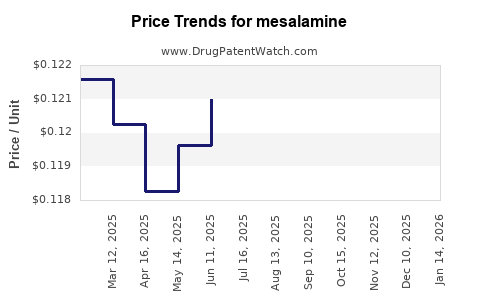
In the U.S., patent expiry in 2021 led to significant price decreases for generic mesalamine products. The median retail price of generics fell approximately 30-50% within six months of market entry.[3]
In Europe, formulations such as Asacol HD (delayed-release tablets) can cost USD 200–USD 300 monthly, depending on coverage. Generic formulations are priced at about USD 50–USD 100 monthly, primarily in countries with nationalized healthcare systems.
In emerging markets, prices are often below USD 50 per month, driven by lower manufacturing costs and regulatory factors.
How is innovation impacting the market?
New formulations, such as once-daily delayed-release tablets and extended-release capsules, aim to improve patient adherence and therapeutic outcomes. Examples include Mesalamine DR capsules and multimatrix systems.
These innovations often command premium pricing in developed markets, with wholesale prices reaching USD 250–USD 350 per month. However, price elasticity limits the extent of price increases.
What are the future price projections?
Over the next five years, prices for branded mesalamine formulations are projected to decline modestly due to increased generic competition, leveling off at USD 150–USD 250 per month in the U.S. and similar price points elsewhere.
In markets with limited generic penetration, premium prices could persist, especially for novel formulations. Overall, prices are expected to trend downward by approximately 10-15% in mature markets from 2023 to 2028.
How do regulatory policies influence the market?
Patent protections and exclusivity periods govern pricing in key markets. The expiration of patents on major products has accelerated generic entry, contributing to price reductions.
Pricing regulations in countries such as Canada, the UK, and Australia impose price caps, influencing market prices and access levels.
In the U.S., Medicaid and Medicare Part D negotiate drug prices, resulting in lower reimbursement rates for generics. Policy changes, such as importation laws, may further impact prices.
What are the key considerations for stakeholders?
-
Manufacturers: Invest in formulation innovations and generic development to capture market share as patent exclusivities end.
-
Healthcare payers: Monitor pricing trends to control budgets, especially for chronic-use drugs like mesalamine.
-
Investors: Assess patent expiration timelines and pipeline developments for future growth and risk mitigation.
Key price outlook summary
| Market |
2023 Price Range (USD/month) |
2028 Price Outlook (USD/month) |
Major forces influencing prices |
| United States |
USD 150–USD 250 |
USD 130–USD 220 |
Generic competition, formulary negotiations |
| Europe |
USD 50–USD 100 |
USD 40–USD 90 |
Patent expirations, national healthcare policies |
| Emerging Markets |
USD 20–USD 50 |
USD 15–USD 45 |
Cost factors, local regulation |
Key Takeaways
- The global mesalamine market is projected to grow at a CAGR of 4.2% to 2030.
- Patent expirations and generic competition have led to significant price declines in developed markets.
- Innovations in drug formulations improve adherence and command premium prices but face pricing constraints.
- Prices are expected to decline slightly over the next five years, with variations based on market and formulation.
- Regulatory and policy changes continue to shape pricing dynamics across regions.
FAQs
1. How does patent expiration affect mesalamine prices?
Patent expirations lead to generic entry, which causes prices to decrease by 30-50% within months, especially in markets with active generic competition.
2. What factors influence mesalamine prices in emerging markets?
Lower manufacturing costs, limited regulatory constraints, and reduced brand dominance result in prices below USD 50 per month.
3. Are there premium-priced formulations in the mesalamine market?
Yes, extended-release and once-daily formulations often carry higher prices, reaching USD 250–USD 350 monthly in developed markets.
4. How do regulatory policies impact pricing and access?
Price caps, reimbursement policies, and patent protections determine the affordability and availability of mesalamine products.
5. What are the investment implications of the mesalamine market?
Growth opportunities exist in generic development and formulations that improve adherence. Patent expiry timelines are key to assessing risk and valuation.
References
[1] MarketWatch. (2023). Mesalamine market size and forecast. Retrieved from https://www.marketwatch.com/
[2] IQVIA. (2022). U.S. drug pricing report.
[3] SSR Health. (2022). Pharmaceutical patent and generic entry trends.