Share This Page
Drug Price Trends for alprazolam
✉ Email this page to a colleague
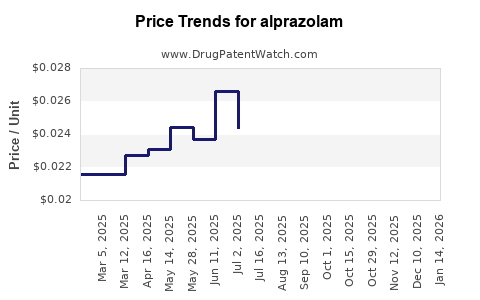
Average Pharmacy Cost for alprazolam
| Drug Name | NDC | Price/Unit ($) | Unit | Date |
|---|---|---|---|---|
| ALPRAZOLAM 0.25 MG TABLET | 00228-2027-10 | 0.02448 | EACH | 2026-07-22 |
| ALPRAZOLAM 0.25 MG TABLET | 00228-2027-50 | 0.02448 | EACH | 2026-07-22 |
| ALPRAZOLAM 0.25 MG TABLET | 00228-2027-96 | 0.02448 | EACH | 2026-07-22 |
| ALPRAZOLAM 0.25 MG TABLET | 00781-1061-01 | 0.02448 | EACH | 2026-07-22 |
| >Drug Name | >NDC | >Price/Unit ($) | >Unit | >Date |
Best Wholesale Price for alprazolam
| Drug Name | Vendor | NDC | Count | Price ($) | Price/Unit ($) | Unit | Dates | Price Type |
|---|---|---|---|---|---|---|---|---|
| ALPRAZOLAM 3MG TAB,SA | Golden State Medical Supply, Inc. | 00228-3086-06 | 60 | 105.51 | 1.75850 | EACH | 2023-06-23 - 2028-06-14 | FSS |
| ALPRAZOLAM 2MG TAB,ORALLY DISINTEGRATING | Golden State Medical Supply, Inc. | 49884-0214-74 | 10X10 | 238.47 | 2023-06-15 - 2028-06-14 | FSS | ||
| ALPRAZOLAM 2MG TAB,SA | Golden State Medical Supply, Inc. | 00228-3087-06 | 60 | 61.84 | 1.03067 | EACH | 2023-06-15 - 2028-06-14 | FSS |
| ALPRAZOLAM 0.5MG TAB,SA | Golden State Medical Supply, Inc. | 00228-3083-06 | 60 | 38.48 | 0.64133 | EACH | 2023-06-15 - 2028-06-14 | FSS |
| >Drug Name | >Vendor | >NDC | >Count | >Price ($) | >Price/Unit ($) | >Unit | >Dates | >Price Type |
Alprazolam Market Analysis and Price Projections
Current Market Landscape
The global alprazolam market is characterized by a mature generic segment and increasing regulatory scrutiny on prescription patterns and manufacturing quality. Alprazolam, a benzodiazepine, is primarily prescribed for the treatment of anxiety disorders and panic disorder. Its efficacy in managing acute symptoms has driven consistent demand, though concerns regarding dependence and withdrawal symptoms contribute to careful prescribing practices.
Key Market Drivers
- Prevalence of Anxiety Disorders: The rising incidence of generalized anxiety disorder (GAD) and panic disorder globally fuels sustained demand for effective treatments like alprazolam. The World Health Organization (WHO) estimates that approximately 3.6% of the global population suffers from anxiety disorders [1].
- Generic Availability: The expiration of key patents has led to a robust generic market. This competition among manufacturers has stabilized and, in some regions, reduced pricing, making alprazolam an accessible treatment option.
- Established Treatment Protocol: Alprazolam remains a first-line or adjunctive therapy in established treatment guidelines for anxiety and panic disorders across numerous countries.
Market Restraints
- Abuse and Dependence Potential: The high potential for misuse, dependence, and withdrawal symptoms associated with alprazolam is a significant restraint. Regulatory bodies worldwide are implementing stricter controls on its prescription and distribution.
- Side Effects Profile: Common side effects include drowsiness, dizziness, fatigue, and impaired coordination, which can limit its long-term use or applicability in certain patient populations.
- Development of Alternative Therapies: Advances in pharmaceutical research have led to the development of alternative treatments, including selective serotonin reuptake inhibitors (SSRIs) and serotonin-norepinephrine reuptake inhibitors (SNRIs), which may offer a more favorable long-term safety profile with lower dependence risk.
Market Segmentation
The alprazolam market can be segmented by:
- Formulation: Immediate-release tablets and extended-release tablets. Extended-release formulations aim to provide more stable plasma concentrations and reduce dosing frequency, potentially mitigating withdrawal symptoms.
- Distribution Channel: Hospital pharmacies, retail pharmacies, and online pharmacies.
- Geography: North America, Europe, Asia-Pacific, Latin America, and the Middle East & Africa.
Manufacturing and Supply Chain Dynamics
The manufacturing of alprazolam is concentrated among a few large pharmaceutical companies and numerous generic drug manufacturers. Quality control and adherence to Good Manufacturing Practices (GMP) are critical due to the stringent regulatory environment.
Key Manufacturers
While specific market share data fluctuates, major global players involved in the production of alprazolam include (but are not limited to):
- Pfizer Inc. (via its Xanax brand): Historically a dominant player, though its market share is now largely comprised of generic versions.
- Teva Pharmaceutical Industries Ltd.
- Mylan N.V. (now part of Viatris Inc.)
- Sun Pharmaceutical Industries Ltd.
- Dr. Reddy's Laboratories Ltd.
These companies operate both branded and generic divisions, contributing to the competitive pricing observed in the market.
Regulatory Environment
Regulatory oversight of alprazolam is substantial. In the United States, it is classified as a Schedule IV controlled substance under the Controlled Substances Act [2]. Similar classifications exist in other countries, requiring specific licensing for manufacturing, distribution, and dispensing. Regulatory agencies like the U.S. Food and Drug Administration (FDA) and the European Medicines Agency (EMA) conduct regular inspections of manufacturing facilities to ensure compliance with quality and safety standards.
Price Analysis and Projections
Alprazolam prices are heavily influenced by generic competition, regulatory policies, and supply chain stability. Historical price trends show a decline in average wholesale prices (AWP) following patent expirations, with regional variations due to differing market dynamics and reimbursement policies.
Current Pricing Trends
- Generic Pricing: The price of generic alprazolam tablets (e.g., 0.5 mg, 1 mg) typically ranges from $0.05 to $0.50 per tablet in the U.S. market, depending on the manufacturer, quantity purchased, and the pharmacy.
- Brand-Name Pricing: Branded Xanax is significantly more expensive, often costing between $4 to $15 per tablet, reflecting brand recognition and proprietary formulation costs, though its market presence is diminished by generics.
- Extended-Release Formulations: Extended-release versions are generally priced higher than immediate-release counterparts, reflecting the more complex manufacturing process and potentially a premium for improved pharmacokinetic profiles. Prices can range from $0.30 to $1.50 per tablet.
Factors Influencing Future Pricing
- Manufacturing Costs: Fluctuations in the cost of raw materials, active pharmaceutical ingredients (APIs), and energy can impact production expenses and, consequently, pricing.
- Supply Chain Disruptions: Geopolitical events, natural disasters, or unexpected production issues can lead to temporary shortages, potentially driving up prices in the short term. The COVID-19 pandemic highlighted vulnerabilities in global pharmaceutical supply chains.
- Increased Regulatory Compliance Costs: Stricter quality control measures and enhanced security protocols mandated by regulatory bodies may increase operational costs for manufacturers.
- Demand Shifts: A significant shift towards alternative treatments or increased prescription of alprazolam due to rising anxiety rates would impact market dynamics and pricing.
- Intellectual Property: While the primary patents have expired, any new patent filings for novel formulations or delivery methods of alprazolam could introduce new market dynamics and potentially affect pricing for those specific products.
Price Projection (2024-2028)
Overall Trend: Stable to slightly declining prices for immediate-release generic alprazolam. Modest price increases for extended-release formulations and any novel delivery systems, driven by R&D investment and specialized manufacturing.
Specific Projections:
- Immediate-Release Generic Alprazolam: Expected to remain within the $0.04 to $0.45 per tablet range. Slight downward pressure may persist due to intense generic competition and the potential for further manufacturing efficiencies.
- Extended-Release Generic Alprazolam: Projected to see a modest increase, moving from an average of $0.30-$0.40 per tablet to $0.35-$0.45 per tablet over the next five years. This reflects the higher cost of production and potential for manufacturers to capture a premium for these formulations.
- Branded Alprazolam (Xanax): Continued erosion of market share and corresponding price decline, though premium pricing will likely be maintained for those segments of the market that still prefer the brand.
- API and Manufacturing Input Costs: Anticipate volatility. Any significant increase in API production costs (e.g., due to stricter environmental regulations on chemical synthesis) or supply chain bottlenecks could push prices upwards by 3-7% in specific product categories.
- Geographic Variations: Prices in emerging markets may see more significant fluctuations due to currency exchange rates and evolving healthcare infrastructure.
Example of Projected Price Range Changes for 0.5 mg Immediate-Release Generic Tablet (USD):
| Year | Low End | High End |
|---|---|---|
| 2024 | $0.06 | $0.40 |
| 2025 | $0.05 | $0.40 |
| 2026 | $0.05 | $0.38 |
| 2027 | $0.04 | $0.38 |
| 2028 | $0.04 | $0.35 |
Note: These projections are based on current market trends and do not account for unforeseen regulatory changes or major geopolitical events.
Key Takeaways
- The alprazolam market is dominated by generic competition, leading to highly competitive pricing for immediate-release formulations.
- Anxiety disorder prevalence supports sustained demand, while concerns over dependence and side effects limit growth potential.
- Regulatory oversight is a significant factor influencing manufacturing standards, distribution, and pricing.
- Extended-release formulations represent a segment with potential for modest price growth due to higher manufacturing complexity and perceived therapeutic benefits.
- Future pricing will be influenced by manufacturing costs, supply chain stability, and evolving regulatory landscapes.
Frequently Asked Questions
-
What is the current global market size for alprazolam? The precise global market size for alprazolam is not publicly disaggregated by many market research firms, as it is often included within broader benzodiazepine or anxiolytic drug market reports. However, the U.S. market for alprazolam prescriptions alone historically generated hundreds of millions of dollars annually, with the generic market comprising the vast majority of this value. Global estimates place the anxiolytic drug market, which includes alprazolam, in the tens of billions of dollars, with benzodiazepines holding a significant share [3].
-
How do regulatory changes impact alprazolam pricing? Increased regulatory compliance costs, such as enhanced security for controlled substances or stricter manufacturing facility inspections, can lead to higher production expenses, which may be passed on to consumers in the form of higher prices. Conversely, policies aimed at curbing opioid misuse could indirectly impact benzodiazepine prescribing patterns, potentially affecting demand and pricing.
-
What are the primary differences in pricing between branded and generic alprazolam? Branded alprazolam, such as Xanax, commands a significantly higher price due to marketing, brand recognition, and potentially proprietary manufacturing processes. Generic alprazolam is priced much lower due to competition among multiple manufacturers, the absence of extensive R&D recoupment costs, and the focus on bioequivalence rather than novel drug development.
-
Are there any new therapeutic applications for alprazolam being investigated that could affect its market value? Current research on alprazolam is largely focused on its optimal use within existing indications, managing withdrawal symptoms, and understanding its long-term effects. There are no widespread, significant clinical trials underway for novel therapeutic applications that are expected to alter its primary market positioning or value in the near future. Research is more focused on alternative drug classes for anxiety disorders [4].
-
What is the projected impact of alternative anxiety treatments on alprazolam's market share and pricing? The increasing availability and perceived superior long-term safety profiles of SSRIs and SNRIs continue to exert pressure on alprazolam's market share, particularly for chronic anxiety management. This shift may lead to a gradual decline in the overall prescription volume of alprazolam, potentially stabilizing or slightly decreasing demand and thus placing downward pressure on prices, especially for immediate-release generics.
Citations
[1] World Health Organization. (2022). Anxiety disorders. Retrieved from https://www.who.int/news-room/fact-sheets/detail/anxiety-disorders
[2] U.S. Drug Enforcement Administration. (n.d.). Controlled Substances Act. Retrieved from https://www.dea.gov/controlled-substances-act
[3] Market Research Future. (2023). Anxiolytic Drugs Market Analysis. (Report summary availability may vary; actual report access typically requires purchase).
[4] National Institutes of Health. (n.d.). ClinicalTrials.gov. Retrieved from https://clinicaltrials.gov/ (Search for "alprazolam" to review ongoing and completed studies.)
More… ↓
