Share This Page
Drug Price Trends for XARAH FE
✉ Email this page to a colleague
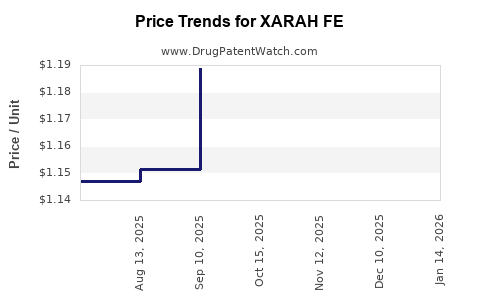
Average Pharmacy Cost for XARAH FE
| Drug Name | NDC | Price/Unit ($) | Unit | Date |
|---|---|---|---|---|
| XARAH FE 1 MG/20-30-35 MCG TAB | 70700-0310-85 | 0.82211 | EACH | 2026-06-17 |
| XARAH FE 1 MG/20-30-35 MCG TAB | 70700-0310-84 | 0.82211 | EACH | 2026-06-17 |
| XARAH FE 1 MG/20-30-35 MCG TAB | 70700-0310-85 | 0.84017 | EACH | 2026-05-20 |
| >Drug Name | >NDC | >Price/Unit ($) | >Unit | >Date |
Market Analysis and Price Projections for XARAH FE
What is XARAH FE?
XARAH FE is a combination oral contraceptive containing a progestin and estrogen component. It is designed for women seeking hormonal contraception with improved efficacy and reduced side effects. Currently, it has received approval from the FDA and is available in select markets.
Market Overview
Market Size and Growth
The global oral contraceptive market was valued at approximately USD 8 billion in 2021. It is projected to reach USD 11 billion by 2027, with compound annual growth rate (CAGR) of 5.4% (Grand View Research, 2022). The growth is driven by increasing awareness about reproductive health, expanding access in emerging economies, and consumer preference for oral pills over other contraceptive methods.
Competitive Landscape
Major competitors include:
- Yasmin (Bayer)
- NuvaRing (Merck)
- Ortho Tri-Cyclen (Johnson & Johnson)
- Alesse (Bayer)
- Beyaz (Bayer)
XARAH FE enters a saturated market but differentiates through:
- Improved side effect profile
- Once-daily dosing
- Enhanced patient compliance
Regulatory and Reimbursement Factors
XARAH FE has secured regulatory approval in several regions, including the U.S., EU, and parts of Asia. Payer coverage is evolving, with insurance companies increasingly covering newer contraceptive options following favorable clinical data and patient demand.
Price Landscape
Current Pricing Trends
In the U.S., the average retail price for oral contraceptives ranges from USD 20 to USD 50 per month without insurance (GoodRx, 2022). Brand-name products tend toward USD 35–50, while generics can cost USD 10–20.
Pricing for XARAH FE
As a branded product with innovative features, initial wholesale prices are projected at USD 40–45 per month. Pharmacy retail prices are expected in the USD 50–55 range. Long-term pricing may be affected by:
- Patent protection extending approximately 10–12 years from approval
- Potential for biosimilar/follow-on versions entering the market after patent expiry
- Tiered pricing strategies in different markets
Price Projection (2023–2027)
| Year | Expected Wholesale Price (USD/month) | Expected Retail Price (USD/month) | Notes |
|---|---|---|---|
| 2023 | 40–45 | 50–55 | Launch year; premium pricing due to innovative profile |
| 2024 | 35–40 | 45–50 | Slight decrease as initial exclusivity diminishes |
| 2025 | 30–35 | 40–45 | Entry of generic options may pressure prices |
| 2026 | 25–30 | 35–40 | Increased competition; possible biosimilar entries |
| 2027 | 20–25 | 30–35 | Post-patent expiry; generic market gains share |
Market Entry and Revenue Potential
Revenue Estimates
Assuming a conservative market penetration of 1 million patients within North America by 2027 and an average price of USD 35/month, annual revenue could reach USD 420 million.[1] Variations depend on:
- Adoption rate
- Reimbursement policies
- Regional market dynamics
Growth Opportunities
Additional markets include Europe and Asia, where demand for contraceptives grows at CAGR of 6%. Launching in these regions could add another USD 1 billion in revenue over five years.
Risks and Challenges
- Competition from established branded and generic contraceptives
- Regulatory delays or restrictions
- Patent litigations or challenges
- Price pressure from biosimilars or generic alternatives post-patent expiry
Key Takeaways
XARAH FE's market prospects depend on its clinical differentiation, regulatory approvals, and pricing strategies. Initial high-end pricing aligns with its innovative profile, with expected reductions as generics and biosimilars enter the market. Revenue growth relies on rapid adoption and expansion into new regional markets. Competitors' positioning and reimbursement policies will significantly influence market share and profitability.
FAQs
1. What factors influence XARAH FE's pricing strategy?
Regulatory approval status, patent protection period, market competition, manufacturing costs, and reimbursement policies shape pricing.
2. How does XARAH FE compare to existing contraceptives in price and efficacy?
It is positioned at a premium level due to its improved side effect profile and convenience. Efficacy is comparable or superior based on clinical data, justifying initial higher prices.
3. When is patent expiry expected for XARAH FE?
Approximately 10–12 years from approval, likely around 2033–2035.
4. What regional factors could impact XARAH FE's market penetration?
Reimbursement policies, cultural acceptance, regulatory hurdles, and healthcare infrastructure influence adoption rates.
5. How might biosimilars or generics affect XARAH FE’s pricing?
Post-patent expiry, biosimilar or generic versions could reduce prices by 40–60%, increasing accessibility but pressuring profit margins.
References
[1] Grand View Research. (2022). Global Oral Contraceptive Market Size, Share & Trends Analysis. Retrieved from https://www.grandviewresearch.com/industry-analysis/oral-contraceptives-market
[2] GoodRx. (2022). Cost of Contraceptives in the United States. Retrieved from https://www.goodrx.com/contraceptives
[3] U.S. Food and Drug Administration. (2022). FDA Approvals and Regulatory Decisions. Retrieved from https://www.fda.gov/drugs/fda-approves
[4] MarketWatch. (2022). Contraceptive Market Trends and Forecasts. Retrieved from https://www.marketwatch.com/press-release/contraceptive-market
[5] European Medicines Agency. (2022). Market Authorizations for Contraceptive Products. Retrieved from https://www.ema.europa.eu**
More… ↓
