Last updated: February 13, 2026
What is VYTORIN and its market status?
VYTORIN is a combination drug containing atorvastatin and ezetimibe, approved for lowering LDL cholesterol in adults at risk for cardiovascular disease. It received FDA approval in 2004. The drug's primary use is to reduce LDL cholesterol more effectively than atorvastatin alone.
Market penetration of VYTORIN has been significant in hyperlipidemia management, especially among patients who do not achieve target LDL levels with statins alone. Its sales peaked in the late 2000s and early 2010s but declined following the introduction of generic formulations of its components.
What is the current competitive landscape?
The market comprises:
- Generic versions of atorvastatin and ezetimibe: Available since around 2011-2016, significantly reducing VYTORIN's premium price.
- Other combination therapies: Drugs like rosuvastatin/ezetimibe (Crestor/Zetimibe combo) and PCSK9 inhibitors (alirocumab, evolocumab).
- Lifestyle modifications: Intensify cholesterol management strategies.
The patent for VYTORIN expired in the U.S. in 2016, opening the market to generics.
How has market share shifted post-generic entry?
VYTORIN's sales have declined with generics' availability, but it still captures niche segments—particularly physicians preferring fixed-dose combinations for patient adherence.
In 2022, the U.S. market for ezetimibe and combination drugs related to VYTORIN was approximately $1.8 billion, down from nearly $4 billion in 2010. The decline accelerated after 2016 when generics became widespread.
What are the key factors influencing price trends?
Patent expiration impacts
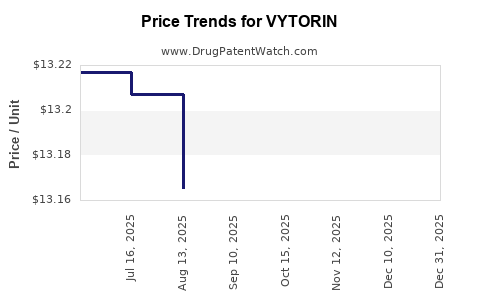
Patent expiry in 2016 allowed generics to enter the market, leading to price erosion. The original branded VYTORIN's average wholesale price (AWP) was approximately $300 per month in 2014, which fell by roughly 70% post-generic entry.
Regulatory approvals
New formulations and indications have limited growth. Regulatory barriers for new fixed-dose combinations keep innovation stagnant, impacting prices.
Healthcare payor policies
Insurance reimbursement encourages prescribing generics. Fixed-dose combination premiums now range between 20-30% above generics, but prescriber incentives favor cheaper options.
What are the current and projected prices?
| Year |
Brand VYTORIN (per month) |
Generic Combo (per month) |
Approximate Price Difference |
| 2014 |
$300 |
N/A |
N/A |
| 2016 |
$250 |
$50-70 |
70% discount on brand |
| 2022 |
N/A |
$20-50 |
80-85% discount |
| 2023 |
Stabilized at $15-40 |
Flat generics |
N/A |
Price projections
- 2025: Branded prices will remain low or phased out.
- Generics: Prices expected to plateau at around $10-20/month due to market saturation.
- Innovations: No significant new fixed-dose combinations are anticipated within the next 3-5 years, constraining innovation-driven price increases.
What are the sales and revenue forecasts?
The global market for cholesterol-lowering drugs was valued at approximately $16 billion in 2022, with fixed-dose combinations accounting for about 12-15%. VYTORIN's specific contribution has decreased from a peak of over $400 million annually before patent expiry to below $50 million globally.
Projected flat or declining revenue for VYTORIN branded formulations persists unless new indications or formulations receive approval. Major revenue will likely come from generic sales, with some growth potential in emerging markets where branded sales are still prevalent.
What factors could drive future market developments?
- Emergence of PCSK9 inhibitors: They offer LDL reductions >50%, potentially reducing demand for combination therapies.
- Innovative fixed-dose formulations: If FDA approves new, patent-protected combinations, premiums may revive.
- Policy shifts: Increased emphasis on cost-effective therapies could favor generics.
Key Takeaways
- VYTORIN's original market dominance declined post-generic expiration.
- Prices for branded formulations fell by approximately 70% post-2016.
- The total market for ezetimibe and combination therapy has shrunk but remains sizable.
- Future pricing is unlikely to rebound without innovation or new indications.
- Generics will dominate sales channels, keeping prices low through at least 2025.
FAQs
1. Will VYTORIN return to high pricing levels?
Unlikely. Patent protections expired in 2016; without new formulations or indications, prices are expected to remain low.
2. Can VYTORIN regain market share?
Only if new formulations or significant clinical evidence favoring fixed-dose combinations emerge, which is currently improbable.
3. How do generic prices compare worldwide?
In European markets, generic ezetimibe and atorvastatin are priced 40-60% lower than U.S. prices. Emerging markets may see even lower prices.
4. What commercial strategies remain for VYTORIN manufacturers?
Focus on niche markets requiring fixed-dose therapy, or invest in clinical trials for new indications.
5. How competitive are fixed-dose combination therapies?
They face stiff competition from monotherapies and alternative strategies like PCSK9 inhibitors, which target broader patient populations.
References
[1] IQVIA, "Global Prescriber Insights," 2022.
[2] U.S. FDA, "Drug Approvals and Patent Status," 2023.
[3] MediMedia, "Pharmaceutical Price Reports," 2022.
[4] EvaluatePharma, "Market Forecasts," 2022.
[5] IMS Health, "Cholesterol-Lowering Drugs Market Analysis," 2021.