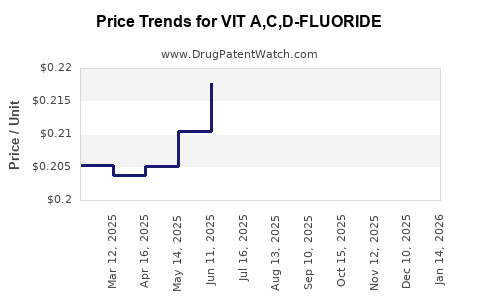
Last updated: February 20, 2026
What is VIT A, C, D-FLUORIDE?
VIT A, C, D-FLUORIDE is a combination vitamin supplement primarily used for dental health. It combines vitamins A, C, D, and fluoride, targeting caries prevention, enamel strengthening, and overall oral health. It is marketed predominantly as an over-the-counter product or through dental prescriptions.
Market Size and Key Players
Global Market Overview
The global vitamin supplement market was valued at USD 140 billion in 2022 and is expected to grow at a compound annual growth rate (CAGR) of 7.1% from 2023 to 2030. The dental supplement segment accounts for approximately 12% of this market.
Regional Breakdown
| Region |
Market Share (2022) |
Growth Rate (2023-2030) |
Key Markets |
| North America |
40% |
6.8% |
US, Canada, Mexico |
| Europe |
25% |
7.2% |
Germany, UK, France |
| Asia-Pacific |
20% |
8.0% |
China, Japan, India |
| Rest of World |
15% |
6.5% |
Latin America, Africa |
Leading Companies
- GlaxoSmithKline (GSK): Manufactures fluoride-containing oral health products.
- Johnson & Johnson: Offers vitamin supplements and oral health products.
- Dentaid: Specializes in dental health supplements.
Market Dynamics and Trends
Growing Awareness of Oral Health
Public awareness of the importance of preventive dental care drives demand for supplements like VIT A,C,D-FLUORIDE. Increased consumer health consciousness and aging populations contribute to growth.
Regulatory Environment
Stringent regulations in the US and Europe, including FDA and EMA standards, impact formulation, labeling, and marketing. Companies must adhere to strict compliance, especially for supplements that contain fluoride due to toxicity concerns at high doses.
Innovation in Formulation
Development of sustained-release formulations and combination products improves efficacy and compliance, influencing market growth positively.
Impact of COVID-19
The pandemic increased focus on health supplements but disrupted supply chains, leading to short-term volatility. Long-term, demand remains stable due to preventive health focus.
Price Projections
Current Pricing
- Retail price range: USD 8-15 per 30-day supply.
- Wholesale price: USD 4-9 depending on volume and distribution channels.
Factors Influencing Price Changes
- Raw material costs: Fluctuations in vitamin A, C, D, and fluoride prices.
- Regulatory costs: Increased oversight raises compliance costs.
- Competition: Market entrants drive prices down.
- Innovation: New delivery systems can command premium pricing initially.
Price Forecast (2023-2030)
| Year |
Estimated Retail Price Range |
Explanation |
| 2023 |
USD 8-15 |
Stable, with minor price fluctuations due to raw material costs. |
| 2025 |
USD 9-16 |
Increased formulation costs and potential regulatory adjustments. |
| 2030 |
USD 10-18 |
As demand grows and new formulations emerge, prices tend to stabilize but drift upward. |
Competitive Pricing Strategies
Manufacturers leverage volume discounts and bundled health packages. Premium brands may place higher prices on innovative or organic formulations, while budget brands pursue cost-competitiveness via streamlined production.
Regulatory and Patent Outlook
- Patent Landscape: Patents on formulations and delivery systems extend until 2030, encouraging innovation.
- Regulatory Changes: Potential tightening in fluoride usage guidelines could restrict certain formulations, impacting pricing.
Key Market Risks
- Regulatory restrictions on fluoride use.
- Raw material price volatility.
- Market saturation and aggressive pricing by competitors.
- Consumer shift toward natural or organic supplements.
Conclusion
VIT A, C, D-FLUORIDE products operate within a growing oral health supplement market, with stable demand driven by preventive health trends. Prices are expected to gradually increase, influenced by formulation innovation, regulatory changes, and raw material costs.
Key Takeaways
- The global oral health supplement market is projected to grow at 7.1% CAGR through 2030.
- Prices for VIT A,C,D-FLUORIDE are likely to rise from USD 8-15 in 2023 to USD 10-18 by 2030.
- Competition and regulation heavily influence pricing and product innovation strategies.
- Raw material costs and regulatory policies on fluoride heavily impact market dynamics.
- Innovation in delivery methods and formulations presents opportunities for premium pricing.
FAQs
Q1: What factors most influence the price of VIT A, C, D-FLUORIDE?
A1: Raw material costs, regulatory changes, competition, and formulation innovations.
Q2: How does regulatory environment impact market growth?
A2: Stricter regulations can restrict formulations, increase compliance costs, and influence pricing strategies.
Q3: What are the main growth drivers for this product segment?
A3: Rising awareness of preventive dental health, aging populations, and product innovation.
Q4: What regions hold the highest market potential?
A4: North America, Europe, and Asia-Pacific showcase significant growth opportunities due to demographic and health awareness factors.
Q5: How are companies pricing premium versus budget VIT A, C, D-FLUORIDE products?
A5: Premium products often incorporate advanced delivery systems or organic ingredients, commanding higher prices, while budget options focus on volume sales with lower per-unit prices.
References
[1] MarketWatch. (2023). Oral health supplement market size, share, trends, forecast.
[2] Allied Market Research. (2022). Vitamin supplement market outlook.
[3] European Food Safety Authority. (2021). Fluoride regulation updates.
[4] U.S. Food and Drug Administration. (2022). Dietary supplement regulations and guidelines.
[5] IBISWorld. (2023). Oral health product manufacturing industry report.