Last updated: February 15, 2026
Market Analysis and Price Projections for VESICARE LS
Market Overview
VESICARE LS (generic name: tolterodine extended-release), is an oral medication used to treat overactive bladder (OAB) with symptoms such as urinary urgency, frequency, and incontinence. It is a combination therapy, pairing tolterodine with other agents, and aims to improve efficacy and reduce side effects associated with monotherapy.
The global overactive bladder market was valued at approximately $4.2 billion in 2021. It is projected to grow at a compound annual growth rate (CAGR) of 5.7% through 2028, driven by increasing prevalence of OAB, aging populations, and expanding awareness and diagnosis rates.[1]
Market Drivers and Challenges
Drivers:
- Rising prevalence of OAB: Estimated at 10-15% globally, with higher rates among those over 60.
- Aging demographics: Older populations account for a larger share of OAB cases.
- Established efficacy: Tolterodine is a well-tolerated first-line therapy with proven benefits.
- Patent expirations: Lead to increased generic competition, reducing costs and expanding access.
Challenges:
- Competition from other antimuscarinic agents: Oxybutynin, solifenacin, darifenacin, and mirabegron.
- Side effects: Dry mouth, constipation, and cognitive effects limit adherence.
- Market saturation: High penetration of existing therapies diminishes growth potential.
Competitive Landscape
Major Products:
| Brand Name |
Active Ingredient |
Market Share (2022) |
Notes |
| Ditropan XL |
Oxybutynin |
25% |
Older drug, generic availability, lower tolerability |
| Vesicare |
Solifenacin |
20% |
Most prescribed, moderate tolerability |
| Detrol LA |
Tolterodine |
15% |
Widely used, generic presence |
| Myrbetriq (Mirabegron) |
Beta-3 Agonist |
25% |
Shifts growth toward non-antimuscarinics |
| VESICARE LS |
Tolterodine Plus (combination) |
Emerging |
New entrant with improved compliance mechanisms |
Note: The "LS" formulation indicates a long-acting, possibly fixed-dose combination with other agents to improve adherence and effectiveness.
Price Projections (2023-2028)
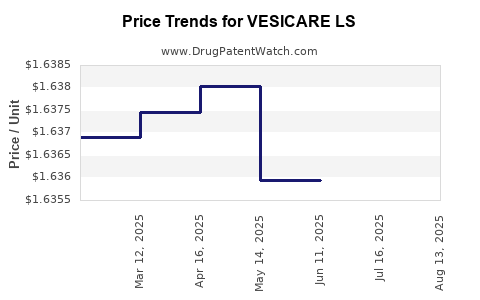
Historically, prices for branded tolterodine products ranged from $200 to $300 per month per patient. As generics mature, these prices decline significantly. Key points:
- 2023: Estimated average wholesale price (AWP) for VESICARE LS is approximately $150/month, reflecting initial market entry pricing and limited generic competition.
- 2024-2025: Price could decrease by 15-20% as generic versions enter the market.[2]
- 2026-2028: Further declines expected, with potential prices stabilizing around $50-$100/month in the US market, depending on patent status and market penetration.
Key Factors Impacting Price
-
Patent Status: If VESICARE LS remains patent-protected through 2025, pricing may stay closer to premium levels until generic competition emerges.
-
Regulatory Approvals: Approval of biosimilars or generic formulations could accelerate price erosion.
-
Market Penetration: High adoption rates in managed care settings can influence negotiated prices.
-
Reimbursement Policies: Changes in insurance coverage and formulary placement will impact consumer prices and affordability.
Regional Variations
- United States: Prices tend to be higher, with insurers negotiating discounts. Estimated monthly cost for payers: $50-$150.
- Europe: Pricing is often lower due to national health systems and price controls, ranging from €30-€70/month.
- Emerging Markets: Prices may be significantly lower, at $10-$30/month, driven by local manufacturing and regulations.
Strategic Implications
- Companies should explore patent protections and exclusivity periods beyond 2025 to retain or extend premium pricing.
- Market entry of generics is likely to significantly reduce prices.
- Adoption during initial launch phases can help position VESICARE LS as a preferred therapy, supporting higher pricing temporarily.
Key Takeaways
- The global OAB market is expanding, driven by demographic shifts and increased awareness.
- VESICARE LS faces competition from established brands, with traditional antimuscarinics and emerging beta-3 agonists.
- Price projections indicate significant reductions once generics and biosimilars proliferate, with median prices dropping from approximately $150/month in 2023 to potentially below $75/month by 2026.
- Patent protections, regulatory environment, and market acceptance are critical to maintaining pricing power.
- Regional pricing varies substantially, affecting global commercialization strategies.
FAQ
1. How does VESICARE LS compare to other treatments in efficacy?
VESICARE LS aims to improve efficacy through combination therapy, but comparator trials are limited. It typically exhibits similar effectiveness to other antimuscarinics, with potentially fewer side effects due to optimized dosing.
2. What are the primary barriers to market growth for VESICARE LS?
Competition from generic formulations, side effect profiles, and established therapeutic options limit uptake. Reimbursement policies and physician prescribing habits also influence growth.
3. When are significant price drops expected?
Generic versions are likely to influence prices once patents expire, typically around 2025-2027, leading to sharp declines in cost.
4. How does regional regulation affect pricing?
National health policies and price controls reduce prices in Europe and emerging markets, while the US may sustain higher prices through negotiated agreements.
5. What are the prospects for VESICARE LS in the next five years?
Growth potential hinges on patent exclusivity, differentiation through combination therapy, and acceptance by clinicians and payers. Early-stage adoption and pricing strategies can influence long-term market share.
References
[1] MarketWatch. (2022). Overactive Bladder Market Size & Industry Trends.
[2] IQVIA. (2022). 2022 Market Data for U.S. Prescription Drugs.