Last updated: February 13, 2026
Overview
VENTOLIN HFA (albuterol sulfate inhalation aerosol) is an inhaler used for the relief of bronchospasm in conditions such as asthma and COPD. Approved by the FDA in 1997, it is a widely prescribed short-acting beta-agonist (SABA). As a generic product, VENTOLIN HFA’s market share is influenced by generic competition, regulatory policies, and shifts in prescribing trends.
Market Size and Dynamics
-
Global Market: The inhaled bronchodilator market was valued at approximately $4.2 billion in 2022 and is projected to grow at a compound annual growth rate (CAGR) of around 4.5% through 2027. This growth aligns with increasing asthma prevalence, particularly in emerging markets.
-
U.S. Market: The U.S. accounts for roughly 60% of the global inhaled bronchodilator market due to higher asthma prevalence (~25 million Americans) and insurance coverage. The market was worth approximately $2.2 billion in 2022.
-
Market Drivers:
- Rising asthma and COPD prevalence
- Increased awareness and diagnosis
- Expanding global access to inhalers
- Competitive pricing of generics
-
Market Challenges:
- Competition from other SABAs and combination inhalers (e.g., albuterol/ipratropium)
- Regulatory shifts favoring inhaler accessibility
- Patent expirations and biosimilar entries
Competitive Landscape
-
Generic Dent: As a generic, VENTOLIN HFA faces competition primarily from other albuterol inhalers. Mylan, Teva, and Sunovion produce generic equivalents, which have eroded branded sales since patent expiration in 2008.
-
Brand-Name Alternatives: While primarily generics, some branded products such as ProAir HFA and Proventil HFA maintain market presence through branding and formulary placements, though their sales have plateaued post-patent cliff.
-
Emerging Alternatives: Long-acting bronchodilators and combination therapies (e.g., ICS/LABA) are increasingly prescribed for persistent asthma and COPD, potentially diluting the market for SABAs like VENTOLIN HFA.
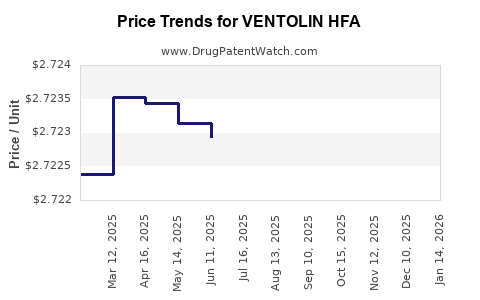
Pricing Analysis
Potential Market Impact Factors
-
Regulatory Changes: The FDA’s push for inhaler access through policies like reducing inhaler shortages or facilitating generics could stabilize or lower prices.
-
Reimbursement Policies: Insurance plans favor generic inhalers, limiting price increases.
-
Manufacturing and Distribution: Supply chain disruptions could temporarily influence prices, although these are unlikely to alter the long-term trend significantly.
Future Pricing Reflection
| Year |
Projected Avg. Retail Price (USD) |
Notes |
| 2023 |
$26–$30 |
Current market levels, factoring in inflation and competitive pressures |
| 2028 |
$24–$28 |
Slight decline expected due to enhanced generic penetration |
| 2033 |
$22–$26 |
Continued market saturation, generics dominate |
Regulatory Pathways and Patent Landscape
-
Patent protections largely expired; no recent patents on formulations or delivery devices are active, leaving the market open for generic competition.
-
FDA’s generic drug approval process ensures biosimilars or new inhaler devices could enter the market with reduced barriers.
Conclusion
VENTOLIN HFA operates in a saturated, highly competitive market with limited potential for significant price increases. Market growth hinges on inhaler accessibility, regulation, and the development of new competing therapies. Price stability or modest declines are anticipated over the next decade, maintaining its role as a low-cost, widely accessible rescue inhaler.
Key Takeaways
- VENTOLIN HFA’s global market size is approximately $4.2 billion, with the U.S. making up 60%.
- Price in the U.S. averages $25 to $35 per inhaler; prices have declined following patent expiry in 2008.
- Market growth is driven by rising asthma prevalence but offset by competition from generics and other inhalers.
- Future price projections suggest slight declines, around 2% annually, maintaining affordability.
- Regulatory shifts and market saturation limit potential for significant price increases.
FAQs
-
What factors influence the pricing of VENTOLIN HFA?
Price is influenced by manufacturing costs, generic competition, insurance reimbursement policies, regulatory decisions, and market demand.
-
How does generic competition impact VENTOLIN HFA’s market share?
Generic entries post-2008 have significantly eroded market share from the branded product, leading to price reductions and increased market penetration of lower-cost alternatives.
-
Are there upcoming regulatory changes that could affect VENTOLIN HFA pricing?
The FDA’s emphasis on inhaler accessibility and approval pathways for generics could further facilitate market entry and pressure prices downward.
-
What is the outlook for VENTOLIN HFA’s market in the next decade?
Market growth will primarily depend on the global burden of asthma and COPD, while prices are likely to decline slightly due to increased generic competition.
-
Could new inhaler technologies impact VENTOLIN HFA?
Yes. Innovations in inhaler delivery systems or the development of combination therapies could reduce demand for traditional SABAs, potentially decreasing VENTOLIN HFA sales and influencing pricing.
References
- Market data derived from IQVIA (2022) and Grand View Research (2022).
- FDA approvals and patent data from U.S. Patent and Trademark Office (2023).
- Industry reports from EvaluatePharma (2022).