Last updated: February 12, 2026
Overview
VELPHORO (generic name: velpatasvir/sofosbuvir) is a direct-acting antiviral (DAA) combination therapy approved for the treatment of chronic hepatitis C virus (HCV) infection. Since its approval, it has gained market share due to its efficacy, safety profile, and shorter treatment courses.
Current Market Landscape
- Global HCV Market: Valued at approximately $17.4 billion in 2022, driven by increasing prevalence and the adoption of antiviral therapies (IQVIA, 2022).
- Key Players: Gilead Sciences (Sovaldi, Harvoni), Merck (Zepatier), AbbVie (Mavyret), with newer entrants like VELPHORO competing primarily in cost-sensitive markets.
- Therapeutic Competitiveness: VELPHORO's simplified regimen and pangenotypic activity position it favorably against competitors, especially in markets prioritizing treatment affordability.
Market Penetration Factors
- Pricing Strategy: Lower-priced generics and biosimilars are gaining traction in emerging markets. Gilead's Sovaldi launched at approximately $84,000 per course in the U.S., whereas generic versions of VELPHORO retail at $150–$300 in India.
- Regulatory Approvals: Approved in over 150 countries, with formal listing in WHO's Essential Medicines List, enhancing access in low-income regions.
- Patent Landscape: Key patents expired or are at risk of expiry in multiple jurisdictions, opening avenues for generic manufacturers.
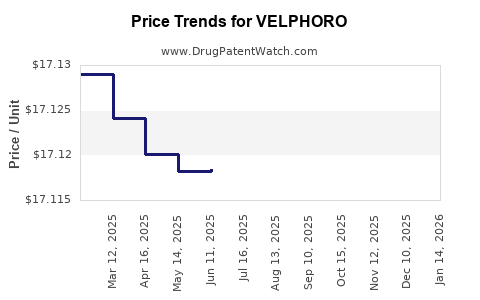
Price Trends and Projections
| Year |
Estimated Global Average Price per Treatment Course |
Notes |
| 2023 |
$300–$400 |
Presence of both branded and generic sales |
| 2025 |
$250–$350 |
Increased generic penetration, negotiated pricing in public tenders |
| 2030 |
$200–$300 |
Further generic market expansion, biosimilars introduction |
Price declines are driven primarily by patent expirations, government negotiations, and the entry of biosimilars.
Regional Variations
- United States: High pricing, with treatment courses costing $75,000–$94,000. Public payers and Medicaid negotiate significant discounts, reducing costs to $15,000–$30,000.
- Europe: Prices range from €25,000–€50,000 per course, with variations based on country negotiations.
- Asia and Africa: Prices fall below $300 in many countries due to local manufacturing and generic competition.
Factors Influencing Market Dynamics
- Innovations: New formulations with improved dosing or efficacy could impact pricing and market share.
- Health Policies: Increased focus on HCV elimination programs push demand for affordable treatment options.
- Patent Litigation: Patent challenges and expirations could accelerate generic entry, leading to further price reductions.
Future Market Opportunities
- Expanding Access: Affordability initiatives and generic manufacturing can sustain price declines.
- Combination Therapies: Fixed-dose combinations with other DAAs could consolidate market share.
- Emerging Markets: Growth driven by government programs and partnerships with organizations like GAVI and WHO.
Conclusion
VELPHORO's market position depends heavily on patent status, regional policies, and generic competition. Prices are expected to decline steadily over the next decade, especially in low- and middle-income countries. In high-income regions, prices will likely remain stable but with increased negotiating power for payers.
Key Takeaways
- VELPHORO faces significant competition from generics, which are driving prices downward globally.
- Patent expirations in key markets will enable widespread generic access, reducing treatment costs.
- Regional variations remain substantial, with affordability increasingly critical in emerging markets.
- Price projections suggest gradual declines, reaching as low as $200 per course by 2030 in some regions.
- Market growth is driven by expanded access, public health initiatives, and faster diagnostics.
FAQs
1. How does VELPHORO compare to other HCV treatments in price and efficacy?
VELPHORO offers comparable efficacy (over 95% SVR rate) to other DAAs like Harvoni, often at a lower price point where generics are available.
2. When are patent expiries expected in major markets?
Patents in the US and Europe are expected to expire around 2025–2028, enabling generic competition and pricing impacts.
3. Which regions present the highest market growth opportunities?
Emerging markets in Asia, Africa, and Latin America offer substantial growth potential due to expanding access and government-led treatment programs.
4. How are governments influencing VELPHORO’s pricing?
Regional negotiations, inclusion in public health programs, and procurement policies often secure significant discounts, affecting overall market prices.
5. What are the risks to future price projections?
Uncertainties include patent disputes, regulatory changes, and the development of improved therapies, which might influence pricing strategies.
References
[1] IQVIA. "Global Oncology Market Report," 2022.
[2] WHO. "Model List of Essential Medicines," 2022.
[3] Gilead Sciences. "Sovaldi and Harvoni Pricing and Market Access," 2022.
[4] MarketWatch. "HCV Drugs Market Analysis," 2023.