Share This Page
Drug Price Trends for TRETINOIN
✉ Email this page to a colleague
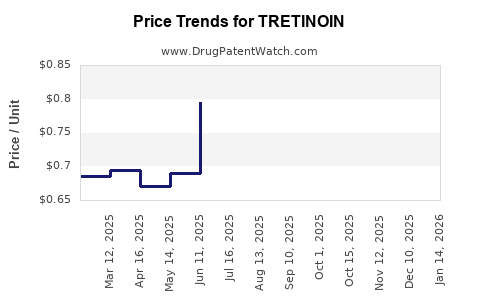
Average Pharmacy Cost for TRETINOIN
| Drug Name | NDC | Price/Unit ($) | Unit | Date |
|---|---|---|---|---|
| TRETINOIN 0.01% GEL | 00378-8085-15 | 3.30988 | GM | 2026-07-22 |
| TRETINOIN 0.01% GEL | 00378-8085-45 | 2.24833 | GM | 2026-07-22 |
| TRETINOIN 0.01% GEL | 00574-2301-15 | 3.30988 | GM | 2026-07-22 |
| >Drug Name | >NDC | >Price/Unit ($) | >Unit | >Date |
Best Wholesale Price for TRETINOIN
| Drug Name | Vendor | NDC | Count | Price ($) | Price/Unit ($) | Unit | Dates | Price Type |
|---|---|---|---|---|---|---|---|---|
| TRETINOIN 0.1% CREAM,TOP | Golden State Medical Supply, Inc. | 51672-1395-00 | 20GM | 23.48 | 1.17400 | GM | 2023-06-23 - 2028-06-14 | FSS |
| TRETINOIN 10MG CAP | Golden State Medical Supply, Inc. | 10370-0268-01 | 100 | 2236.94 | 22.36940 | EACH | 2023-11-15 - 2028-06-14 | FSS |
| TRETINOIN 0.1% CREAM,TOP | Golden State Medical Supply, Inc. | 51672-1395-09 | 45GM | 38.87 | 0.86378 | GM | 2023-06-15 - 2028-06-14 | FSS |
| >Drug Name | >Vendor | >NDC | >Count | >Price ($) | >Price/Unit ($) | >Unit | >Dates | >Price Type |
TRETINOIN: Global Market Analysis and Price Projections
Tretinoin is a retinoid, a derivative of vitamin A, used primarily for treating acne vulgaris and photoaging. Its mechanism of action involves accelerating skin cell turnover and reducing inflammation, thereby improving skin texture and appearance. The global market for tretinoin is influenced by increasing demand for dermatological treatments, rising awareness of skin health, and its established efficacy. However, market growth is tempered by regulatory hurdles for new formulations, the availability of alternative treatments, and price sensitivity in certain regions.
What is the Current Global Market Size and Projected Growth for Tretinoin?
The global tretinoin market is projected to reach approximately USD 3.5 billion by 2028, exhibiting a compound annual growth rate (CAGR) of 5.2% from 2023 to 2028. This growth is driven by the rising prevalence of skin conditions like acne and the increasing adoption of anti-aging therapies. The demand for topical retinoids, including tretinoin, is on an upward trend, supported by an aging global population and a greater emphasis on personal grooming and aesthetics.
| Year | Market Size (USD Billion) | CAGR (2023-2028) |
|---|---|---|
| 2023 (Estimated) | 2.7 | N/A |
| 2028 (Projected) | 3.5 | 5.2% |
The market is segmented by application, including acne treatment and anti-aging, and by formulation, such as creams, gels, and lotions. Acne treatment constitutes the largest segment, accounting for over 60% of the market share. The anti-aging segment is experiencing a faster growth rate due to increasing consumer interest in preventative and restorative skincare.
What are the Key Drivers of Tretinoin Market Growth?
Several factors are propelling the growth of the tretinoin market:
- Rising Prevalence of Skin Conditions: Acne vulgaris affects a significant portion of the adolescent and adult population globally. Estimates suggest that acne affects 80% of individuals between the ages of 11 and 30 at some point [1]. The chronic nature of acne and the desire for effective treatment drive sustained demand for tretinoin. Photoaging, characterized by wrinkles, sunspots, and loss of elasticity, also affects a large demographic, particularly in regions with high UV exposure, further boosting demand for anti-aging treatments like tretinoin.
- Increasing Consumer Awareness and Demand for Dermatological Treatments: Greater access to information through digital platforms and increased emphasis on skin health have led to higher consumer awareness of available treatments. Consumers are actively seeking effective solutions for common dermatological issues. This awareness translates into a higher demand for prescription and over-the-counter (OTC) dermatological products, including tretinoin.
- Technological Advancements in Formulations: Manufacturers are developing novel tretinoin formulations that offer improved efficacy, reduced irritation, and enhanced patient compliance. This includes controlled-release technologies and combination therapies that mitigate common side effects like dryness and peeling. For example, microencapsulation techniques are being explored to deliver tretinoin more effectively and with less irritation.
- Growing Healthcare Expenditure and Disposable Income: In many emerging economies, rising disposable incomes and increased healthcare spending enable consumers to afford dermatological treatments. This demographic shift expands the addressable market for tretinoin. Governments and private entities are also investing more in healthcare infrastructure, making advanced treatments more accessible.
What are the Restraints and Challenges in the Tretinoin Market?
Despite robust growth potential, the tretinoin market faces several constraints:
- Strict Regulatory Approval Processes: As a prescription drug in many jurisdictions, tretinoin formulations are subject to rigorous clinical trials and regulatory approval by agencies like the U.S. Food and Drug Administration (FDA) and the European Medicines Agency (EMA). The lengthy and costly approval process for new or improved formulations can delay market entry and limit innovation. The cost of bringing a new drug to market can range from USD 1 billion to USD 2 billion [2].
- Availability of Alternative Treatments: The market for acne and anti-aging treatments is competitive. Alternative therapies such as other retinoids (e.g., adapalene, tazarotene), antibiotics, benzoyl peroxide, and newer treatments like oral isotretinoin (for severe acne) and cosmetic procedures (e.g., chemical peels, laser therapy) present significant competition. Adapalene, for instance, is available OTC in some regions, offering a lower barrier to entry.
- Side Effects and Patient Compliance: Tretinoin is known to cause side effects, including skin irritation, redness, peeling, and increased sensitivity to sunlight. These side effects can reduce patient compliance, leading to interrupted treatment and suboptimal outcomes. Managing these side effects often requires careful patient education and the use of complementary skincare products, which adds to the overall treatment cost and complexity.
- Price Sensitivity and Counterfeit Products: While tretinoin is a well-established treatment, price can be a barrier in certain markets, especially where generic versions are not readily available or where out-of-pocket expenses are high. The prevalence of counterfeit or substandard tretinoin products, particularly in unregulated online markets, poses a risk to patient safety and can undermine confidence in genuine products.
How is the Tretinoin Market Segmented by Application?
The tretinoin market is primarily divided into two major application segments:
- Acne Treatment: This is the largest segment, driven by the high incidence of acne across all age groups. Tretinoin is a cornerstone therapy for inflammatory and non-inflammatory acne lesions. Its ability to normalize follicular keratinization and reduce comedone formation makes it highly effective. The global acne treatment market is valued at over USD 10 billion and is expected to grow substantially, with topical retinoids playing a crucial role [3].
- Anti-Aging: Tretinoin is a gold standard in dermatological treatments for photoaging. It stimulates collagen production, reduces fine lines and wrinkles, improves skin texture, and fades hyperpigmentation. The growing demand for anti-aging solutions, fueled by an aging population and increased disposable income, contributes to the expansion of this segment. The global anti-aging market is estimated to exceed USD 300 billion by 2025 [4].
Key Formulations and Their Market Presence
Tretinoin is available in various formulations, with creams and gels being the most common:
- Creams: Typically used for dry or sensitive skin, offering a moisturizing effect alongside the active ingredient. Concentrations usually range from 0.025% to 0.1%.
- Gels: Preferred for oily or acne-prone skin due to their lighter texture and faster absorption. Concentrations are similar to creams.
- Lotions and Solutions: Less common but available, offering alternative application methods.
The choice of formulation often depends on the patient's skin type, the condition being treated, and physician preference.
What are the Geographic Market Trends for Tretinoin?
The global tretinoin market exhibits distinct trends across different regions:
- North America: This region holds a significant market share due to high healthcare expenditure, advanced healthcare infrastructure, and a large consumer base seeking dermatological treatments for acne and aging. The U.S. FDA approval for various tretinoin formulations and strong brand recognition of established products contribute to market dominance.
- Europe: A mature market with high awareness of skin health and established dermatological practices. Stringent regulatory standards ensure product quality and safety. Demand is driven by both acne and anti-aging applications.
- Asia Pacific: This region is experiencing the fastest growth. Factors include a rapidly expanding middle class with increased disposable income, rising awareness of skincare and anti-aging, and a growing number of dermatological clinics. Countries like China, India, and South Korea are key contributors to this growth. The increasing prevalence of skin disorders and the adoption of advanced cosmetic procedures further fuel demand.
- Latin America and Middle East & Africa: These regions represent emerging markets with significant growth potential. Improving healthcare access, increasing awareness, and a growing demand for aesthetic treatments are driving market expansion. However, price sensitivity and the availability of counterfeit products remain challenges.
Who are the Key Players in the Tretinoin Market?
The tretinoin market is characterized by a mix of large pharmaceutical companies and specialized dermatology firms. Competition is based on product portfolios, research and development, strategic partnerships, and market reach. Key players include:
- Johnson & Johnson: Through its subsidiary, Neutrogena, the company offers popular OTC and prescription tretinoin products like Retin-A.
- Galderma S.A.: A leading dermatology company offering a range of prescription and OTC products, including tretinoin formulations.
- Bausch Health Companies Inc.: Offers tretinoin under various brand names for acne and other dermatological conditions.
- Valeant Pharmaceuticals International (now Bausch Health): Has historically held a strong position in the dermatology market.
- Stiefel Laboratories (a GSK company): Known for its dermatological products, including tretinoin.
- Other Generic Manufacturers: Numerous generic pharmaceutical companies contribute to the market by offering bioequivalent tretinoin products, increasing accessibility and driving price competition.
These companies invest in R&D to develop novel delivery systems, combination therapies, and improved safety profiles for tretinoin.
What are the Price Projections for Tretinoin?
Tretinoin prices are subject to several factors, including formulation, brand name versus generic, concentration, geographic market, and distribution channels.
- Brand-name prescription tretinoin (e.g., Retin-A) typically commands a premium price. In the U.S., a 20-gram tube of 0.05% tretinoin cream can range from USD 70 to USD 150 without insurance, depending on the pharmacy and specific product.
- Generic tretinoin offers a more affordable alternative. A 20-gram tube of 0.025% or 0.05% generic tretinoin cream or gel can cost between USD 20 and USD 50.
- OTC tretinoin (e.g., Neutrogena Rapid Wrinkle Repair with retinol, which is a vitamin A derivative but not tretinoin itself, or regulated OTC tretinoin in some markets) has varying price points, but direct comparison is difficult due to regulatory differences. However, if tretinoin itself becomes more widely available OTC, prices would likely stabilize within the higher end of generic prescription pricing or slightly above.
- Emerging markets may see lower average selling prices due to local manufacturing, generic competition, and price sensitivity. However, specialized formulations or brand-name products can still be expensive.
Price Projections:
- Stable Growth in Developed Markets: In North America and Europe, prices for branded tretinoin are expected to remain relatively stable, with modest increases due to inflation and R&D investment. Generic tretinoin prices are likely to continue to decline due to intense competition.
- Increased Accessibility in Emerging Markets: As more generic manufacturers enter and expand their presence in the Asia Pacific, Latin America, and MEA regions, prices for tretinoin are expected to decrease, making it more accessible to a larger population. This could lead to an average global price reduction of 5-10% over the next five years, particularly for generic formulations.
- Premium Pricing for Novel Formulations: Any new, innovative tretinoin formulations that demonstrate significantly improved efficacy or reduced side effects, or novel delivery systems, may command premium pricing initially. However, this is dependent on successful clinical trials and regulatory approvals.
- Impact of OTC Availability: If tretinoin were to become widely available OTC globally, it could lead to a slight increase in overall average prices as more consumers might opt for it as a first-line treatment. However, the competitive landscape would likely prevent substantial price hikes, with competition from existing OTC ingredients keeping prices in check. Current OTC products that are vitamin A derivatives (retinols) are generally priced lower than prescription tretinoin.
Overall, the global average selling price (ASP) for tretinoin is anticipated to see a gradual decline in the medium term, primarily driven by increased generic penetration and competition in emerging markets. However, this trend could be partially offset by the introduction of higher-priced, innovative formulations.
What are the Future Market Opportunities and Strategic Considerations?
- Combination Therapies: Developing and marketing tretinoin in combination with other active ingredients (e.g., antibiotics for acne, antioxidants for anti-aging) offers an opportunity to enhance efficacy and address multiple skin concerns simultaneously.
- Advanced Drug Delivery Systems: Research into novel delivery systems, such as nanoparticles, liposomes, and microneedles, can improve tretinoin's penetration, efficacy, and reduce irritation, creating a competitive advantage.
- Expansion in Emerging Markets: Targeting the growing middle-class populations in Asia Pacific and Latin America with cost-effective and locally relevant tretinoin products presents a significant growth opportunity.
- Biologics and Gene Therapy: While currently in early stages, future research may explore synergistic effects of tretinoin with emerging biologics or gene therapy approaches for severe dermatological conditions.
- Personalized Medicine: Leveraging genetic profiling and AI-driven diagnostics to tailor tretinoin treatment regimens based on individual patient response and skin characteristics could become a future differentiator.
Key Takeaways
The global tretinoin market is poised for steady growth, driven by increasing demand for acne and anti-aging treatments, coupled with rising consumer awareness and advancements in formulations. North America and Europe remain key markets, while the Asia Pacific region is emerging as the fastest-growing segment. Challenges include stringent regulations, competition from alternative therapies, and potential side effects. Price projections indicate a gradual decline in average selling prices globally due to generic competition in emerging markets, though novel formulations may command premium pricing. Key players are focusing on R&D, strategic partnerships, and market expansion to capitalize on future opportunities.
FAQs
1. Is tretinoin available over-the-counter (OTC) globally?
No, tretinoin is primarily a prescription-only medication in most major markets, including the United States and European Union, due to its potential for side effects and the need for medical supervision. However, some regions may have different regulatory frameworks, and formulations with lower concentrations or related compounds (like retinol) are often available OTC.
2. What is the typical duration of treatment with tretinoin for acne?
Treatment duration for acne with tretinoin varies depending on the severity of the condition and individual response. Patients typically see initial improvements within 2-3 weeks, with significant results often observed after 6-8 weeks of consistent use. Many individuals use tretinoin long-term for maintenance to prevent future breakouts.
3. How does tretinoin compare to other topical retinoids like adapalene and tazarotene?
Tretinoin is considered a highly effective topical retinoid. Adapalene is also potent and often causes less irritation than tretinoin, making it a good alternative for sensitive skin, and it is available OTC in some markets. Tazarotene is generally considered the most potent of the three but also carries a higher risk of irritation. Each retinoid has a unique molecular structure and receptor binding profile, leading to slightly different efficacy and tolerability profiles.
4. What are the main side effects associated with tretinoin use?
Common side effects include skin dryness, redness, peeling, scaling, and increased sensitivity to sunlight. These are often referred to as the "retinization" period and tend to diminish over time as the skin adjusts. Less common side effects can include stinging, burning, and temporary changes in skin pigmentation. It is crucial to use a broad-spectrum sunscreen daily when using tretinoin.
5. How is the pricing of tretinoin influenced by generic versus brand-name products?
Brand-name tretinoin products, such as Retin-A, are typically more expensive due to research, development, and marketing costs incurred by the original innovator company. Generic versions, which are bioequivalent to the brand-name drug, are manufactured by other pharmaceutical companies after the patent expires. These generic formulations are significantly less expensive, making tretinoin more accessible to a wider patient population.
Citations
[1] American Academy of Dermatology Association. (n.d.). Acne. Retrieved from https://www.aad.org/media/stats-skin
[2] DiMasi, J. A., Grabowski, H. G., & Hansen, R. W. (2016). Innovation in the pharmaceutical industry: new estimates of R&D costs. Journal of Health Economics, 47, 20–33. https://doi.org/10.1016/j.jhealeco.2016.01.003
[3] Global Market Insights. (2023). Acne Treatment Market Size, Share & Trends Analysis Report.
[4] Allied Market Research. (2022). Anti-aging Market by Product Type, by Service, by Demography, by End User: Global Opportunity Analysis and Industry Forecast, 2021-2030.
More… ↓
