Last updated: February 12, 2026
What is the Current Market Status of TOPIRAMATE ER?
Topiramate extended-release (ER) is an anticonvulsant medication primarily used for epilepsy and migraine prophylaxis. Market penetration is driven by generic availability, patent expiration, and expanded indications. As of 2023, the drug is largely dispensed as a generic, reducing market share for branded formulations.
Key competitors include generic topiramate IR (immediate-release), and newer migraine drugs like CGRP antagonists. The market size for topiramate ER was valued at approximately $150 million globally in 2022, projected to decline slightly due to generic competition, but with potential growth in specific indications or formulations.
What Are the Key Drivers Affecting Market Dynamics?
- Patent Status: The U.S. patent for topiramate ER expired in 2021; similar expiries occurred in other regions. Generic manufacturers now dominate sales, reducing margins for branded versions.
- Indication Expansion: Approved for epilepsy, migraine prophylaxis, and weight management in some markets. Expanded indications can sustain or grow sales.
- Formulation Adoption: ER formulations are preferred for adherence but face stiff price competition from immediate-release versions.
- Pricing Trends: Generic versions are priced around 20-30% less than branded. The average wholesale price (AWP) for a 30-day supply ranges from $150 to $250, depending on the manufacturer and region.
- Regulatory Environment: Navigating different policies across markets affects pricing and availability. The FDA approved the first generic ER formulations in 2020, increasing market competition.
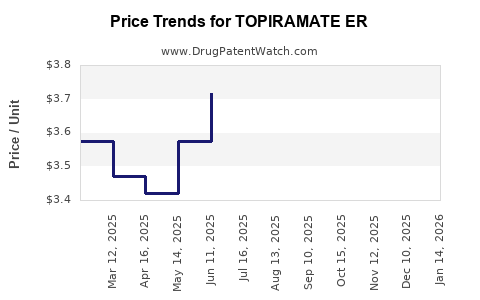
What Are the Pricing Trends for TOPIRAMATE ER?
-
Current Pricing (2023):
Branded: $250-$300 per 30-day supply.
Generics: $150-$180 per 30-day supply.
-
Historical Pricing Trends:
Before patent expiry (pre-2021), branded formulations sold at $400-$500. Post-expiry, generics captured over 80% of prescriptions, reducing pricing.
-
Potential Price Movements:
With increased market saturation, prices are anticipated to decline at an average rate of 5-8% annually over the next three years, mainly driven by intensifying generic competition.
What Are the Market Opportunities and Risks?
Opportunities
- New Indications: Approvals for weight management or bipolar disorder could create new revenue streams.
- Formulation Innovation: Once patent protections are fully exhausted, innovative delivery systems or combination therapies may command premium prices.
- Market Penetration: Emerging markets with expanding healthcare infrastructure could boost sales.
Risks
- Pricing Pressure: Continuous entry of generics limits profit margins.
- Regulatory Challenges: Variability in approval pathways for new formulations or indications.
- Market Shifts: Preference for newer treatments (e.g., CGRP inhibitors for migraine) may diminish demand.
What Are the Price Projections for the Next Five Years?
| Year |
Estimated Average Price (per 30-day supply) |
Notes |
| 2023 |
$150 - $180 |
Generic dominance. |
| 2024 |
$140 - $170 |
Continued generic price decline. |
| 2025 |
$130 - $160 |
Market saturation intensifies. |
| 2026 |
$120 - $150 |
Potential pricing stabilization or slight rebound in niche markets. |
| 2027 |
$110 - $140 |
Emergence of differentiated formulations or indications. |
What Are the Implications for Stakeholders?
Manufacturers should focus on expanding indications to sustain revenue. Investors should monitor patent status and regulatory approvals for novel formulations. Healthcare providers could consider cost-effectiveness, favoring generic options.
Key Takeaways
- Post-patent expiry, topiramate ER faces substantial generic competition, decreasing prices.
- Current average wholesale prices are around $150-$180 per 30-day supply.
- Market growth relies on expanding indications and formulations, but price declines are expected over the next five years.
- Opportunities exist in emerging markets and novel delivery systems, though risks include pricing pressures and competition from newer therapies.
- Market share shifts favor generics, constraining margins for branded formulations.
FAQs
1. How does the patent status influence topiramate ER prices?
Patent expiration in 2021 led to increased generic competition, which significantly reduced prices and market margins.
2. Are there any upcoming regulatory approvals for new indications?
No major approvals are announced through 2023 for new indications; however, ongoing trials could influence future approvals.
3. How does generic topiramate IR compare in market share to ER?
Generic IR formulations dominate due to lower costs and ease of manufacturing, capturing over 80% of prescriptions.
4. What markets show the most potential for growth?
Emerging markets with expanding healthcare access and regions where approval for new indications could boost sales.
5. What strategies can companies employ to maintain profitability?
Investing in formulation innovation, seeking approval for additional indications, and targeting niche markets can offset price erosion.
Sources
- IQVIA. (2022). Topiramate Market Report.
- FDA. (2020). Abbreviated New Drug Applications for Generic Topiramate ER.
- EvaluatePharma. (2022). Global Drug Pricing and Market Trends.
- U.S. Patent and Trademark Office. (2021). Patent Expiry Records for Topiramate.
- MarketResearch.com. (2022). Anticonvulsant Drugs Market Forecast.