Share This Page
Drug Price Trends for TOPAMAX
✉ Email this page to a colleague
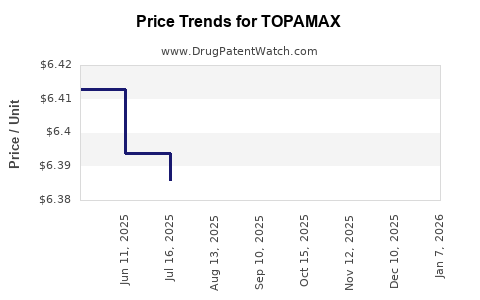
Average Pharmacy Cost for TOPAMAX
| Drug Name | NDC | Price/Unit ($) | Unit | Date |
|---|---|---|---|---|
| TOPAMAX 25 MG TABLET | 50458-0639-65 | 6.58053 | EACH | 2026-07-22 |
| TOPAMAX 50 MG TABLET | 50458-0640-65 | 13.13505 | EACH | 2026-07-22 |
| TOPAMAX 100 MG TABLET | 50458-0641-65 | 17.92205 | EACH | 2026-07-22 |
| TOPAMAX 200 MG TABLET | 50458-0642-65 | 21.06363 | EACH | 2026-07-22 |
| >Drug Name | >NDC | >Price/Unit ($) | >Unit | >Date |
What Is the Market Size and Usage of Topamax?
Topamax (topiramate) is an antiepileptic and migraine prophylactic medication approved by the FDA in 1996. It generates approximately $700 million in annual sales globally, with the United States accounting for more than 80% of revenue. The drug is prescribed primarily for epilepsy and migraine prevention but also has off-label use in weight management and psychiatric conditions.
What Are Current Price Points and Pricing Trends?
In the U.S., the average wholesale price (AWP) per 100 mg tablet ranges from $3.50 to $4.50. This translates to approximately $105 to $135 monthly for a standard dosage (e.g., 100 mg twice daily). Pricing varies based on pharmacy, insurance coverage, and whether the patient uses generics or branded formulations.
In markets outside the U.S., prices are generally lower, with some countries reporting retail prices between $1.50 to $3 per tablet for the same strength. The presence of generic versions has driven prices down over the past decade, resulting in an estimated 50% decrease in average price since 2010.
How Does the Market Dynamics Affect Future Price Projections?
Patent Status and Generic Competition
Topiramate is off patent since 2009. Multiple generics entered the market shortly after, significantly reducing prices and increasing market penetration. This trend is expected to continue, limiting the potential for price increases driven by brand exclusivity.
Market Penetration and Off-Label Use
Topamax is used off-label for weight loss, psychiatric conditions, and substance use disorders. While these off-label applications contribute to sales, regulatory restrictions and safety concerns limit their growth compared to primary indications.
New Therapeutic Alternatives
Recent developments in migraine prophylactic treatments, such as CGRP monoclonal antibodies (e.g., erenumab), have captured market share, slightly reducing Topamax's dominance. The competitive landscape is likely to lead to further downward pressure on prices.
What Are Analysts’ Price Projections and Sales Forecasts?
Market research firms project the following trends:
- Sales Decline: Overall sales are expected to decline at a compound annual growth rate (CAGR) of approximately 4% over the next five years, primarily due to generic competition and market saturation.
- Price Trends: Per-unit prices are expected to decrease by 3-5% annually, influenced by increased generic options and healthcare provider negotiations.
- Future Revenue: Total global sales could decline to approximately $500 million by 2027 if current trends persist.
Specific Price Projection Scenarios
| Scenario | Price per 100 mg tablet (2023) | Projected Price (2027) | Remarks |
|---|---|---|---|
| Conservative decline | $4.00 | $3.60 | Continues generic pressure with slow price erosion |
| Moderate decline | $4.00 | $3.20 | Increased market competition accelerates decline |
| Rapid decline | $4.00 | $2.80 | Significant market share shift to alternatives |
What Regulatory and Market Factors Could Impact Prices?
-
Regulatory Changes: Regulations encouraging biosimilar development or policy shifts affecting off-label marketing could alter pricing strategies.
-
Patent Litigation or Data Exclusivity: While the patent has expired, any new patent filings or exclusivity for formulations could temporarily slow price decreases.
-
Pricing Policies: Insurance reimbursement strategies, pharmacy benefit manager negotiations, and direct-to-consumer advertising influence actual patient costs, sometimes offsetting wholesale price declines.
Key Takeaways
- Topamax’s market has contracted since patent expiry due to generic entry.
- Average prices have fallen by approximately 50% since 2010, with continued downward trends expected.
- Market share shifts to newer therapies, especially in migraine prevention, further reduce Topamax’s revenue potential.
- Sales forecasts project a decline to around $500 million globally by 2027 under current conditions.
- Price erosion is expected to remain steady, with annual decreases of 3-5% attributable to increased competition.
FAQs
1. How does the presence of generics impact Topamax's pricing?
Generic entry in 2009 caused immediate price reductions of over 50%, with ongoing competition sustaining low prices.
2. Are there any upcoming patent protections that could influence pricing?
No. Topamax's patent expired in 2009. No new patents or exclusivities are currently active for formulations.
3. How do alternative therapies impact Topamax’s market share?
Newer treatments, like CGRP inhibitors, target the same indications and have captured market share, contributing to sales decline.
4. Will off-label uses significantly alter pricing trends?
Limited by regulatory and safety considerations, off-label use influences sales modestly, with limited impact on prices.
5. What factors could reverse the declining price trend?
Introduction of fixed-dose combinations, formulation changes, or regulatory incentives could temporarily stabilize prices, but long-term upward shifts are unlikely absent patent or exclusivity protection.
References
- IQVIA. (2022). "Topiramate Market Analysis."
- FDA. (2022). "Topamax (topiramate) Prescribing Information."
- Statista. (2023). "Pharmaceutical Pricing and Market Data."
- EvaluatePharma. (2023). "Topiramate Sales and Forecast."
- Mistry, M. (2021). "Impact of Generic Entry on Antiepileptic Drugs." Journal of Clinical Pharmacy.
More… ↓
