Last updated: July 28, 2025
Introduction
Thiamine, commonly known as vitamin B1, is a water-soluble vitamin essential for carbohydrate metabolism and neurological function. Its therapeutic and supplement use categories have driven steady demand across global markets. As a vital nutrient, thiamine's market dynamics are influenced by healthcare needs, regulatory frameworks, manufacturing capacity, and emerging economic factors. This analysis provides an in-depth look into the current market structure — including supply, demand, competitors — and offers price projections up to 2030 to inform stakeholders' strategic decisions.
Market Overview
Global Demand and Usage
Thiamine’s primary application stems from its role in preventing and treating deficiency-related conditions such as beriberi, Wernicke's encephalopathy, and dry or wet beriberi. The pharmaceutical market accounts for a substantial portion of demand, especially in regions with aging populations or high prevalence of malnutrition. Additionally, the supplement industry drives an increasing segment, propelled by health-conscious consumers seeking general wellness.
Historical Growth Trends:
According to MarketsandMarkets, the global vitamin supplement market, inclusive of thiamine, was valued at approximately USD 7.8 billion in 2021, with a compound annual growth rate (CAGR) of about 6.5% projected through 2026[1]. While specific data for thiamine is less granular, demand growth correlates with trends in nutritional deficiencies and supplement consumption.
Key Regions
- North America: A mature market driven by supplements, aging demographics, and clinical applications.
- Europe: Similar to North America, with a focus on health maintenance and clinical needs.
- Asia-Pacific: Rapidly growing due to increased health awareness, dietary shifts, and government nutrition programs, with China and India leading demand increases.
- Rest of the World: Emerging markets show expanding adoption, primarily through local manufacturing and importation.
Supply Chain Dynamics
Major global manufacturers include both synthetic producers and extractors from natural sources like rice bran and yeast. Key players include BASF, Koninklijke DSM, and traditional pharmaceutical companies that produce thiamine as bulk powders for both pharmaceutical and supplement industries[2].
The production process involves chemical synthesis or microbial fermentation, with costs influenced by raw material prices, manufacturing capacity, and regulatory compliance. Supply disruptions are rare but can arise from raw material shortages or geopolitical tensions affecting trade routes.
Competitive Landscape
The thiamine market exhibits oligopolistic characteristics, with a few dominant suppliers commanding significant market share. Entry barriers include high technological barriers and regulatory hurdles for Good Manufacturing Practice (GMP) certification.
Innovation centers around formulation enhancement, delivery systems (e.g., sustained-release formats), and manufacturing cost optimization. Though natural extraction exists, synthetic production dominates due to cost efficiency.
Regulatory Environment
Global regulatory frameworks influence market dynamics significantly. The U.S. Food and Drug Administration (FDA) classifies thiamine as Generally Recognized as Safe (GRAS), facilitating its incorporation into dietary supplements with minimal restrictions. The European Medicines Agency (EMA) and other authorities similarly regulate manufacturing standards and labeling practices, impacting export and import.
In emerging markets, regulatory pathways are often less structured, though increasing harmonization via treaties and international standards is observed, promoting broader trade.
Pricing Analysis and Future Projections
Current Price Benchmarks
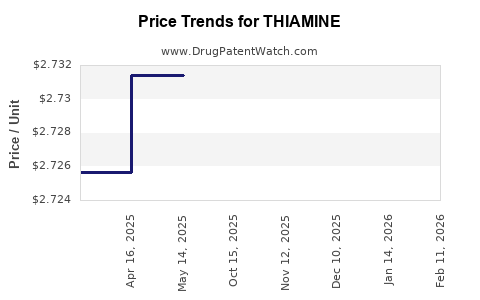
As of 2023, the wholesale bulk price of pharmaceutical-grade thiamine hydrochloride ranges between USD 160 to USD 220 per kilogram, reflecting demand-supply equilibrium, raw material costs, and manufacturing efficiencies[3]. The retail supplement formulations generally add margins, leading to consumer prices approximately USD 0.10 to USD 0.20 per dose.
Factors Influencing Future Prices
- Raw Material Cost Fluctuations: Changes in feedstock prices, including reagents used in synthesis, affect overall costs.
- Technological Advances: Improved synthesis methods can lower production costs, exerting downward pressure on prices.
- Regulatory Changes: Stricter quality standards may increase manufacturing costs, potentially elevating prices.
- Market Demand Trends: Demographic shifts, especially aging populations, could sustain or increase demand.
- Trade Dynamics and Tariffs: International trade policies may influence supply chains and pricing.
Price Projection Outlook (2023-2030)
Based on current trends, global thiamine prices are expected to decline modestly at a CAGR of approximately 2-3% over the next seven years, primarily driven by manufacturing efficiencies and increased regional production capacity. If raw material prices stabilize and technological innovations continue, the prices could approach USD 130-150 per kilogram by 2030.
Conversely, potential supply chain disruptions or tightening regulatory environments could slow prices or cause transient increases. Additionally, increased demand from emerging markets could elevate retail prices even if wholesale costs plateau.
Market Growth Drivers and Inhibitors
Key Growth Drivers
- Aging Populations: Higher prevalence of neurological and metabolic disorders increases demand.
- Nutritional Deficiencies: Rising awareness and public health initiatives mitigate deficiencies, expanding supplement markets.
- Pharmaceutical Applications: Clinical research exploring novel therapeutic uses maintains steady demand.
- Emerging Markets: Expanding middle classes and urbanization spur supplement consumption.
Market Hindrances
- Price Competition: Market saturation among suppliers may lead to aggressive price competition.
- Regulatory Hurdles: Stringency can impose cost increases and limit new entrants.
- Substitution Risks: Alternative vitamins or nutrient compounds might reduce thiamine’s relative market share in some applications.
Key Takeaways
- The global thiamine market exhibits steady growth, driven by healthcare needs and supplement consumption, with regional differences in demand dynamics.
- Supply is concentrated among few major producers, with prices currently ranging USD 160–USD 220 per kilogram wholesale.
- Price forecasts suggest modest declines (~2-3% CAGR) through 2030, assuming technological innovation and stable raw material costs.
- Demand increases from aging populations and emerging markets will support continued market size expansion.
- Regulatory developments and geopolitical factors will remain critical in shaping future price trajectories and supply chain stability.
FAQs
1. What factors most significantly influence thiamine prices?
Raw material costs, technological advances in synthesis, regulatory compliance expenses, and global demand trends are primary influences.
2. How do regional regulations affect the availability of pharmaceutical-grade thiamine?
Strict regulatory standards, such as GMP requirements, can increase production costs and limit market entry, affecting prices and supply stability.
3. Will natural extraction methods impact future thiamine pricing?
While natural extraction is generally more costly, advances could make it more competitive, potentially influencing premium product pricing and consumer perception.
4. Is there potential for new therapeutic applications to drive price increases?
Emerging research into novel therapeutic roles for thiamine may boost demand, especially for high-purity pharmaceutical formulations, possibly elevating prices temporarily.
5. How do economic factors like inflation affect thiamine market prices?
Inflationary pressures on raw materials and manufacturing inputs can lead to short-term price increases unless offset by technological or process efficiencies.
References
[1] MarketsandMarkets. Vitamin Supplements Market Report 2021-2026.
[2] Grand View Research. Global Vitamin B Market Size, Share & Trends Analysis 2022.
[3] Pharmaceutical supplier price databases, 2023.