Share This Page
Drug Price Trends for TESTOSTERONE CYP
✉ Email this page to a colleague
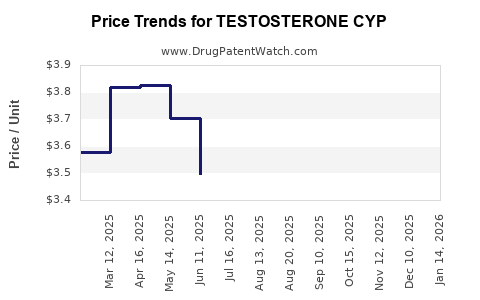
Average Pharmacy Cost for TESTOSTERONE CYP
| Drug Name | NDC | Price/Unit ($) | Unit | Date |
|---|---|---|---|---|
| TESTOSTERONE CYP 2,000 MG/10 ML | 00143-9005-01 | 3.57200 | ML | 2026-07-22 |
| TESTOSTERONE CYP 2,000 MG/10 ML | 00143-9726-01 | 3.57200 | ML | 2026-07-22 |
| TESTOSTERONE CYP 1,000 MG/10 ML | 00409-6557-01 | 5.19636 | ML | 2026-07-22 |
| TESTOSTERONE CYP 2,000 MG/10 ML | 00409-6562-20 | 3.57200 | ML | 2026-07-22 |
| TESTOSTERONE CYP 1,000 MG/10 ML | 55150-0276-01 | 5.19636 | ML | 2026-07-22 |
| TESTOSTERONE CYP 1,000 MG/10 ML | 69097-0536-37 | 5.19636 | ML | 2026-07-22 |
| TESTOSTERONE CYP 1,000 MG/10 ML | 70700-0288-22 | 5.19636 | ML | 2026-07-22 |
| >Drug Name | >NDC | >Price/Unit ($) | >Unit | >Date |
Best Wholesale Price for TESTOSTERONE CYP
| Drug Name | Vendor | NDC | Count | Price ($) | Price/Unit ($) | Unit | Dates | Price Type |
|---|---|---|---|---|---|---|---|---|
| TESTOSTERONE CYPIONATE 200MG/ML INJ,1ML (IN O | Golden State Medical Supply, Inc. | 00143-9659-01 | 1ML | 5.18 | 5.18000 | ML | 2023-06-15 - 2028-06-14 | FSS |
| TESTOSTERONE CYPIONATE 200MG/ML INJ (IN OIL) | Golden State Medical Supply, Inc. | 00143-9726-01 | 10ML | 19.26 | 1.92600 | ML | 2023-06-15 - 2028-06-14 | FSS |
| TESTOSTERONE CYPIONATE 200MG/ML INJ (IN OIL) | Golden State Medical Supply, Inc. | 00143-9726-01 | 10ML | 21.70 | 2.17000 | ML | 2023-06-23 - 2028-06-14 | FSS |
| TESTOSTERONE CYPIONATE 100MG/ML INJ (IN OIL) | AvKare, LLC | 70700-0288-22 | 10ML | 36.57 | 3.65700 | ML | 2023-08-07 - 2028-06-14 | FSS |
| TESTOSTERONE CYPIONATE 100MG/ML INJ (IN OIL) | AvKare, LLC | 70700-0289-22 | 1ML | 8.25 | 8.25000 | ML | 2023-08-07 - 2028-06-14 | FSS |
| >Drug Name | >Vendor | >NDC | >Count | >Price ($) | >Price/Unit ($) | >Unit | >Dates | >Price Type |
TESTOSTERONE CYP MARKET ANALYSIS AND PRICE PROJECTIONS
Testosterone cypionate, a synthetic androgen ester, is primarily used for testosterone replacement therapy (TRT) in men with hypogonadism. The market is driven by an aging male population, increasing awareness of TRT benefits, and a growing demand for anabolic steroids in veterinary medicine and performance enhancement.
WHAT IS TESTOSTERONE CYPIONATE?
Testosterone cypionate is an injectable form of testosterone, the principal male sex hormone. It is an ester prodrug, meaning it is converted into active testosterone in the body. This esterification process slows down the drug's release from the injection site, allowing for less frequent dosing compared to unesterified testosterone. The drug is indicated for the treatment of conditions associated with endogenous testosterone deficiency, commonly known as hypogonadism.
Therapeutic Applications
- Hypogonadism Treatment: The primary indication is to restore normal testosterone levels in men diagnosed with primary hypogonadism or hypogonadotropic hypogonadism. This includes conditions like Klinefelter syndrome, Kallmann syndrome, or pituitary tumors.
- Gender Affirming Care: Testosterone therapy is a cornerstone of masculinizing hormone therapy for transgender men.
Mechanism of Action
Upon intramuscular injection, testosterone cypionate is hydrolyzed to release testosterone, which then binds to androgen receptors in target tissues. This binding initiates intracellular events that lead to the expression of androgen-responsive genes, influencing male sexual development and maintenance of secondary male sexual characteristics.
Pharmaceutical Formulations and Administration
Testosterone cypionate is typically supplied in an oil-based solution for intramuscular injection. Common concentrations include 100 mg/mL and 200 mg/mL. Dosing regimens vary based on the patient's condition and response, but typically involve injections every one to two weeks.
MARKET DYNAMICS AND DRIVERS
The global testosterone cypionate market is experiencing steady growth, propelled by several key factors.
Increasing Prevalence of Hypogonadism
The incidence of hypogonadism, or low testosterone, is rising globally. Factors contributing to this include:
- Aging Population: Testosterone levels naturally decline with age, increasing the prevalence of symptomatic hypogonadism in older men. The World Health Organization (WHO) projects the global population aged 60 years and over to more than double from 12% to 22% between 2015 and 2050 [1].
- Obesity and Metabolic Syndrome: These conditions are strongly correlated with lower testosterone levels. The Centers for Disease Control and Prevention (CDC) reports that the prevalence of obesity in the United States has risen significantly, with over 42% of adults classified as obese in 2017-2020 [2].
- Lifestyle Factors: Chronic stress, poor diet, and lack of physical activity can also negatively impact testosterone production.
Growing Awareness and Diagnosis of TRT
Increased public and medical awareness of the symptoms and potential treatment of hypogonadism is driving demand. Educational campaigns and improved diagnostic tools facilitate earlier and more accurate diagnoses, leading to greater prescription rates for testosterone replacement therapy.
Demand in Veterinary Medicine
Testosterone cypionate is utilized in veterinary medicine for specific therapeutic purposes, such as treating certain reproductive disorders in male animals and as a component in hormone therapy for some spayed female animals. While a smaller segment, it contributes to overall market volume.
Illicit Use in Sports and Bodybuilding
The use of anabolic steroids, including testosterone cypionate, for performance enhancement in sports and bodybuilding remains a persistent driver of demand, albeit outside of regulated pharmaceutical channels. This segment, while not officially tracked, represents a significant, though illicit, market.
MARKET SEGMENTATION
The testosterone cypionate market can be segmented by application, route of administration, and distribution channel.
Segmentation by Application
- Therapeutic Use: This is the largest segment, encompassing treatment for diagnosed hypogonadism and gender-affirming hormone therapy.
- Veterinary Use: Application in animal health.
- Performance Enhancement: Illicit use in sports and bodybuilding.
Segmentation by Route of Administration
- Intramuscular Injection: The predominant route of administration for testosterone cypionate.
- Other (e.g., Transdermal, Oral): While less common for cypionate specifically, other testosterone formulations utilize these routes. This segmentation primarily applies to the broader testosterone market.
Segmentation by Distribution Channel
- Hospital Pharmacies: Dispensing to inpatients and outpatients.
- Retail Pharmacies: Primary channel for community-based prescription fulfillment.
- Online Pharmacies: Growing channel for both legitimate and illegitimate sales.
- Veterinary Clinics/Hospitals: For animal health applications.
COMPETITIVE LANDSCAPE
The testosterone cypionate market is characterized by the presence of both originator brands and a significant number of generic manufacturers. Key players are involved in the manufacturing and distribution of testosterone cypionate injections.
Major Manufacturers
- AbbVie Inc. (AndroGel®, Nebido®): While AbbVie's primary testosterone products are transdermal and injectable undecanoates, they represent a major player in the broader testosterone market.
- Endo International plc (Aveed®): Offers injectable testosterone undecanoate, a direct competitor in the TRT space.
- Teva Pharmaceutical Industries Ltd.: A significant generic manufacturer with a broad portfolio, including testosterone products.
- Perrigo Company plc: Another major generic pharmaceutical company with testosterone offerings.
- Pfizer Inc. (Depo-Testosterone™): Historically a key player with its own branded testosterone cypionate formulation.
Generic Competition
The patent expiries of originator testosterone cypionate formulations have led to robust generic competition. Generic versions often offer significant price advantages, driving down overall treatment costs and increasing market accessibility.
Market Concentration
The market is moderately concentrated, with a few large pharmaceutical companies holding significant market share, particularly in branded formulations and established generic supply chains. However, the entry of new generic players can lead to price erosion.
PRICING ANALYSIS AND PROJECTIONS
Testosterone cypionate pricing is influenced by factors such as brand vs. generic status, dosage, quantity, insurance coverage, and the specific pharmacy or distributor.
Current Pricing Trends
- Branded Testosterone Cypionate: A 10 mL vial (200 mg/mL) of a branded formulation like Pfizer's Depo-Testosterone™ can range from $150 to $300 USD, or higher, depending on the pharmacy and location.
- Generic Testosterone Cypionate: A 10 mL vial (200 mg/mL) of a generic testosterone cypionate typically costs between $40 to $100 USD. This represents a significant price difference, making generics the preferred choice for cost-conscious patients and healthcare systems.
- Per-Dose Pricing: When considering typical doses (e.g., 100-200 mg per injection), the per-dose cost for a generic can be as low as $2-$5 USD, while branded options can range from $10-$30 USD or more.
- Veterinary Pricing: Prices for veterinary-grade testosterone cypionate vary widely based on quantity and supplier but are generally competitive within that sector.
Factors Influencing Future Pricing
- Generic Market Dominance: As more generic manufacturers enter the market and competition intensifies, the price of testosterone cypionate is expected to continue to decline, particularly for off-patent formulations.
- Manufacturing Costs: Fluctuations in the cost of active pharmaceutical ingredients (APIs) and manufacturing processes can impact pricing.
- Regulatory Landscape: Changes in FDA or other regulatory body approvals, or new manufacturing standards, could affect supply and cost.
- Market Demand: Sustained or increasing demand for TRT due to demographic shifts will support market stability but may not lead to significant price increases, especially with robust generic supply.
- Competition from Alternative Therapies: The development and adoption of newer, potentially more convenient testosterone delivery systems (e.g., long-acting injections, subcutaneous implants) could exert downward pressure on traditional injectable prices if they offer superior value propositions or are priced competitively.
- Supply Chain Stability: Disruptions in global supply chains for APIs or finished drug products can lead to temporary price spikes.
Price Projections
Based on current market trends and influencing factors, the following price projections are anticipated:
- Short-Term (1-2 years): Stable to slightly declining prices for generic testosterone cypionate due to ongoing generic competition and stable demand. Branded formulations may see minor price adjustments driven by inflation and market positioning.
- Medium-Term (3-5 years): Continued price erosion for generic formulations is expected, potentially reaching price points below $30-$50 USD for a 10 mL vial in highly competitive markets. Branded products will likely maintain a premium but face increasing pressure to justify their cost relative to generics. The emergence of novel delivery systems could start to impact the market share of traditional injectables, influencing their pricing strategies.
- Long-Term (5+ years): Generic testosterone cypionate is expected to be widely available at highly competitive prices, primarily driven by manufacturing efficiency and market competition. The market share of branded cypionate may diminish further unless innovative formulations or delivery methods are introduced. The overall cost of testosterone therapy will likely be dictated by the most cost-effective generic options.
Table 1: Estimated Price Range for Testosterone Cypionate (10 mL Vial, 200 mg/mL)
| Formulation | Current Estimated Range (USD) | Projected 3-5 Year Range (USD) |
|---|---|---|
| Branded | $150 - $300+ | $120 - $250+ |
| Generic | $40 - $100 | $30 - $70 |
Note: Prices are estimates and can vary significantly based on location, supplier, and insurance. These projections assume no major disruptive innovations or significant supply chain disruptions.
REGULATORY LANDSCAPE
Testosterone cypionate is a controlled substance in many jurisdictions, subject to strict regulations regarding manufacturing, distribution, and prescription.
United States
- FDA Approval: All testosterone products sold in the US must be approved by the Food and Drug Administration (FDA).
- DEA Classification: Testosterone is classified as a Schedule III controlled substance under the Controlled Substances Act due to its potential for abuse and dependence. This imposes record-keeping, prescribing, and dispensing requirements.
- Prescription Requirement: Testosterone cypionate is available only by prescription from a licensed healthcare professional.
European Union
- EMA Oversight: Products are regulated by the European Medicines Agency (EMA) or national competent authorities.
- Controlled Status: Similar to the US, testosterone is often subject to national regulations regarding controlled substances, requiring prescriptions.
Global Regulations
Many countries have similar regulatory frameworks, classifying testosterone as a prescription-only medication and a controlled substance to prevent misuse.
KEY TAKEAWAYS
- The global testosterone cypionate market is driven by an aging male population, increasing diagnosis of hypogonadism, and its utility in veterinary medicine.
- Generic competition is a dominant factor, significantly lowering treatment costs and increasing accessibility compared to branded formulations.
- Current pricing for branded testosterone cypionate is substantially higher than generics, with a 10 mL vial of branded product potentially costing three to six times more.
- Price projections indicate a continued decline in generic prices and stable to moderately decreasing prices for branded options due to market competition and the availability of cost-effective alternatives.
- Regulatory oversight, including its classification as a controlled substance, impacts manufacturing, distribution, and prescription practices globally.
FREQUENTLY ASKED QUESTIONS
-
What is the primary therapeutic use of testosterone cypionate? Testosterone cypionate's primary therapeutic use is for testosterone replacement therapy (TRT) in men diagnosed with hypogonadism, a condition characterized by insufficient endogenous testosterone production.
-
How does the price of generic testosterone cypionate compare to branded versions? Generic testosterone cypionate is considerably less expensive than its branded counterpart. A typical 10 mL vial of generic testosterone cypionate (200 mg/mL) may cost between $40 to $100 USD, whereas a branded version can range from $150 to $300 USD or more for the same volume and concentration.
-
What factors are expected to influence the future pricing of testosterone cypionate? Future pricing will likely be shaped by increased generic market penetration, manufacturing costs, evolving regulatory landscapes, sustained market demand, and the potential competitive impact of newer testosterone delivery systems.
-
Is testosterone cypionate a controlled substance? Yes, in many countries, including the United States, testosterone cypionate is classified as a Schedule III controlled substance due to its potential for abuse. This designation imposes strict regulations on its prescription, dispensing, and distribution.
-
What is the projected market trend for testosterone cypionate over the next five years? Over the next three to five years, the market is projected to see continued price erosion for generic testosterone cypionate, with stable to moderately decreasing prices for branded formulations. The market share of traditional injectable testosterone cypionate may also face pressure from the introduction of novel delivery systems.
CITATIONS
[1] World Health Organization. (2022). Ageing and health. Retrieved from https://www.who.int/news-room/fact-sheets/detail/ageing-and-health [2] Centers for Disease Control and Prevention. (2022). Adult Obesity Facts. Retrieved from https://www.cdc.gov/obesity/data/adult.html
More… ↓
