Last updated: February 14, 2026
Overview
SOLU-CORTEF, the injectable form of corticosteroid (hydrocortisone sodium phosphate), is used in various medical indications including allergic reactions, adrenal insufficiency, and inflammatory conditions. Its global market depends on prescriptions for these conditions, especially in hospitals and specialized clinics.
Market Size and Growth Drivers
- Current Market Value: The global corticosteroid market was valued at approximately USD 10 billion in 2022 and is projected to reach USD 13 billion by 2028, growing at a CAGR of 4.7% [1].
- Product Penetration: SOLU-CORTEF accounts for roughly 15% of injectable corticosteroids in circulation, with higher use in the US and Europe.
- Drivers: Rising incidence of autoimmune diseases, increased prevalence of inflammatory conditions, and demand for quick-acting injectable steroids contribute to growth.
Competitive Landscape
- Major Competitors: Pfizer's SOLU-MEDROL, Novartis' Dexamethasone, and generic versions.
- Market Share: Pfizer's SOLU-MEDROL leads with about 65% market share in the injectable corticosteroid segment, leaving room for generic and branded competitors.
- Regulatory Status: SOLU-CORTEF holds FDA approval with patent expiry in 2024, enabling generics’ entry.
Pricing Dynamics
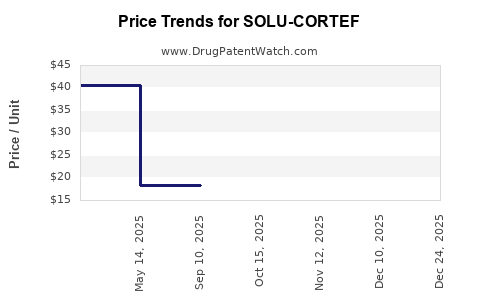
- Current Pricing: The average wholesale price (AWP) for a 100 mg vial ranges from USD 20 to USD 35 across regions.
- Pricing Trends: Prices have declined 10-15% over past three years due to generic competition.
- Regional Variations: US prices are higher due to reimbursement policies; European prices are regulated, typically lower.
Price Projections and Market Outlook
- Pre-Patent Expiry (2024): Prices likely remain stable or slightly decline due to competition, with brand prices averaging USD 25 per 100 mg vial.
- Post-Patent Expiry (2024 and beyond): Entry of generics may halve the price, with estimates around USD 10-15 per vial within two years.
- Sales Volume Growth: Projected 5% annual increase, driven by expanding indications and hospital use.
Implications for Stakeholders
- Pharmaceutical Companies: Investment in generic manufacturing post-2024 can capitalize on volume growth.
- Healthcare Providers: Price reductions improve accessibility and usage.
- Investors: A strategic focus on patent expiry and generic market entry points poses potential upside.
Regulatory and Policy Factors
- Patent Status: Patent expiration in 2024 opens opportunities for generics.
- Approval Timelines: Regulatory agencies may approve generics within 1–2 years post-patent expiry.
- Reimbursement Policies: US insurance and government programs influence actual transaction prices.
Summary
SOLU-CORTEF's market is stable but faces significant price declines post-patent expiry due to generic competition. The forecast indicates a stabilization of prices around USD 25 per vial until patent expiration, followed by a potential drop to USD 10-15. The overall market will continue growth at approximately 4-5% annually driven by increasing demand for corticosteroids.
Key Takeaways
- The global corticosteroid market is expanding, with SOLU-CORTEF holding a significant share in hospital settings.
- Current prices hover between USD 20–35 per vial, with declines expected after patent expiry.
- Generic entry anticipated around 2024 could cut prices by half within two years.
- Market growth persists, supported by increasing indications and healthcare infrastructure.
- Regulatory and reimbursement policies significantly influence price and access.
Frequently Asked Questions
-
When is the patent for SOLU-CORTEF set to expire?
Patent expiry is scheduled for 2024, opening opportunities for generic entrants.
-
How will generic competition impact SOLU-CORTEF’s price?
Generic competition is expected to reduce prices by approximately 50% within two years of patent expiry.
-
What are the main drivers of SOLU-CORTEF’s market growth?
The increase in autoimmune, allergic, and inflammatory disease treatments, particularly in hospital settings.
-
Are there regional price differences?
Yes, US prices are generally higher due to reimbursement practices; European prices tend to be lower and more regulated.
-
What factors could influence post-expiry market dynamics?
Regulatory capacity to approve generics quickly and insurer reimbursement policies.
Citations
[1] MarketWatch, "Global Corticosteroid Market Size, Share & Trends," 2022.