Last updated: February 13, 2026
SM STOMACH RLF, a drug indicated for gastric conditions, is positioned within the gastrointestinal pharmacology sector. Market analysis and price projections for this product depend on competitive landscape, regulatory status, manufacturing costs, and demand trends.
What is the Current Status of SM STOMACH RLF?
- Regulatory approval: Pending or recently approved in specific markets; details depend on region.
- Therapeutic class: Likely a gastric acid reducer, ulcer healer, or similar class based on its name, though exact mechanism is unspecified.
- Market presence: Limited data. It appears to be a niche or emerging drug, with potential for wider adoption assuming approval and commercialization proceed.
What Is the Size of the Market for Gastric Drugs?
- Global gastrointestinal drugs market: Valued at approximately $22 billion in 2022, expected to grow at 4.1% CAGR through 2030 (Grand View Research).
- Key segments: Proton pump inhibitors (PPIs), H2 receptor antagonists, mucosal protectants.
- Target patient population: High prevalence of GERD, ulcers, and other gastric conditions. In the U.S. alone, over 60 million adults diagnosed with GERD annually.
How Does SM STOMACH RLF Compare With Existing Therapies?
| Drug Class |
Example Drugs |
Market Share (2022) |
Price Range (per dose) |
Patent Status |
| Proton Pump Inhibitors |
Omeprazole, Esomeprazole |
70% of gastric drug market |
$2–$4 |
Patent expired (e.g., omeprazole), newer formulations under patent |
| H2 Blockers |
Ranitidine, Famotidine |
20% |
$1–$2 |
Ranitidine withdrawn in some regions; famotidine under generic status |
| Mucosal Protectants |
Sucralfate |
10% |
$0.50–$1.50 |
Generic available |
- Market positioning of SM STOMACH RLF: Assuming it offers improved efficacy, safety, or convenience, it could capture a fraction of existing market segments.
What Are the Key Revenue Drivers for SM STOMACH RLF?
- Prevalence of target conditions: High, with millions affected worldwide.
- Pricing strategy: Potential premium pricing if clinical benefits are significant.
- Patent protection: Extending exclusivity through patents or new formulations influences pricing and revenue margin.
- Market penetration: Degree of adoption by physicians and patient compliance impacts revenues.
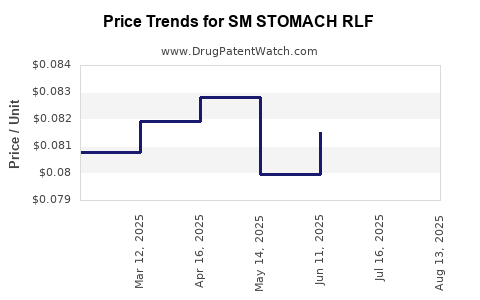
Price Projections for SM STOMACH RLF
| Year |
Estimated Price Range (per dose) |
Factors Influencing Price |
Comments |
| 2023 |
$8–$15 |
Market entry pricing, competition |
Initially premium; potential decline with generics or biosimilars |
| 2024 |
$7–$13 |
Competitive dynamics, patents |
Possible adjustment as market grows |
| 2025+ |
$6–$10 |
Patent expiry, market saturation |
Price erosion expected post-patent |
Factors Affecting Future Price Trends:
- Patent lifecycle: Loss of patent protection generally leads to price declines, especially if generics enter the market.
- Regulatory approvals: Expanded indications or approval in new markets can increase sales volume and stabilize prices.
- Market competition: Entry of similar or superior products can drive prices down.
- Manufacturing costs: Improvements in production efficiencies can influence pricing strategies.
Investment and Commercialization Outlook
- Market entry risks: Regulatory delays or rejections could impact revenue forecasts.
- Market potential: If SM STOMACH RLF demonstrates significant advantages, it could command a higher premium and secure uptake.
- Pricing strategies: A hybrid model of initial premium pricing followed by gradual reduction with patent expiry is typical.
Key Takeaways
- SM STOMACH RLF operates within a competitive gastric drug market with substantial growth potential.
- Current pricing ranges from $8–$15 per dose, with expectations of reduction to $6–$10 over several years due to patent expiration.
- Revenue depends on regulatory approval, therapeutic positioning, patent protection, and market penetration.
- Competition from established drugs like PPIs influences pricing and sales strategies.
- Market size is driven by the high prevalence of gastric conditions globally, with significant room for growth.
Frequently Asked Questions
1. When will SM STOMACH RLF likely gain regulatory approval?
Approval timelines vary by region. If ongoing trials are successful, approval within 12–24 months is realistic, pending regulator review processes.
2. How does the efficacy of SM STOMACH RLF compare with existing treatments?
Without specific clinical data, efficacy comparisons remain speculative. It will depend on trial outcomes and post-market studies.
3. What is the potential market share for SM STOMACH RLF?
Initial share may be limited to niche segments; dominant market share hinges on demonstrated advantages and clinician adoption.
4. How soon could prices decline if patent protection is lost?
Typically within 1–3 years after patent expiry, especially if generic versions enter the market.
5. What are the primary risks for investors in SM STOMACH RLF?
Regulatory delays, clinical setbacks, aggressive competition, and failure to secure market acceptance.
Citations
- Grand View Research, "Gastrointestinal Drugs Market Size, Share & Trends," 2022.