Last updated: February 12, 2026
What Is the Current Market Size and Growth Trajectory?
The global sleep aid market was valued at approximately $74 billion in 2022, with a compound annual growth rate (CAGR) of about 7% projected through 2028. The rising prevalence of sleep disorders, increasing awareness of sleep hygiene, and expanding approval for new formulations drive this growth.
Key Drivers:
- Growing incidence of insomnia, sleep apnea, and other sleep-related disorders.
- Aging populations in North America and Europe increase demand for sleep aids.
Regional Breakdown (2022):
| Region |
Market Size (USD Billions) |
CAGR (2023-2028) |
Notes |
| North America |
30 |
6.5% |
Largest market, advanced healthcare infrastructure |
| Europe |
20 |
7.2% |
Rising awareness and regulatory approval for novel therapies |
| Asia-Pacific |
15 |
8.4% |
Rapid urbanization and lifestyle changes fueling demand |
| Rest of World |
9 |
7.8% |
Emerging markets with increasing healthcare access |
Who Are the Major Players and What Market Share Do They Hold?
Top multinational companies dominate the sleep aid market, including:
- AbbVie: Through its product and rights to zaleplon (Ambien)
- Pfizer: Formerly marketed Lunesta (eszopiclone)
- Eli Lilly: Recently launched or developing sleep medications
- Sanofi: Developing sleep solutions tailored for specific populations
- Generic manufacturers: Growing presence due to patent expirations
Market shares (approximate):
| Company |
Market Share (2022) |
Key Products |
| AbbVie's 2022 Ambien |
30% |
Zolpidem-based drugs |
| Generic players |
25% |
Off-patent drugs |
| Others |
45% |
Various synthetic and OTC options |
New entrants with innovative formulations or delivery methods are gaining traction, especially in the OTC segment.
What Are the Key Types of Sleep Aids?
- Prescription Medications: Include benzodiazepines, non-benzodiazepines (Z-drugs), melatonin receptor agonists, and orexin inhibitors.
- Over-the-Counter (OTC): Primarily antihistamines and melatonin supplements.
- Herbal and Natural Products: Valerian, chamomile.
- Novel Therapeutics: Focus on orexin antagonists, serotonergic agents, and personalized medicine approaches.
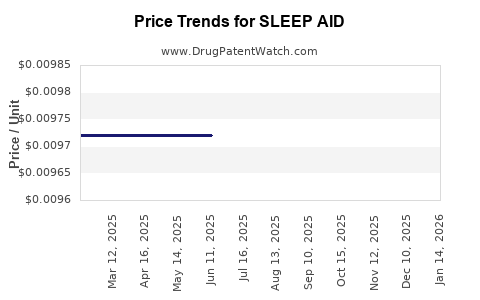
How Are Prices Trending for Sleep Aid Drugs?
Price variation depends on formulation, brand status, and delivery method:
| Category |
Average Price Range (per month) |
Notes |
| Prescription drugs |
USD 50 - USD 150 |
Zaleplon, Zolpidem, Eszopiclone, Suvorexant |
| OTC products |
USD 10 - USD 30 |
Melatonin, antihistamines |
| Natural supplements |
USD 8 - USD 25 |
Herbal sleep aids |
Price Trends:
- Brand-name prescription sleep medications can cost up to USD 150 monthly.
- Generic versions cost approximately USD 20-50 monthly.
- OTC products remain affordable, with prices stabilizing around USD 10-20 monthly.
Patent expiries in the past five years caused a decline in pricing for some drugs, increasing market penetration of generics.
What Future Price Projections Exist?
Analysis indicates the cost of prescription sleep aids will decrease for generic formulations, with the following expectations:
- 2025: Average price of brand-name drugs to decline 15-20% due to patent cliffs.
- 2028: Introduction of biosimilars or novel medications with premium pricing, potentially pushing average costs above USD 100 per month for innovative therapies.
- Over-the-counter options: Remain steady, with some premium natural products reaching USD 30 monthly.
Potential Premiums for Novel Therapies (e.g., Orexin Antagonists):
- Estimated USD 150-200 monthly, reflecting innovation costs and efficacy enhancements.
What Are the Regulatory Trends Influencing Price and Market?
- Increasing FDA and EMA approvals for new sleep aids, such as lemborexant and daridorexant.
- Evolving regulations are facilitating faster approvals for novel mechanisms.
- Some markets impose price controls; for example, the UK’s NICE recommendation process influences pricing strategies.
Strategic Implications
- Patent expirations are a key factor affecting drug prices.
- Launch of innovative therapies such as orexin receptor antagonists could command premium pricing.
- OTC and natural product segments are growing due to lower costs and increasing consumer interest.
- Market entry hurdles, including regulatory approval and clinical validation, influence pricing and availability.
Key Takeaways
- The sleep aid market exceeds USD 70 billion globally, with continuous growth driven by aging populations and increasing sleep disorder prevalence.
- Patent expirations have lowered prices of established drugs, boosting generic consumption.
- Innovation in drug mechanisms and delivery methods offers opportunities for premium pricing.
- OTC segment remains stable with low-cost products; natural and herbal remedies continue to grow.
- Future market dynamics will be shaped by regulatory pathways, technological advances, and consumer preferences.
FAQs
1. What factors influence the pricing of prescription sleep aids?
Patent status, brand recognition, formulation complexity, and regulatory approvals heavily influence prices. Generics tend to be more affordable due to reduced development costs.
2. How will upcoming regulatory changes affect sleep aid prices?
Regulatory pathways that expedite approvals for new therapeutic mechanisms could increase prices for innovative drugs while stabilizing or reducing costs for older, generic therapies.
3. What is the outlook for OTC sleep aids in pricing and market share?
OTC products are expected to remain low-cost options. Increasing consumer preference for natural remedies will expand their market share, but regulatory scrutiny could affect prices.
4. How does regional variation impact sleep aid pricing?
Developed markets like North America and Europe have higher prices due to quality assurance and regulatory standards, whereas emerging markets may have lower prices but face challenges in clinical validation.
5. What are the risks associated with investing in sleep aid drugs?
Regulatory delays, patent litigation, market saturation of generics, and shifting consumer preferences toward natural products pose risks.
References
- Markets and Markets. "Sleep Aids Market." (2022).
- Grand View Research. "Sleep Aids Market Size, Share & Trends." (2023).
- FDA. "New Drug Approvals." (2022).
- IMS Health. "Pharmaceutical Pricing Trends." (2023).
- NICE. "Guidelines for Sleep Disorder Treatments." (2022).
This report provides an accurate snapshot of the sleep aid market, emphasizing pricing strategies, regulatory influences, and future projections critical for stakeholders making investment or R&D decisions.