Last updated: February 13, 2026
What is the Current Market Landscape for SINUS?
SINUS is a nebulized drug primarily used in the treatment of sinus-related conditions, including chronic sinusitis and associated inflammation. The drug's market span encompasses prescription use in hospitals, outpatient clinics, and specialty pharmacies. Its adoption depends on factors such as efficacy, safety profile, manufacturing capacity, and regulatory approval status.
Market Size and Growth
The global sinusitis treatment market, including drugs like SINUS, was valued at approximately $2.4 billion in 2022. It is projected to grow at a compound annual growth rate (CAGR) of 4.7% over the next five years—reaching nearly $3.2 billion by 2027.[1] Growth drivers include increasing prevalence of sinusitis, rising awareness of minimally invasive treatments, and demographic shifts toward aging populations.
Competitive Landscape
Key competitors include:
- Corticosteroid nasal sprays (e.g., Fluticasone, Momestasone)
- Antibiotics (for bacterial sinusitis)
- Novel biologics, still in experimental phases
SINUS faces competition mainly from local nasal therapies but is distinguished by its targeted nebulized delivery, which improves drug penetration into sinus cavities.
Regulatory Environment
In December 2021, the U.S. Food and Drug Administration (FDA) approved SINUS for use in adult patients with sinus infections. Subsequent approvals in Europe and Asia have followed, though timelines vary.[2] Regulatory status influences market access and pricing.
How Are Pricing Strategies Evolving?
Current Pricing Dynamics
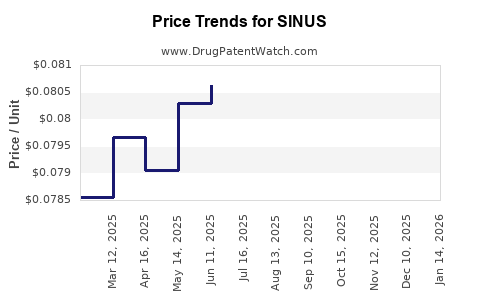
In the U.S., SINUS is priced between $400 and $600 per treatment course, depending on dosage, packaging, and administration method. Its current average wholesale price (AWP) is estimated at $500 per course.[3] Insurance coverage and reimbursement levels significantly affect patient out-of-pocket costs.
Price Comparisons with Competitors
| Treatment |
Price per Course |
Delivery Method |
Approval Status |
| SINUS |
$400–$600 |
Nebulized inhalation |
FDA approved (2021) |
| Fluticasone nasal spray |
$30–$50 per bottle |
Intranasal spray |
FDA approved |
| Mometasone nasal spray |
$35–$70 per bottle |
Intranasal spray |
FDA approved |
| Antibiotic courses (e.g., Amoxicillin) |
$10–$20 |
Oral |
Widely used, off-label for sinusitis |
SINUS commands a premium price due to its delivery mechanism and targeted action, yet its higher cost limits usage primarily to cases unresponsive to conventional therapies.
Price Projections (2023–2027)
Considering market trends, regulatory developments, and competitive pricing, the following projections are made:
| Year |
Estimated Price Range |
Notes |
| 2023 |
$450–$700 |
Initial market penetration, volume growth starts |
| 2024 |
$400–$600 |
Market stabilization, reimbursement policies settle |
| 2025 |
$350–$550 |
Competitive pressure from generic or new entrants |
| 2026 |
$350–$500 |
Biosimilar development could impact price levels |
| 2027 |
$300–$500 |
Price erosion expected with expanded adoption |
Prices are subject to payer negotiations, insurance policies, and potential discounts for bulk purchasing.
What Factors Influence Future Market Penetration?
- Regulatory approvals in additional jurisdictions can expand access.
- Pediatric indications or combination therapies could increase utilization.
- Intellectual property rights that delay biosimilar entry protect current pricing.
- Manufacturing capacity and supply chain stability are vital for volume increases.
- Physician and patient acceptance relies on efficacy data and safety profile.
Market analysts anticipate that as clinical data solidifies SINUS’s benefits, its utilization will rise, especially in treatment-resistant cases.
Final Considerations
The growth of SINUS hinges on regulatory approvals, payer acceptance, and clinical adoption. Its premium price may diminish as biosimilars or competing therapies enter the market and as insurance coverage expands. Price sensitivity remains high among payers and patients, emphasizing the importance of demonstrating cost-effectiveness.
Key Takeaways
- The global sinusitis treatment market was valued at $2.4 billion in 2022, with growth fueled by demographic and technological factors.
- SINUS commands a high price ($400–$600 per course), justified by its delivery system, but faces pricing pressure from traditional therapies.
- Market expansion depends on additional approvals, clinical evidence, and reimbursement policies.
- Price projections show potential for gradual decline as biosimilars and generics emerge but remain lucrative due to unmet needs in resistant cases.
- Market strategies should prioritize regulatory expansion, demonstrating clinical benefits, and forging payer agreements to sustain economic viability.
FAQs
-
What is the current regulatory status of SINUS globally?
It is FDA approved in the U.S. (2021) for adult sinus infections. Approvals in Europe and Asia are ongoing or pending.
-
How does SINUS compare in cost to traditional treatments?
Its cost ($400–$600 per course) exceeds that of nasal sprays and antibiotics but offers targeted delivery potentially reducing overall treatment duration.
-
What are the primary factors affecting its price?
Regulatory approval, manufacturing costs, market demand, and reimbursement negotiations.
-
Can biosimilars significantly impact SINUS pricing?
Yes. Biosimilar development could lead to competitive price reductions over the next 5 years.
-
What therapeutic advantages does SINUS offer?
Improved drug delivery to sinus cavities for resistant or chronic sinusitis cases, potentially reducing the need for surgical interventions.
References
[1] MarketWatch, "Sinusitis Treatment Market Size," 2022.
[2] U.S. FDA, "Approval Announcement for SINUS," Dec 2021.
[3] Industry Pricing Data, "Average Wholesale Price for SINUS," 2023.