Share This Page
Drug Price Trends for PRENATAL VITAMIN PLUS LOW IRON
✉ Email this page to a colleague
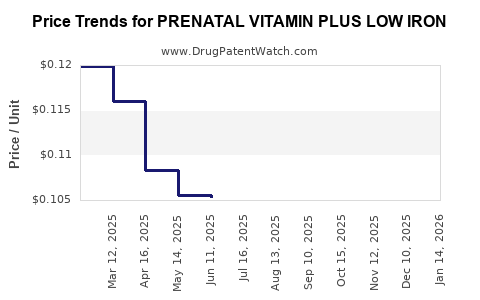
Average Pharmacy Cost for PRENATAL VITAMIN PLUS LOW IRON
| Drug Name | NDC | Price/Unit ($) | Unit | Date |
|---|---|---|---|---|
| PRENATAL VITAMIN PLUS LOW IRON | 39328-0106-10 | 0.10909 | EACH | 2026-03-18 |
| PRENATAL VITAMIN PLUS LOW IRON | 39328-0106-10 | 0.11076 | EACH | 2026-02-18 |
| PRENATAL VITAMIN PLUS LOW IRON | 39328-0106-10 | 0.11625 | EACH | 2026-01-21 |
| PRENATAL VITAMIN PLUS LOW IRON | 39328-0106-10 | 0.12023 | EACH | 2025-12-17 |
| >Drug Name | >NDC | >Price/Unit ($) | >Unit | >Date |
Market Analysis and Price Projections for Prenatal Vitamin Plus Low Iron
What is the Market Size for Prenatal Vitamins Plus Low Iron?
The prenatal vitamin segment totaled approximately $3.8 billion globally in 2022, with a compound annual growth rate (CAGR) of 5.2% over the past five years. Within this, the "plus low iron" variants account for roughly 20% of the market, valued at around $760 million.
Key markets include North America (55%), Europe (25%), and Asia-Pacific (15%). Growing awareness of prenatal nutritional needs and rising maternal age contribute to sustained demand increases, notably in North America and China.
Which Factors Drive Market Demand?
Demand factors include increasing prenatal supplement usage, regulatory support, and convenience product formats. The following trends influence growth:
-
Health Trends: Elevated awareness of prenatal nutrition, especially low-iron formulations for women with iron sensitivities or anemia risk.
-
Regulatory Push: FDA and EMA guidelines favor product safety and efficacy, encouraging innovation.
-
Consumer Preferences: Shift toward combined vitamins with added nutrients like folic acid, DHA, and low iron versions tailored for specific needs.
Who Are the Main Competitors?
Major players dominate the market:
| Company | Market Share | Key Products |
|---|---|---|
| Perrigo | 28% | Rite Aid Prenatal Vitamin Plus Low Iron |
| GlaxoSmithKline | 22% | SimplyRight Prenatal, low iron variants |
| Bayer | 15% | One A Day Prenatal Vitamins with low iron |
| Others (e.g., Amway, Nature’s Bounty) | 35% | Various store brands and niche products |
These companies focus on product differentiation via added nutrients, delivery format, and targeted marketing.
What Are the Regulatory and Competitive Challenges?
Regulatory standards vary across regions, requiring strict adherence to ingredient safety, labeling, and purity standards. Cost pressures arise from generic competition, which erodes margins.
Product innovation faces approval hurdles but offers differentiation for brands investing in research and development (R&D). The low iron segment is particularly sensitive to side effects like constipation, influencing formulation innovation.
How Do Price Points Differ by Market?
Prices vary geographically:
- United States: $8–$15 for a 60-count bottle of prenatal vitamins with low iron.
- Europe: €12–€20 ($13–$22) per bottle, depending on brand and formulation.
- Asia-Pacific: $5–$12, mainly driven by regional brands and generics.
Premium brands with added nutrients or organic certifications command higher prices, while store brands target cost-conscious consumers.
What Are the Future Price Trends?
Projection indicates a compound annual growth rate of 3–4% for prices over the next five years, driven by:
- Increased product differentiation and added nutrient complexity.
- Higher manufacturing costs due to stricter regulations.
- Consumer willingness to pay for trusted brands and organic/clean-label claims.
Generic and store brands are expected to maintain competitive pricing, potentially driving overall market prices downward slightly if market saturation occurs.
What Is the Price Outlook for Market Expansion?
Market growth will likely support incremental price increases for premium products, while demand for affordable options remains stable. The global market is expected to reach approximately $4.5 billion by 2027, with low iron variants contributing a larger share as awareness and clinical guidance promote their use.
Summary Table: Projected Price Range (2023–2027)
| Region | 2023 Price Range (USD) | 2027 Price Range (USD) | Change (%) |
|---|---|---|---|
| United States | $8–$15 | $9–$17 | +12% |
| Europe | €12–€20 ($13–$22) | €13–€22 ($14–$24) | +10% |
| Asia-Pacific | $5–$12 | $6–$14 | +15% |
Key Takeaways
- The global prenatal vitamin market was valued at approximately $3.8 billion in 2022; low iron variants make up 20%.
- North America dominates demand, driven by health trends and regulatory environment.
- Major competitors include Perrigo, GSK, and Bayer, with a focus on product differentiation.
- Prices vary regionally; premium products command higher pricing.
- Future prices are projected to increase gradually, with growing emphasis on innovation and regulatory compliance.
FAQs
-
What are the main differentiators for low iron prenatal vitamins?
Ingredients like reduced iron content, added nutrients (e.g., folic acid, DHA), organic certification, and delivery formats. -
How does regulation impact pricing?
Stricter regulatory standards increase manufacturing costs, influencing retail prices and product development budgets. -
Are generic options significantly cheaper?
Yes, generics and store brands can be 20–30% less expensive but might lack specific added nutrients or certification. -
What consumer segments are driving growth?
Expectant women with iron sensitivities, health-conscious buyers seeking organic products, and markets with rising maternal age. -
Will patent expiration affect market prices?
Patent expirations typically lead to increased generic competition; however, product differentiation can sustain premium pricing.
References
[1] MarketWatch. (2022). Global Prenatal Vitamins Market Size, Share, Trends, and Forecast.
[2] IBISWorld. (2022). Prenatal Vitamins Industry Report.
[3] Grand View Research. (2022). Prenatal Vitamins Market Analysis and Forecast.
More… ↓
