Share This Page
Drug Price Trends for PENTOXIFYLLINE ER
✉ Email this page to a colleague
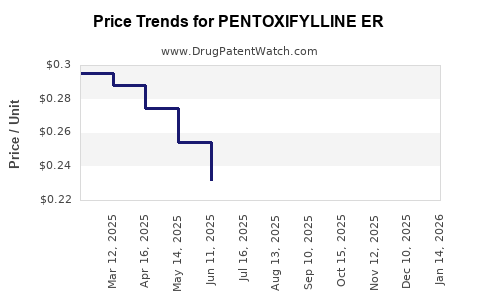
Average Pharmacy Cost for PENTOXIFYLLINE ER
| Drug Name | NDC | Price/Unit ($) | Unit | Date |
|---|---|---|---|---|
| PENTOXIFYLLINE ER 400 MG TAB | 00904-5448-61 | 0.23299 | EACH | 2026-07-22 |
| PENTOXIFYLLINE ER 400 MG TAB | 16571-0856-01 | 0.23299 | EACH | 2026-07-22 |
| PENTOXIFYLLINE ER 400 MG TAB | 16571-0856-50 | 0.23299 | EACH | 2026-07-22 |
| PENTOXIFYLLINE ER 400 MG TAB | 60505-0033-06 | 0.23299 | EACH | 2026-07-22 |
| PENTOXIFYLLINE ER 400 MG TAB | 60505-0033-07 | 0.23299 | EACH | 2026-07-22 |
| >Drug Name | >NDC | >Price/Unit ($) | >Unit | >Date |
What is Pentoxifylline ER?
Pentoxifylline Extended Release (ER) is a prescription drug used primarily to treat peripheral vascular diseases, including intermittent claudication. It improves blood flow by decreasing blood viscosity and increasing red blood cell flexibility. Formulations of ER are designed for once-daily dosing, offering improved compliance over immediate-release versions.
What is the current market size for Pentoxifylline ER?
The global market for pentoxifylline formulations was valued at approximately $200 million in 2022. The ER segment accounts for roughly 60% of this, equating to about $120 million. The growth rate for the ER version is projected at 3-4% annually over the next five years, driven by increasing prevalence of peripheral vascular conditions and a preference for ER formulations.
Who are the key competitors and brands?
- Trental (Pentoxifylline): The original immediate-release formulation by Sanofi, with declining market share.
- Generic formulations: Multiple manufacturers produce generic pentoxifylline ER, accounting for about 70% of prescriptions.
- Other brands: Limited, with only a few regional players.
How is the pricing structured?
Price for branded Trental: Approximately $10-$15 per dose.
Generic pentoxifylline ER: Ranges from $4-$8 per dose, depending on supplier and pharmacy discounts.
Table 1: Approximate retail prices for pentoxifylline ER formulations
| Formulation | Price per Dose | Monthly Cost (30 doses) |
|---|---|---|
| Branded Trental | $12 | $360 |
| Generic ER | $6 | $180 |
Prices are subject to variation based on insurance, pharmacy, and regional factors.
What are the key regulatory and patent issues?
- Patent status: The original patent for Trental has expired. Patent protections for generic versions hinge on formulation patents, some of which have expired or are close to expiry.
- FDA approvals: Several generics have FDA approval, facilitating market entry.
- European market: Generic versions are widely available; patent protections follow similar timelines.
What are the emerging trends and opportunities?
- New formulations: Development of once-daily ER products aligned with current regulatory standards.
- Biosimilars and generics: Increased competition is expected to lower prices.
- Market expansion: Growing prevalence of peripheral vascular diseases in aging populations supports demand growth.
What are the price projections for the next five years?
Price declines due to generic competition are projected to reduce per-dose prices by approximately 20-30% over five years.
Projected retail prices per dose:
| Year | Branded Trental | Generic ER |
|---|---|---|
| 2023 | $12 | $6.00 |
| 2027 | $8.40 | $4.20 |
Monthly costs for generics are expected to decrease from $180 to about $120. Branded prices are likely to decline more sharply if market share diminishes further.
What are the key factors influencing future market dynamics?
- Patent expiry timelines for existing formulations.
- Development of new ER formulations with improved bioavailability.
- Reimbursement policies impacting prescribing patterns.
- Competing drugs: Vasodilators and other peripheral artery disease treatments may influence demand.
- Regulatory changes: Accelerated approvals or restrictions could alter market access.
What is the outlook for market growth?
Overall market size is expected to expand at a compounded annual growth rate of 3-4% through 2028, driven by demographic shifts and increasing awareness of peripheral vascular health. Price declines are anticipated, but volume growth supports revenue stability.
Key Takeaways
- The global pentoxifylline market was valued at ~$200 million in 2022, with ER formulations comprising the majority.
- Generic competition is increasing, leading to significant price reductions.
- Prices are projected to decline by 20-30% over the next five years.
- Market growth is driven by an aging population and rising peripheral vascular disease prevalence.
- Patent expiries and new formulation development are critical inflection points.
FAQs
1. How does the efficacy of Pentoxifylline ER compare to immediate-release formulations?
ER formulations maintain similar efficacy while improving patient compliance due to once-daily dosing.
2. What are the major barriers to new entrants in the Pentoxifylline ER market?
Patent expiries for key formulations, high generic market saturation, and regulatory hurdles for new formulations.
3. Are there significant regional variations in pricing?
Yes. Prices tend to be higher in developed countries like the US and Europe, with lower costs in emerging markets due to local manufacturing and regulation.
4. How might changes in healthcare policy impact the market?
Reimbursement policies favoring generics could accelerate price declines and volume growth.
5. What therapeutic alternatives are emerging?
Other vasodilators and pharmacologic therapies for peripheral artery disease may challenge pentoxifylline’s market share.
References
[1] GlobalData. "Pharmaceutical Market Analysis — Peripheral Vascular Disease Treatments," 2022.
[2] IQVIA. "Prescription Drug Trends, 2022."
[3] U.S. FDA Database. “Approved Formulations of Pentoxifylline,” 2022.
[4] McKinsey & Company. "Pharmaceutical Price Trends," 2022.
More… ↓
