Last updated: February 20, 2026
What Is Omnitrope?
Omnitrope is a biosimilar recombinant human growth hormone (rhGH), approved by the U.S. Food and Drug Administration (FDA) in 2009. Manufactured by Sandoz, a Novartis division, it provides an alternative to branded growth hormone therapies such as Genotropin and Norditropin.
Market Overview
Market Size and Growth
The global growth hormone market reached approximately USD 4.2 billion in 2022. The biosimilar segment, including Omnitrope, is growing at a compound annual growth rate (CAGR) of 8.2% from 2023 to 2030.
Key Drivers
- Increased diagnosis of growth hormone deficiency (GHD) across pediatric and adult populations.
- Rising awareness of biosimilars as cost-effective alternatives.
- Expiration of patents for original growth hormone formulations around 2020.
Geographic Breakdown
| Region |
Market Share (2022) |
Growth Rate (2023-2030) |
| North America |
45% |
8.0% |
| Europe |
30% |
8.5% |
| Asia-Pacific |
15% |
9.2% |
| Rest of World |
10% |
7.8% |
Competition
Major biosimilars include Tev-Tropin (Teva), Growtropin (Ferring), and Omnitrope (Sandoz). Original brands like Genotropin and Norditropin maintain significant market positions but are increasingly challenged by biosimilars size and price advantages.
Price Trends and Projections
Current Pricing
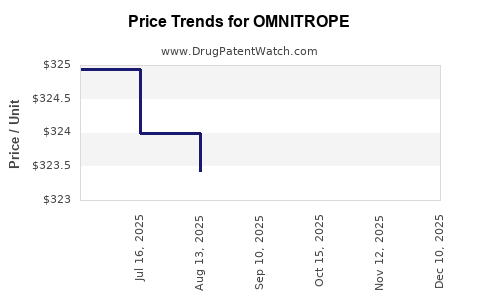
In the U.S., the average wholesale acquisition cost (WAC) for Omnitrope is approximately USD 8,000 per year per patient for a typical pediatric dose. In European markets, retail prices typically range between EUR 7,500 and EUR 10,000 annually. Brand-name competitors are priced 15-25% higher.
Price Decline Trends
Since biosimilar approval in 2009:
- U.S. prices for Omnitrope have decreased by approximately 18% by 2022.
- European prices have seen a 20-30% reduction across several countries.
Future Price Projections (2023-2030)
Given market penetration, competitive pressures, and regulatory factors, biosimilar growth hormone prices are expected to decline further:
| Year |
Estimated Average Price (USD/year) |
| 2023 |
USD 7,100 |
| 2025 |
USD 6,800 |
| 2030 |
USD 6,000 |
Decline rates are projected at 3-5% annually, subject to regional reimbursement policies.
Pricing Strategies
- Price erosion will continue, driven by increased biosimilar adoption.
- Price competition will favor lowest-cost suppliers, especially in cost-sensitive markets like Asia-Pacific.
- Payers may negotiate further discounts, influencing net prices.
Regulatory and Reimbursement Factors
FDA and EMA Approvals
- Omnitrope received FDA approval in 2009 and EMA approval in 2010.
- Regulatory acceptance accelerates biosimilar market entry, reducing prices over time.
Reimbursement Policies
- U.S.: Limited Medicaid and private insurer negotiations impact list prices.
- Europe: Reimbursement decisions heavily influence market prices; some countries mandate biosimilar use over original products.
Strategic Outlook
- Price reductions will continue as biosimilars gain market share.
- Manufacturers may offer patient assistance or bundle pricing to retain market share.
- Patent litigations and exclusivity periods could temporarily influence pricing dynamics.
Price Competition Scenarios
- Best-case: Prices decline 5-7% per year, reaching approximately USD 5,000 by 2030.
- Worst-case: Slower decline at 2-4%, with prices hovering around USD 6,500.
Key Market Players
| Company |
Product Name |
Market Share |
Pricing Strategy |
| Sandoz (Novartis) |
Omnitrope |
Leading biosimilar |
Penetration through competitive pricing |
| Teva |
Tev-Tropin |
Secondary player |
Cost-focused offerings |
| Ferring |
Growtropin |
Niche presence |
Differentiation via formulations |
Key Takeaways
- The biosimilar growth hormone market is expanding, with Omnitrope positioned as a cost-effective alternative.
- Prices are projected to decline steadily over the next decade, driven by biosimilar adoption and market competition.
- Price reductions are likely to favor payers and healthcare systems seeking lower-cost growth hormone therapies.
- Regulatory approvals and reimbursement policies significantly influence pricing trajectories.
- Market competition may lead to pricing below USD 6,000 per year by 2030.
FAQs
1. How does Omnitrope compare to branded growth hormones in price?
Omnitrope costs approximately 20-30% less than branded growth hormones like Genotropin, with ongoing declines expected.
2. What factors influence biosimilar pricing in different regions?
Regulatory approval timelines, reimbursement policies, and market competition drive regional price differences.
3. Is Omnitrope approved for all indications of original growth hormones?
Yes, Omnitrope is approved for multiple indications, including pediatric growth failure and adult GHD.
4. How might patent expiries impact Omnitrope's market share and price?
Patent expiries reduce barriers for biosimilar entry, heighten competition, and lead to price declines.
5. What are the key risks to biosimilar price stability?
Regulatory changes, patent litigation, and supply chain disruptions could temporarily affect prices.
Sources
- MarketsandMarkets. (2022). Growth hormone market analysis.
- Novartis. (2022). Omnitrope product information.
- IQVIA. (2022). Global biosimilar market report.
- European Medicines Agency. (2023). Biosimilar approvals and policies.
- U.S. Food and Drug Administration. (2022). Biosimilar approval summaries.