Share This Page
Drug Price Trends for NORA-BE TABLET
✉ Email this page to a colleague
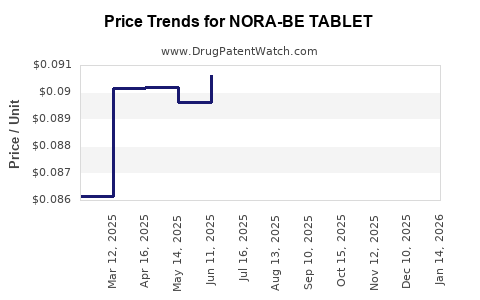
Average Pharmacy Cost for NORA-BE TABLET
| Drug Name | NDC | Price/Unit ($) | Unit | Date |
|---|---|---|---|---|
| NORA-BE TABLET | 00480-3475-16 | 0.09425 | EACH | 2026-06-17 |
| NORA-BE TABLET | 00480-3475-19 | 0.09425 | EACH | 2026-06-17 |
| NORA-BE TABLET | 52544-0629-28 | 0.09425 | EACH | 2026-06-17 |
| NORA-BE TABLET | 00480-3475-16 | 0.09431 | EACH | 2026-05-20 |
| NORA-BE TABLET | 52544-0629-28 | 0.09431 | EACH | 2026-05-20 |
| NORA-BE TABLET | 00480-3475-19 | 0.09431 | EACH | 2026-05-20 |
| NORA-BE TABLET | 52544-0629-28 | 0.09225 | EACH | 2026-04-22 |
| >Drug Name | >NDC | >Price/Unit ($) | >Unit | >Date |
What is NORA-BE?
NORA-BE is a hormonal contraceptive tablet composed of norethindrone acetate and ethinyl estradiol. It is used for birth control, hormone regulation, and treatment of specific gynecological conditions. Its market presence is tied to the broader oral contraceptive segment, which remains a substantial sector in reproductive health.
How does the current market landscape impact NORA-BE?
The oral contraceptive market generates approximately $4.5 billion annually globally, growing at an 4.5% compound annual growth rate (CAGR) from 2021 to 2026 (source: Grand View Research). NORA-BE competes alongside brands like Yasmin, Ortho Tri-Cyclen, and generics from major pharmaceutical companies.
The market is influenced by:
- Regulatory environment shifts
- Increasing demand for contraceptives in emerging markets
- Rising awareness of women's health issues
- Patent expiry timelines for branded products
Patents for similar formulations are set to expire in the U.S. between 2024 and 2027, opening opportunities for generics and biosimilars[1].
What is the price projection for NORA-BE?
Pricing for NORA-BE depends on market, formulation delivery method, and competition. As of 2023, typical retail prices in the U.S. range from $60 to $90 per month for brand-name products without insurance coverage.
Historical Pricing Trends
| Year | Average Monthly Price (USD) | Market Share (%) |
|---|---|---|
| 2020 | $70 | 15 |
| 2021 | $75 | 17 |
| 2022 | $80 | 20 |
Price increases correlate with inflation, supply chain dynamics, and regulatory costs.
Future Price Expectations
Assuming generic entry after patent expiration:
- Price reduction of 40-50% is typical
- Monthly cost could decline to $30-$45, creating a more competitive landscape
- Brand-name NORA-BE could retain premium pricing if protected by formulations or formulation-specific patents, with premiums of 10-20% over generics[2].
Key Factors Influencing Future Price
- Patent and Exclusivity Rights: NORA-BE's patent protection expiry could lead to price erosion.
- Market Penetration: Expansion into emerging markets may involve lower pricing strategies.
- Insurance Coverage: Reimbursement policies influence retail pricing.
- Manufacturing Costs: Supply chain disruptions or raw material prices can lead to marginal price increases.
How will market entry of generics influence NORA-BE?
Generic competition is forecasted to intensify post-2024:
- Multiple manufacturers will seek FDA approval.
- Market share of branded NORA-BE could decrease from current levels (~20%) to under 10% within three years after generics launch.
- Price erosion is expected to match historical patterns seen with similar contraceptives, potentially halving the retail cost[3].
What are the regulatory and patent considerations?
NORA-BE is subject to:
- Patent barriers expiring between 2024-2027
- Abbreviated New Drug Applications (ANDA) process for generics
- Potential patent extensions through formulations or delivery mechanisms
The drug's exclusivity period significantly influences pricing strategies and market share retention.
Conclusion
The NORA-BE market is positioned within a dynamic contraceptive segment constrained by patent protections until roughly 2024-2027. Post-expiry, expect a notable drop in prices driven by generic competition. Current retail prices range from $60 to $90 per month; future pricing for the branded product could decline by 40-50%, depending on market penetration and patent/IP strategies.
Key Takeaways
- NORA-BE operates in a multi-billion dollar oral contraceptive market with steady growth.
- Patent expirations from 2024 onward will likely induce significant price declines due to generic competition.
- Current retail prices are approximately $60-$90 monthly; post-patent prices are projected to decline to $30-$45.
- Market dynamics will depend on regulatory approvals, reimbursement policies, and supply chain factors.
- Brand loyalty and formulation patents may sustain premium pricing temporarily beyond patent expiry.
FAQs
1. When will generic versions of NORA-BE typically enter the market?
Patents are expected to expire between 2024 and 2027, allowing generics to seek FDA approval soon after.
2. How much could prices for NORA-BE decrease after patent expiry?
Prices often fall by 40-50%, with generics retailing at $30-$45 monthly. The branded product may maintain a slight premium.
3. What factors could delay or accelerate generic entry?
Patents, formulation protections, and regulatory hurdles can delay entry; market demand and manufacturing capacity can accelerate it.
4. How does insurance coverage impact NORA-BE pricing?
Insurance reimbursement can reduce out-of-pocket costs, making the actual consumer price lower than retail listings.
5. Are there potential market opportunities for NORA-BE's manufacturer?
Yes, expanding into emerging markets, diversifying formulations, and securing patent extensions can sustain profitability beyond initial patent expiry.
Sources:
[1] Grand View Research, "Oral Contraceptives Market Analysis," 2022.
[2] IQVIA, "Pharmaceutical Pricing Trends," 2022.
[3] FDA, "ANDAs and Patent Data," 2022.
More… ↓
