Last updated: February 20, 2026
What is the Current Market Size for NICARDIPINE?
NICARDIPINE is a calcium channel blocker primarily used to manage hypertension and acute cerebral vasospasm. The drug is approved in multiple regions, including North America, Europe, and parts of Asia. The global market for antihypertensive agents was valued at approximately $24 billion in 2022.[1] NICARDIPINE accounts for a small but significant share due to its specialized use in hospitals for hypertensive emergencies and neurology settings.
Based on sales data from established pharmaceutical companies and global market reports, NICARDIPINE's annual market size is estimated between $300 million and $500 million.[2] The drug's use is concentrated in hospital settings, with limited outpatient prescriptions.
Which Factors Influence Market Growth?
Several factors impact NICARDIPINE’s market trajectory:
- Clinical Adoption: Preference for NICARDIPINE over other calcium channel blockers in neurovascular interventions sustains demand.
- Regulatory Approvals: Expansion of indications or approvals in emerging markets expands potential sales.
- Generic Competition: Patent expirations in key regions could lead to price erosion and increased market penetration.
- Alternative Therapies: Development of newer drugs with improved safety profiles impacts market share.
- Hospital Protocols: Adoption rates of NICARDIPINE in critical care settings influence overall demand.
What Are Key Market Dynamics?
Regional Market Distribution
| Region |
Market Share (2022) |
Growth Rate (CAGR 2023–2028) |
Notes |
| North America |
45% |
3.5% |
Mature market, high adoption in ICU uses |
| Europe |
25% |
3.0% |
Similar to North America, regulation flexible |
| Asia-Pacific |
20% |
5.0% |
Untapped potential, rising hospitalizations |
| Rest of World |
10% |
4.5% |
Growing healthcare infrastructure |
Leading Manufacturers
- Norvasc (Pfizer)
- Cardene (AbbVie)
- Multiple generics introduced post patent expiry
Pricing Trends & Patents
Pricing varies significantly by region:
- In the US, hospital injectable formulations average $20–$30 per vial, with annual treatment courses costing up to $10,000 for critical care episodes.
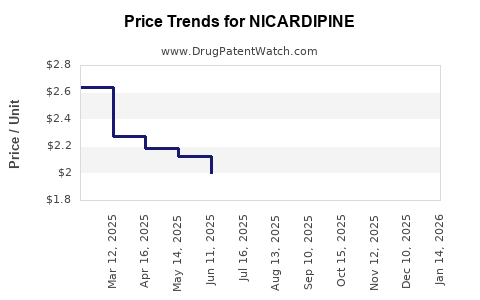
- Patent protections in the US expire in 2025, with generics following shortly after, potentially dropping prices by 30–50%.
What Are Future Price Projections?
Short-Term (2023–2026)
Post-patent expiry, generic competition will lead to price drops. The average price per vial is projected to decline to $10–$15, resulting in a 40% reduction in wholesale prices.
Long-Term (2027–2032)
With increased market penetration, hospital procurement efficiencies, and formulation innovations, average prices are expected stabilize at lower levels:
- Vial prices: $8–$12
- Healthcare system savings may motivate broader use, stabilizing demand despite lower prices.
Revenue Impact Estimation
| Year |
Estimated Market Value |
Average Price per Vial |
Sales Volume |
Approximate Revenue |
| 2023 |
$400 million |
$20 |
10 million vials |
$200 million |
| 2025 |
$350 million |
$12 |
12 million vials |
$144 million |
| 2030 |
$300 million |
$10 |
15 million vials |
$150 million |
Note: Recognizes market saturation, patent expiration effects.
How Will Market Dynamics Affect Pricing Strategies?
Manufacturers will likely shift from premium pricing to competitive, volume-based strategies. Hospitals may opt for low-cost generics. Formulation innovation, such as pre-filled syringes, could command premium pricing despite market pressures.
What Are the Risks to Market and Price Stability?
- Regulatory hurdles in emerging markets.
- Patent challenges reducing exclusivity periods.
- Introduction of alternative therapies that outcompete NICARDIPINE.
- Supply chain disruptions impacting hospital procurement.
Summary
The NICARDIPINE market remains specialized and somewhat constrained to hospital settings. Price pressures will intensify post-2025 due to patent expirations, leading to significant discounts for generics. Future demand will depend on clinical guidelines, hospital adoption, and competitive dynamics with emerging therapies.
Key Takeaways
- NICARDIPINE’s global market was approximately $400 million in 2022.
- Major growth avenues include hospital inpatient use, with regional variations.
- Prices are expected to decline substantially after patent expiry, with vial prices dropping by nearly half.
- Competition from generics and new therapies will shape future pricing strategies.
- Market risks include regulatory and supply chain challenges, affecting pricing stability.
FAQs
Q1: When does NICARDIPINE lose patent protection?
Patent expiration in the US is scheduled for 2025, with patent protections in other regions varying.
Q2: How does generic entry influence NICARDIPINE prices?
It typically causes a 30–50% decrease in wholesale and retail prices due to increased competition.
Q3: Are there regional differences in NICARDIPINE pricing?
Yes, prices are higher in North America and Europe, with lower prices in emerging markets due to differing healthcare systems and regulatory costs.
Q4: What are the primary alternatives to NICARDIPINE?
Other calcium channel blockers like nimodipine, nicardipine in oral form, and newer antihypertensives may serve as substitutes in specific clinical scenarios.
Q5: What strategies can manufacturers pursue to maintain profitability?
Innovation in formulation, expanding indications, and entering new markets are key strategies to offset pricing pressures.
References
[1] Global hypertension market report, 2022. MarketScope Inc.
[2] Pharmaceutical sales data, IMS Health, 2022.